Why success destroys the companies we love, with Eric Ries
Episode
48 min
Read time
2 min
Topics
Relationships, Startups, Fundraising & VC
AI-Generated Summary
Key Takeaways
- ✓Trustworthiness as financial asset: Mission-driven companies with strong structural protections outperform conventional corporations across multiple financial metrics — including return on invested assets and Tobin's Q — and are six times more likely to survive to year 50 (60% vs. 10%). Treat trustworthiness as a balance sheet asset requiring active protection, not a soft cultural value.
- ✓Foundation ownership model: Novo Nordisk's century-old structure — a nonprofit foundation owning a for-profit subsidiary — disproves the assumption that market discipline requires standard shareholder primacy. Founders should evaluate this governance structure early, before IPO pressure makes adoption nearly impossible. Waiting until pre-IPO is typically too late to implement meaningful structural protection.
- ✓Harder-is-easier principle: Cloudflare gave away SSL encryption — previously their top premium-to-paid conversion feature — after recognizing it conflicted with their mission of a better internet. Conversion rates dropped, but top-of-funnel signups increased tenfold. The company is now worth $70 billion. Doing the principled thing at short-term cost repeatedly generates disproportionate long-term competitive advantage.
- ✓Success as vulnerability: The more valuable a company's accumulated trust, the more attractive a target it becomes for extraction. Whole Foods' compulsion to maintain high stock prices — to prevent activist takeover — prevented price reductions that would have sustained foot traffic, ultimately triggering the exact activist pressure they feared. Structural governance, not stock price, is the real defense against hostile capture.
- ✓Individual decisions as systemic force: Every consumer, employee, or board member choice registers in someone's metrics dashboard. Organizations are statistically addicted to behavioral data at the individual level. Consistently choosing the principled option — even privately — shifts the gravitational pull on organizational decision-making. Cynical compliance with extractive systems actively strengthens those systems, not just passively tolerates them.
What It Covers
Eric Ries, author of *The Lean Startup* and new book *Incorruptible*, argues that corporate corruption is structural rather than ethical, that success itself destroys mission-driven companies, and that foundation-owned business structures like Novo Nordisk's outperform conventional shareholder-primacy models across measurable financial metrics.
Key Questions Answered
- •Trustworthiness as financial asset: Mission-driven companies with strong structural protections outperform conventional corporations across multiple financial metrics — including return on invested assets and Tobin's Q — and are six times more likely to survive to year 50 (60% vs. 10%). Treat trustworthiness as a balance sheet asset requiring active protection, not a soft cultural value.
- •Foundation ownership model: Novo Nordisk's century-old structure — a nonprofit foundation owning a for-profit subsidiary — disproves the assumption that market discipline requires standard shareholder primacy. Founders should evaluate this governance structure early, before IPO pressure makes adoption nearly impossible. Waiting until pre-IPO is typically too late to implement meaningful structural protection.
- •Harder-is-easier principle: Cloudflare gave away SSL encryption — previously their top premium-to-paid conversion feature — after recognizing it conflicted with their mission of a better internet. Conversion rates dropped, but top-of-funnel signups increased tenfold. The company is now worth $70 billion. Doing the principled thing at short-term cost repeatedly generates disproportionate long-term competitive advantage.
- •Success as vulnerability: The more valuable a company's accumulated trust, the more attractive a target it becomes for extraction. Whole Foods' compulsion to maintain high stock prices — to prevent activist takeover — prevented price reductions that would have sustained foot traffic, ultimately triggering the exact activist pressure they feared. Structural governance, not stock price, is the real defense against hostile capture.
- •Individual decisions as systemic force: Every consumer, employee, or board member choice registers in someone's metrics dashboard. Organizations are statistically addicted to behavioral data at the individual level. Consistently choosing the principled option — even privately — shifts the gravitational pull on organizational decision-making. Cynical compliance with extractive systems actively strengthens those systems, not just passively tolerates them.
Notable Moment
Ries describes a founder he warned about weak governance structures before IPO. The founder consulted his board, investors, bankers, and lawyers — all dismissed the concern. He was removed from his own company within five months of going public, before completing a single post-IPO quarter.
Episode Transcript
Hey, folks. Jeff Berman here. Exciting news. Applications are now open for the Masters of Scale Summit. It's happening October 20 through October 22 in San Francisco, and it is a really special event. Please join our curated community of founders, innovators, and leaders shaping the future. Expect ideas that challenge your assumptions and connections that move your business and maybe even your life forward. It's an experience that can change literally everything. Apply now at mastersofscale.com/apply20six. That's mastersofscale.com/apply20six. Here's something all founders know. Every dollar should be working for you. So why is your biggest monthly expense, your housing payment, just sitting there? Built is the membership for where you live. Whether you're renting or paying a mortgage, every payment earns you points you can redeem toward flights with United, Lyft rides, amazon.com purchases, or even a down payment on a home. BILT members also get access to a neighborhood concierge. It can book restaurants, fitness classes, and find new local hangouts, all while being rewarded at more than 45,000 merchant partners. It's like a personal assistant built into where you live. Join the membership for where you live at joinbuilt.com/scale. That's joinbilt.com/scale. Are you open to the possibility that you were taught something in business school that was a lie? When the empirical evidence says that the theory is wrong, we have to be willing to say that not only is this a better way, but it also should call into doubt our conviction that our modern doctrines about value creation, about governance, about finance are correct. I think it's actually very clear that they are incorrect, that we've been taught, I would say, indoctrinated into a set of best practices that as a whole are value destroying. And it's time for us to just say no. That's Eric Ries, author of the iconic bestseller, The Lean Startup. Eric is just out with a new book, and it is, if anything, more revolutionary. It's called Incorruptible. And in it, Eric takes direct aim at some of the sacred cows of today's business and investing paradigm. Eric is a contrarian, but not just for the sake of being different. He relies on verified data and in-depth stories to deliver lessons we all need to hear. This episode is a little longer than usual, but it's absolutely worth it, challenging core business assumptions around value and trust, courage, and impact within the trenches stories from anthropic to Cloudflare to Novo Nordisk to Whole Foods. So let's get to it. I'm Bob Safian, and this is Rapid Response. I'm Bob Safian. I'm here with Eric Ries, founder of the Long Term Stock Exchange and Answer AI, terrific podcast host, and, of course, author of bestseller, The Lean Startup, and of the new book, Incorruptible. Eric, thanks for, thanks for being here. No. Thanks to you. Thanks for having me. So, The Lean Startup is an iconic resource for entrepreneurs and and business folk, but the the business landscape is very different …
Get the full transcript (10,223 words) + summary by email — free
One-time email with the complete transcript and AI summary of this episode. No account needed.
One email, no spam. We’ll also show you what SignalCast does.

You just read a 3-minute summary of a 45-minute episode.
Get Masters of Scale summarized like this every Monday — plus up to 2 more podcasts, free.
Pick Your Podcasts — FreeKeep Reading
More from Masters of Scale
Pioneers of AI: OpenAI’s Tibo Sottiaux doesn’t want humans to be an ‘afterthought’
Oct 10 · 37 min

Startups For the Rest of Us
Episode 834 | Eric Ries Revisits The Lean Startup and Discusses How to Become Incorruptible
May 26
More from Masters of Scale
Building a marketplace from scratch, with Hipcamp founder Alyssa Ravasio
Oct 8 · 32 min

Lenny's Podcast
How to build a company that withstands any era | Eric Ries, Lean Startup author
May 10
Books, tools, and gear mentioned in this episode
SignalCast may earn commission on purchases via these links. As an Amazon Associate, SignalCast earns from qualifying purchases.
Books
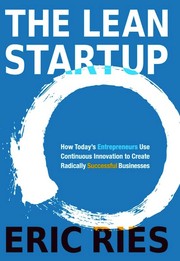 The Lean StartupBy guest
by Eric Ries
“Eric Ries, author of *The Lean Startup* and new book *Incorruptible*”
- IncorruptibleBy guest
by Eric Ries
“Eric Ries, author of *The Lean Startup* and new book *Incorruptible*”
company
“foundation-owned business structures like Novo Nordisk's outperform conventional shareholder-primacy models across measurable financial metrics”
“Whole Foods' compulsion to maintain high stock prices — to prevent activist takeover — prevented price reductions that would have sustained foot traffic”
“Cloudflare gave away SSL encryption — previously their top premium-to-paid conversion feature — after recognizing it conflicted with their mission of a better internet.”
More from Masters of Scale
We summarize every new episode. Want them in your inbox?
Pioneers of AI: OpenAI’s Tibo Sottiaux doesn’t want humans to be an ‘afterthought’
Building a marketplace from scratch, with Hipcamp founder Alyssa Ravasio
Kalshi vs. Everyone: Co-Founder Luana Lopes Lara on the lawsuits and the long game
Don't be boring: KCRW's Jennifer Ferro on building a brand people love
Halloween meets GLP-1s: Hershey’s candy Super Bowl, with CEO Kirk Tanner
Similar Episodes
Related episodes from other podcasts

Startups For the Rest of Us
May 26
Episode 834 | Eric Ries Revisits The Lean Startup and Discusses How to Become Incorruptible

Lenny's Podcast
May 10
How to build a company that withstands any era | Eric Ries, Lean Startup author

Software Engineering Daily
Jul 9
Eric Ries on Why Good Companies Go Bad

We Study Billionaires
May 10
RWH068: How to Be Better in Work & Life w/ David Epstein

10% Happier with Dan Harris
Oct 5
How To Be Sanely Productive | Oliver Burkeman
Explore Related Topics
This podcast is featured in Best Business Podcasts (2026) — ranked and reviewed with AI summaries.
Read this week's Startups & Product Podcast Insights — cross-podcast analysis updated weekly.
You're clearly into Masters of Scale.
Every Monday, we deliver AI summaries of the latest episodes from Masters of Scale and 192+ other podcasts. Free for one show.
Start My Monday DigestNo credit card · Unsubscribe anytime