How to build a company that withstands any era | Eric Ries, Lean Startup author
Episode
99 min
Read time
3 min
Topics
Health & Wellness, Investing, Startups
AI-Generated Summary
Key Takeaways
- ✓Public Benefit Corporation Filing: Converting to a PBC requires only a two-page Delaware legal filing that explicitly states a company's purpose beyond "any lawful act or activity." This single document prevents future boards from invoking fiduciary duty to force unwanted acquisitions — the exact mechanism that compelled Vectura's board to sell to Philip Morris for 15 pence per share above market, destroying a £1.1 billion acquisition within three years.
- ✓Founder Removal Statistics: According to Harvard Law School data, only 20% of venture-backed founders remain CEO three years after their IPO under standard governance documents. The remaining 80% are removed despite lawyers, VCs, and bankers consistently telling each founder they are the exception. Standard Delaware charters legally obligate boards to accept the highest acquisition bid, regardless of the founder's wishes or company mission.
- ✓Mission Guardian Structures: Companies need a designated entity — not a person — to protect founding mission long-term. Anthropic's Long-Term Benefit Trust appoints board directors who are AI safety experts with zero equity stake, removing financial incentive to compromise safety. Novo Nordisk has used a nonprofit foundation ownership structure since 1920, producing six times greater survival rates to year 50 compared to conventionally governed counterparts.
- ✓Harder Is Easier Principle: Cloudflare gave away SSL encryption for free despite it being their primary driver of premium upgrades, after an engineer noted that a better internet should be an encrypted internet. Top-of-funnel increased by an order of magnitude, and the trust built contributed to Cloudflare reaching a $70 billion valuation. Principled decisions generate compounding trust assets that reduce customer acquisition costs and increase employee retention.
- ✓Mission Drive Audit: Claiming mission alignment without structural enforcement is what Ries calls being "mission hopeful." The concrete test: identify every role where an employee could financially benefit by cutting quality, safety, or performance. If any such pathway exists in OKRs, bonus structures, or incentive systems, the mission is unprotected. Automated testing and AI auditing tools can now systematically close these gaps before they become cultural defaults.
What It Covers
Eric Ries, author of The Lean Startup, discusses his new book Incorruptible, examining why successful companies lose their founding mission through structural and governance failures. He presents specific legal mechanisms — including public benefit corporation filings, perpetual purpose trusts, and two-tiered governance boards — that founders can implement to protect their companies from financial gravity and hostile takeovers.
Key Questions Answered
- •Public Benefit Corporation Filing: Converting to a PBC requires only a two-page Delaware legal filing that explicitly states a company's purpose beyond "any lawful act or activity." This single document prevents future boards from invoking fiduciary duty to force unwanted acquisitions — the exact mechanism that compelled Vectura's board to sell to Philip Morris for 15 pence per share above market, destroying a £1.1 billion acquisition within three years.
- •Founder Removal Statistics: According to Harvard Law School data, only 20% of venture-backed founders remain CEO three years after their IPO under standard governance documents. The remaining 80% are removed despite lawyers, VCs, and bankers consistently telling each founder they are the exception. Standard Delaware charters legally obligate boards to accept the highest acquisition bid, regardless of the founder's wishes or company mission.
- •Mission Guardian Structures: Companies need a designated entity — not a person — to protect founding mission long-term. Anthropic's Long-Term Benefit Trust appoints board directors who are AI safety experts with zero equity stake, removing financial incentive to compromise safety. Novo Nordisk has used a nonprofit foundation ownership structure since 1920, producing six times greater survival rates to year 50 compared to conventionally governed counterparts.
- •Harder Is Easier Principle: Cloudflare gave away SSL encryption for free despite it being their primary driver of premium upgrades, after an engineer noted that a better internet should be an encrypted internet. Top-of-funnel increased by an order of magnitude, and the trust built contributed to Cloudflare reaching a $70 billion valuation. Principled decisions generate compounding trust assets that reduce customer acquisition costs and increase employee retention.
- •Mission Drive Audit: Claiming mission alignment without structural enforcement is what Ries calls being "mission hopeful." The concrete test: identify every role where an employee could financially benefit by cutting quality, safety, or performance. If any such pathway exists in OKRs, bonus structures, or incentive systems, the mission is unprotected. Automated testing and AI auditing tools can now systematically close these gaps before they become cultural defaults.
- •Culture Bank Deposits: Borrowed from Howard Schultz and applied by Devoted Health founder Todd Park, the rule is to only make deposits into the culture bank — never intentional withdrawals. A deposit occurs when an organization sacrifices short-term gain to uphold its values, as when an H-E-B store manager let customers take groceries home free during a power outage. This builds the invisible organizational alignment that eliminates misalignment meetings entirely.
- •Timing of Governance Protection: The optimal moment to implement mission-protective provisions is at incorporation, not pre-IPO. At each funding stage — seed, Series A, growth, IPO prep — advisors consistently defer the conversation, citing either "too early" or "too late." Anthropic secured the right to implement its Long-Term Benefit Trust in founding documents at inception, then executed it at Series C, demonstrating that intention must be legally encoded before leverage disappears.
Notable Moment
Ries describes asking a longtime Google employee to estimate the probability of two events: Google filing its next quarterly report on time, and Google accidentally causing harm and covering it up. The employee rated the first at 100% certainty and the second at 90-95% possibility — revealing that financial reporting has a massive enforcement apparatus while ethical commitments remain entirely unstructured.
Episode Transcript
All kinds of famous companies. The thing that destroyed them was not competition. Their very success became a liability. When you hear the OpenAI versus Anthropic story Aria was a first time founder. Wasn't a hot company at all. The boom hadn't happened yet. ChatGPT hadn't been invented yet. Nonetheless, they were true believers in this safety mission, and so one of their investors suggested they come talk to me. I told them, look, if you don't get this right, here's what's gonna happen. They were very determined to do something about it. They wrote into their charter. Anthropic has directors on its for profit board who are appointed by and are accountable to an outside group of trustees who are AI safety experts who do not have equity in Anthropic. Whenever you see Anthropic do the right thing, like when they refuse to release a model because they think it's too dangerous, think about how much that's costing them. This new book, Incorruptible, protection from? We all know this force. I call it the force that no one controls but everyone obeys. That tends to drag organizations down into mediocrity to the point that we lose control of them. What's a broad stroke solution to this? Harder is easier. If you're willing to be principled in your decision making, you will get these unexpected rewards. But most leaders, when asked to defend their principles, can't do it because they've been taught ROI based thinking, shareholder primacy. That's the path of maximum profitability. That's nuts. Today, my guest is Eric Rees, author of the most influential and impactful book in startup history, The Lean Startup. Today, he is back with a new book, fifteen years later, called Why Good Companies Go Bad and How Great Companies Stay Great. The way Eric describes the connection between these two books is that The Lean Startup was about helping you build a successful company, and this book book is about helping you protect what you've built. Eric wrote this book because he's seen way too many founders lose control of their company and end up being very disappointed and depressed about how things turned out. This is not something that you hear a lot about, but it's a problem that basically every successful founder will face. Eric shares a ton of powerful stories and specific tactics, and very specific advice for what you need to understand and do as a founder if you wanna build something lasting. Before we get into it, don't forget to check out Lenny's productpass.com for a year free of the hottest and most well crafted AI products in the world, available exclusively to Lenny's newsletter subscribers. With that, I bring you Eric Ries. Eric Ries, thank you so much for being here, and welcome back to the podcast. Oh, it's an honor to be back. Congrats on everything that's happened since I was here last time. Wow. Thanks, Eric. So for people that have been living under a …
Get the full transcript (21,303 words) + summary by email — free
One-time email with the complete transcript and AI summary of this episode. No account needed.
One email, no spam. We’ll also show you what SignalCast does.

You just read a 3-minute summary of a 96-minute episode.
Get Lenny's Podcast summarized like this every Monday — plus up to 2 more podcasts, free.
Pick Your Podcasts — FreeKeep Reading
More from Lenny's Podcast
90 minutes of unfiltered product advice from Snap and Discord’s product chief | Peter Sellis
Sep 20 · 96 min

Software Engineering Daily
Eric Ries on Why Good Companies Go Bad
Jul 9
More from Lenny's Podcast
How we built Grok Bot in a month | Roman Ugarte (SpaceXAI)
Sep 8 · 82 min

Startups For the Rest of Us
Episode 834 | Eric Ries Revisits The Lean Startup and Discusses How to Become Incorruptible
May 26
Books, tools, and gear mentioned in this episode
SignalCast may earn commission on purchases via these links. As an Amazon Associate, SignalCast earns from qualifying purchases.
Books
- IncorruptibleBy guest
by Eric Ries
“Eric Ries, author of The Lean Startup, discusses his new book Incorruptible, examining why successful companies lose their founding mission through structural and governance failures.”
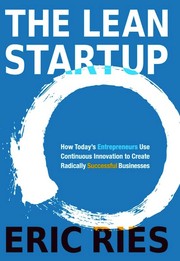 The Lean StartupBy guest
by Eric Ries
“Eric Ries, author of The Lean Startup, discusses his new book Incorruptible”
More from Lenny's Podcast
We summarize every new episode. Want them in your inbox?
90 minutes of unfiltered product advice from Snap and Discord’s product chief | Peter Sellis
How we built Grok Bot in a month | Roman Ugarte (SpaceXAI)
Why companies are becoming a series of loops | Anish Acharya (a16z)
AI’s third era: the rise of persistent AI coworkers | Tara Seshan (OpenAI’s product lead)
How to close $100K+ enterprise deals, step by step | Jen Abel
Similar Episodes
Related episodes from other podcasts

Software Engineering Daily
Jul 9
Eric Ries on Why Good Companies Go Bad

Startups For the Rest of Us
May 26
Episode 834 | Eric Ries Revisits The Lean Startup and Discusses How to Become Incorruptible

Masters of Scale
May 26
Why success destroys the companies we love, with Eric Ries

Radiolab
Aug 28
Dolly Parton's America: Sad Ass Songs

10% Happier with Dan Harris
Aug 19
You Can Stop Fixing Yourself: Buddhist Advice on Boundaries, Rituals, and Dropping Your Self-Aggression | Susan Piver
Explore Related Topics
This podcast is featured in Best Product Management Podcasts (2026) — ranked and reviewed with AI summaries.
Read this week's Health & Longevity Podcast Insights — cross-podcast analysis updated weekly.
You're clearly into Lenny's Podcast.
Every Monday, we deliver AI summaries of the latest episodes from Lenny's Podcast and 192+ other podcasts. Free for one show.
Start My Monday DigestNo credit card · Unsubscribe anytime