Episode 834 | Eric Ries Revisits The Lean Startup and Discusses How to Become Incorruptible
Episode
39 min
Read time
2 min
Topics
Investing, Startups, Fundraising & VC
AI-Generated Summary
Key Takeaways
- ✓Profit Redefinition: Conventional profit calculations ignore negative externalities — costs shifted onto customers, communities, or the environment. Eric Ries argues the functional definition of profit should be "maximizing human flourishing," creating more value than you capture. Encoding this directly into your corporate charter, rather than the standard "any lawful act," structurally aligns company incentives with long-term value creation.
- ✓AI and the Build-Measure-Learn Loop: AI accelerates building and measuring but cannot perform the learning step. Learning happens in founders' minds, not in token-prediction models. Delegating customer conversations or product decisions to AI produces average outputs — because LLMs optimize toward training-data averages. Founders who use AI to augment their own capabilities outperform those who use it to replace their judgment.
- ✓Lean Startup Principles vs. Tactics: Lean Startup's tactical examples — specific timelines, costs, tools — became outdated within years of publication. The underlying principles (validate under uncertainty, shorten feedback loops, treat learning as the unit of progress) remain durable. When writing or applying frameworks, separate principles from tactics, since tactics expire with their economic environment while principles compound over time.
- ✓Governance Fortress as Competitive Moat: Costco's forty-year resilience traces directly to Jim Sinegal encoding Sol Price's customer-first ethos into governance structures that resist outside interference. "Integrity" here means structural ability to make and keep promises — not just ethics. Founders should build governance mechanisms early that protect core operating principles from investor pressure before those pressures arrive.
- ✓Fiduciary Hierarchy — Customers First, Shareholders Last: Sol Price ran FedMart treating customers as fiduciary clients, posting signs directing shoppers to cheaper competitors when applicable. This generated loyalty that drove massive growth. When investors forced him out and reversed the hierarchy, they destroyed in seven years what took twenty to build. Structuring stakeholder priority explicitly — customers, employees, shareholders — produces measurably more durable companies.
What It Covers
Rob Walling interviews Eric Ries, author of The Lean Startup and new book Incorruptible, covering how lean startup principles hold up fifteen years later, AI's impact on the build-measure-learn cycle, and why conventional profit definitions destroy value — illustrated through the founding history of Costco.
Key Questions Answered
- •Profit Redefinition: Conventional profit calculations ignore negative externalities — costs shifted onto customers, communities, or the environment. Eric Ries argues the functional definition of profit should be "maximizing human flourishing," creating more value than you capture. Encoding this directly into your corporate charter, rather than the standard "any lawful act," structurally aligns company incentives with long-term value creation.
- •AI and the Build-Measure-Learn Loop: AI accelerates building and measuring but cannot perform the learning step. Learning happens in founders' minds, not in token-prediction models. Delegating customer conversations or product decisions to AI produces average outputs — because LLMs optimize toward training-data averages. Founders who use AI to augment their own capabilities outperform those who use it to replace their judgment.
- •Lean Startup Principles vs. Tactics: Lean Startup's tactical examples — specific timelines, costs, tools — became outdated within years of publication. The underlying principles (validate under uncertainty, shorten feedback loops, treat learning as the unit of progress) remain durable. When writing or applying frameworks, separate principles from tactics, since tactics expire with their economic environment while principles compound over time.
- •Governance Fortress as Competitive Moat: Costco's forty-year resilience traces directly to Jim Sinegal encoding Sol Price's customer-first ethos into governance structures that resist outside interference. "Integrity" here means structural ability to make and keep promises — not just ethics. Founders should build governance mechanisms early that protect core operating principles from investor pressure before those pressures arrive.
- •Fiduciary Hierarchy — Customers First, Shareholders Last: Sol Price ran FedMart treating customers as fiduciary clients, posting signs directing shoppers to cheaper competitors when applicable. This generated loyalty that drove massive growth. When investors forced him out and reversed the hierarchy, they destroyed in seven years what took twenty to build. Structuring stakeholder priority explicitly — customers, employees, shareholders — produces measurably more durable companies.
Notable Moment
When opponents of the Long Term Stock Exchange pressured Eric Ries to abandon his listing standards, they admitted their concern was not that his ideas would fail — but that they might succeed and disrupt their preferred reform agenda. Every partner was leveraged against him simultaneously.
Episode Transcript
Welcome back to Startups with the Rest of Us. I am your host, Rob Walling. And in this episode, I talk with Eric Ries, the founder of the lean startup. We revisit some concepts from his seminal work, and we also discuss his new book about how to become incorruptible. Before we dive in to our conversation, SAS Institute is my premium coaching program for founders doing a million or more in ARR. We provide a private members only community designed for candid conversations and trusted connections, invite only founder events built to spark breakthroughs and accelerate growth. We surround you with a curated circle of peers. These are other ambitious founders at a similar stage to you, and they're tackling the same challenges. As well as one on one coaching with experienced SaaS operators and subject matter experts, as well as direct access to mentors across growth, sales, product, finance, and more. You can find out the full story at sasinstitute.com. This is a premium paid coaching program, again, only for founders doing 7 or 8 figures in ARR and only for SaaS founders at sasinstitute.com. And with that, let's dive into my conversation with Eric Ries. Eric Rees, welcome to the show. Thank you so much. It's good to see you. Always good to hang out. Yeah. It's, it's been a long time, man, since we saw each other, and, and this is your first time on the show, surprisingly enough. I think I want I wanna have you back on before your next book. Sure. Yeah. Always a pleasure. Your new book is Incorruptible, and it is out today. Incorruptible.co if folks wanna jump straight to Amazon or, you know, a a local bookstore and grab it. I wanna talk today a little bit about lean startup, which is what most folks are gonna know your name from. But you've written now three or four books, and this new book is fascinating. And it's based on a lot of, I think, hard one knowledge from working on the long term stock exchange as well as a lot of observations that probably only you have working with these large companies in the capacity that you've been doing over the past few years. I think first question before we dive into lean startup is what motivated you to write this book? The new book? Oh, gosh. Yeah. I've been busy the last fifteen years, and as they say, I've seen some things. So building long term stock exchange, building the other companies that I've built, helping hundreds, thousands of people start companies, I'm very proud of all the positive work that's come out of this movement. I mean, really, like, the global start up movement together, we have pioneered everything from, like, incredible bootstrappers to massive venture backed companies, new institutions of every kind. Like, we've really had a lot of positive impact, very proud of all that, but there is a dark underbelly to this whole thing. There's …
Get the full transcript (8,626 words) + summary by email — free
One-time email with the complete transcript and AI summary of this episode. No account needed.
One email, no spam. We’ll also show you what SignalCast does.

You just read a 3-minute summary of a 36-minute episode.
Get Startups For the Rest of Us summarized like this every Monday — plus up to 2 more podcasts, free.
Pick Your Podcasts — FreeKeep Reading
More from Startups For the Rest of Us
Episode 853 | How to Become the SaaS That AI Recommends
Oct 6 · 31 min

Masters of Scale
Why success destroys the companies we love, with Eric Ries
May 26
More from Startups For the Rest of Us
Episode 852 | Getting Big Name Customer Case Studies and More Listener Questions (with Ruben Gamez)
Sep 29 · 32 min

Lenny's Podcast
How to build a company that withstands any era | Eric Ries, Lean Startup author
May 10
Books, tools, and gear mentioned in this episode
SignalCast may earn commission on purchases via these links. As an Amazon Associate, SignalCast earns from qualifying purchases.
Books
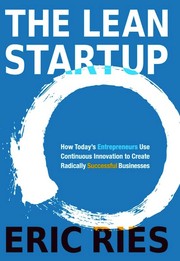 The Lean StartupBy guest
by Eric Ries
“Rob Walling interviews Eric Ries, author of The Lean Startup and new book Incorruptible, covering how lean startup principles hold up fifteen years later”
- IncorruptibleBy guest
by Eric Ries
“Rob Walling interviews Eric Ries, author of The Lean Startup and new book Incorruptible”
company
“When opponents of the Long Term Stock Exchange pressured Eric Ries to abandon his listing standards, they admitted their concern was not that his ideas would fail — but that they might succeed and disrupt their preferred reform agenda.”
More from Startups For the Rest of Us
We summarize every new episode. Want them in your inbox?
Episode 853 | How to Become the SaaS That AI Recommends
Episode 852 | Getting Big Name Customer Case Studies and More Listener Questions (with Ruben Gamez)
Episode 851 | The Messy Middle of a SaaS Pivot
Episode 850 | How Not to Screw Up When Hiring Your first Developer and More Listener Questions (with Derrick Reimer)
Episode 849 | Legal Threats, AI as Platform Risk, Building Confidence, and More Listener Questions (Rob Solo)
Similar Episodes
Related episodes from other podcasts

Masters of Scale
May 26
Why success destroys the companies we love, with Eric Ries

Lenny's Podcast
May 10
How to build a company that withstands any era | Eric Ries, Lean Startup author

Software Engineering Daily
Jul 9
Eric Ries on Why Good Companies Go Bad

We Study Billionaires
May 10
RWH068: How to Be Better in Work & Life w/ David Epstein

10% Happier with Dan Harris
Oct 5
How To Be Sanely Productive | Oliver Burkeman
Explore Related Topics
This podcast is featured in Best Startup Podcasts (2026) — ranked and reviewed with AI summaries.
Read this week's Investing & Markets Podcast Insights — cross-podcast analysis updated weekly.
You're clearly into Startups For the Rest of Us.
Every Monday, we deliver AI summaries of the latest episodes from Startups For the Rest of Us and 192+ other podcasts. Free for one show.
Start My Monday DigestNo credit card · Unsubscribe anytime