What To Do When Life Won't Let Up | Sebene Selassie and Jeff Warren
Episode
62 min
Read time
3 min
Topics
Career Growth, Productivity, Health & Wellness
AI-Generated Summary
Key Takeaways
- ✓Trust Life Framework: Selassie's guiding philosophy, credited to teacher La Sarmiento, is not about denying difficulty but maintaining flexibility within it. Facing worsening cancer scans, she applies it by redirecting energy away from fear-driven control behaviors — obsessive research, constant planning — toward sleep, exercise, community, and joy. The practice is recognizing that balancing forces coexist alongside hardship rather than replacing it.
- ✓"This Is the Curriculum" Reframe: Warren's personal mantra for meeting overwhelming life challenges reframes hardship as training material rather than evidence of wrongness. Instead of running a background narrative of "this shouldn't be happening," treating each difficulty as the specific lesson life is currently offering builds capacity for future challenges. Warren reports a measurable shift in his ability to handle parenting stress and global anxiety using this approach.
- ✓Three Time-Scales of Meditation Practice: Warren outlines three distinct layers of meditation benefit: immediate mood shifts within a single session, nervous system retraining over months and years, and a third long-arc scale where practice generates a felt sense of coherence across one's entire life. Most practitioners focus only on the first two scales, missing the third, which Warren describes as the genuinely spiritual dimension of sustained practice.
- ✓Stopping Rumination with Ritual Finality: For obsessive thinking loops, Warren recommends using a structured ritual — he uses the I Ching, a 64-entry Chinese divination system — to create a felt sense of closure and redirect mental energy. The mechanism is not the specific tool but the act of declaring a decision made and moving forward. Alternatives include singing repetitive thoughts aloud, using the mantra "up and out," or asking "is this useful?" at the 15th mental repetition.
- ✓Acceptance and Commitment Therapy for Overwhelm: Drawing from Russ Harris's book *The Happiness Trap*, Warren identifies the core trap as believing happiness must be the baseline condition. The ACT alternative is asking, at any moment of difficulty, whether the current response moves toward or away from personal values — even when formal meditation practice is impossible. This moment-to-moment micro-application replaces the need for dedicated practice time during high-demand life periods.
What It Covers
Dan Harris, Sebene Selassie, and Jeff Warren explore how to navigate relentless life challenges through three core frameworks: Selassie's "trust life" tattoo philosophy, Warren's "this is the curriculum" reframe, and the three time-scales of meditation practice. Listener voicemails on work-life balance, obsessive thinking, and meditation versus napping ground the conversation in practical application.
Key Questions Answered
- •Trust Life Framework: Selassie's guiding philosophy, credited to teacher La Sarmiento, is not about denying difficulty but maintaining flexibility within it. Facing worsening cancer scans, she applies it by redirecting energy away from fear-driven control behaviors — obsessive research, constant planning — toward sleep, exercise, community, and joy. The practice is recognizing that balancing forces coexist alongside hardship rather than replacing it.
- •"This Is the Curriculum" Reframe: Warren's personal mantra for meeting overwhelming life challenges reframes hardship as training material rather than evidence of wrongness. Instead of running a background narrative of "this shouldn't be happening," treating each difficulty as the specific lesson life is currently offering builds capacity for future challenges. Warren reports a measurable shift in his ability to handle parenting stress and global anxiety using this approach.
- •Three Time-Scales of Meditation Practice: Warren outlines three distinct layers of meditation benefit: immediate mood shifts within a single session, nervous system retraining over months and years, and a third long-arc scale where practice generates a felt sense of coherence across one's entire life. Most practitioners focus only on the first two scales, missing the third, which Warren describes as the genuinely spiritual dimension of sustained practice.
- •Stopping Rumination with Ritual Finality: For obsessive thinking loops, Warren recommends using a structured ritual — he uses the I Ching, a 64-entry Chinese divination system — to create a felt sense of closure and redirect mental energy. The mechanism is not the specific tool but the act of declaring a decision made and moving forward. Alternatives include singing repetitive thoughts aloud, using the mantra "up and out," or asking "is this useful?" at the 15th mental repetition.
- •Acceptance and Commitment Therapy for Overwhelm: Drawing from Russ Harris's book *The Happiness Trap*, Warren identifies the core trap as believing happiness must be the baseline condition. The ACT alternative is asking, at any moment of difficulty, whether the current response moves toward or away from personal values — even when formal meditation practice is impossible. This moment-to-moment micro-application replaces the need for dedicated practice time during high-demand life periods.
- •Intention Setting as Default Mode Override: Harris describes setting the intention "for the benefit of all beings" before any activity — eating, exercising, working — as a neurological intervention against the brain's default mode of self-referential rumination. Neuroscientist Richie Davidson applies this systematically throughout his entire day. Harris marks the practice with a tattoo (FTBOAB) and notes it counteracts selfishness not in a moral sense but as a cognitive reorientation away from chronic self-focus.
Notable Moment
Selassie reveals mid-conversation that her cancer, previously improving, has recently reversed course with scans showing significant deterioration. She describes recognizing fear manifesting specifically as a compulsive need to control — researching mutations, micromanaging treatment data — and consciously choosing to surrender that pattern and trust her oncologist instead.
Episode Transcript
This is the 10% Happier podcast. I'm Dan Harris. Hello, everybody. How we doing? We've got a fascinating and often very funny discussion today, and we cover a lot of ground. How can you be cool with literally anything that happens? Does everything happen for a reason? Is there any truth to that old cliche? We also take your voice mails with questions on work life balance, obsessive thinking, and meditation versus napping. This episode is part of an occasional series we do here on the show called Meditation Party. It features two of my old friends, Jeff Warren and Seven a Selassie. If you are not familiar with those guys, here's a little bit more information about them. Seven a describes herself as a writer, teacher, and immigrant weirdo. She is the author of a great book called You Belong. She's based in Brooklyn in NYC. Jeff Warren is also a writer and meditation teacher. He and I co wrote a book called Meditation for Fidgety Skeptics, and he hosts his own podcast called The Mindbod Adventure Pod. Jeff is based in Toronto. He's my favorite Canadian as I often say. Three quick housekeeping notes before we dive in. First, this conversation first aired back in 2024, but we're bringing it back because it's really good as you will hear. Second, if this episode leaves you wanting more, I've got good news for you. We're doing a three day meditation party retreat IRL at the Omega Institute in, Rhinebeck, New York. It'll be going down October 16 through the eighteenth. So it's a weekend event. It's really fun. We teach a bunch of different flavors of meditation. We take a lot of questions from the crowd. And there's also plenty of time to just chill and socialize, play pickleball, whatever you wanna do. We even do a dance party. You will find a link to register right there in the show notes, or you can just go to eomega.org. Third thing to say, and then I'll shut up. Jeff and Seb are two of the featured teachers over on my new ish meditation app, which is called Ten Percent with Dan Harris. I know, looking at the news these days, you can feel quite powerless in the face of world events. Like, what can you do about it? My view is that taking care of your own mind is actually essential. It's not self indulgent. It's a community service because it allows you to respond sanely. So over on the app, we've got a growing library of meditations to help you train your brain with teachers like Sab and Jeff, but we also have created a community, a whole community with chat groups and weekly live meditation and q and a sessions because the research is very clear that one of the best ways to create an abiding habit is to do it in the carpool lane. So you can join the party if you go over to danharris.com. …
Get the full transcript (12,404 words) + summary by email — free
One-time email with the complete transcript and AI summary of this episode. No account needed.
One email, no spam. We’ll also show you what SignalCast does.

You just read a 3-minute summary of a 59-minute episode.
Get 10% Happier with Dan Harris summarized like this every Monday — plus up to 2 more podcasts, free.
Pick Your Podcasts — FreeKeep Reading
More from 10% Happier with Dan Harris
Anxious? Rushed? Reaching for Your Phone? Four Buddhist Phrases To Bring You Back | Brother Phap Dung and Kaira Jewel Lingo
Oct 7 · 61 min

Huberman Lab
Essentials: Using Meditation to Focus, View Consciousness & Expand Your Mind | Dr. Sam Harris
Jul 23
More from 10% Happier with Dan Harris
How To Be Sanely Productive | Oliver Burkeman
Oct 5 · 70 min

The Prof G Pod
The Story Behind Raging Moderates + Why Jeff Bezos Is Wrong About Taxes
Jun 10
Books, tools, and gear mentioned in this episode
SignalCast may earn commission on purchases via these links. As an Amazon Associate, SignalCast earns from qualifying purchases.
Books
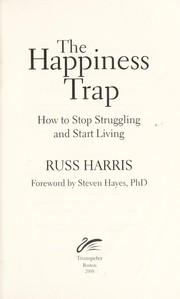 The Happiness TrapRecommended
by Russ Harris
“Drawing from Russ Harris's book *The Happiness Trap*, Warren identifies the core trap as believing happiness must be the baseline condition. The ACT alternative is asking, at any moment of difficulty, whether the current response moves toward or away from personal values.”
other
- I ChingRecommended
“For obsessive thinking loops, Warren recommends using a structured ritual — he uses the I Ching, a 64-entry Chinese divination system — to create a felt sense of closure and redirect mental energy.”
More from 10% Happier with Dan Harris
We summarize every new episode. Want them in your inbox?
Anxious? Rushed? Reaching for Your Phone? Four Buddhist Phrases To Bring You Back | Brother Phap Dung and Kaira Jewel Lingo
How To Be Sanely Productive | Oliver Burkeman
Surviving the News: Buddhist Strategies for Staying Sane, Engaged, and Not Completely Furious | Pascal Auclair
Annoying Partners, Aging Parents, Impossible Coworkers: Buddhist Advice for Conflict, Communication, and "Patience with Teeth" | devon and nico hase
Your 'Inner Child' Runs Your Life. Here's How To Spot It and Take Back the Wheel. | Dr. Galit Atlas
Similar Episodes
Related episodes from other podcasts

Huberman Lab
Jul 23
Essentials: Using Meditation to Focus, View Consciousness & Expand Your Mind | Dr. Sam Harris

The Prof G Pod
Jun 10
The Story Behind Raging Moderates + Why Jeff Bezos Is Wrong About Taxes

My First Million
May 13
How to manufacture a billionaire childhood

This Week in Startups
Mar 6
Wisdom of the $TAO: the future is decentralized AI

Stuff You Should Know
Feb 17
How Crowds Work
Explore Related Topics
This podcast is featured in Best Health Podcasts (2026) — ranked and reviewed with AI summaries.
Read this week's Health & Longevity Podcast Insights — cross-podcast analysis updated weekly.
You're clearly into 10% Happier with Dan Harris.
Every Monday, we deliver AI summaries of the latest episodes from 10% Happier with Dan Harris and 192+ other podcasts. Free for one show.
Start My Monday DigestNo credit card · Unsubscribe anytime