JW

Jeff Warren

Jeff Warren is a meditation teacher and neurodiversity expert known for developing innovative, personalized meditation practices that adapt to individual brain wiring, particularly for people with ADHD, bipolar disorder, OCD, and autism. Through his work, Warren demonstrates how understanding one's unique mental landscape can transform meditation from a rigid practice into a flexible, accessible tool for mental wellness and emotional regulation. He specializes in techniques like "don't know mind" meditation, which helps practitioners combat overthinking, perfectionism, and anxiety by teaching radical acceptance and present-moment awareness. Warren's approach is distinguished by his practical, down-to-earth guidance that helps individuals build emotional resilience, establish healthy boundaries, and connect with direct sensory experience rather than getting trapped in mental narratives.

5episodes
1podcast

Featured On 1 Podcast

All Appearances

5 episodes

AI Summary

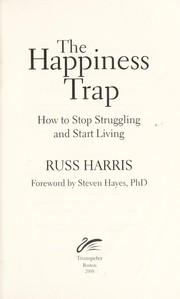
→ WHAT IT COVERS Dan Harris, Sebene Selassie, and Jeff Warren explore how to navigate relentless life challenges through three core frameworks: Selassie's "trust life" tattoo philosophy, Warren's "this is the curriculum" reframe, and the three time-scales of meditation practice. Listener voicemails on work-life balance, obsessive thinking, and meditation versus napping ground the conversation in practical application. → KEY INSIGHTS - **Trust Life Framework:** Selassie's guiding philosophy, credited to teacher La Sarmiento, is not about denying difficulty but maintaining flexibility within it. Facing worsening cancer scans, she applies it by redirecting energy away from fear-driven control behaviors — obsessive research, constant planning — toward sleep, exercise, community, and joy. The practice is recognizing that balancing forces coexist alongside hardship rather than replacing it. - **"This Is the Curriculum" Reframe:** Warren's personal mantra for meeting overwhelming life challenges reframes hardship as training material rather than evidence of wrongness. Instead of running a background narrative of "this shouldn't be happening," treating each difficulty as the specific lesson life is currently offering builds capacity for future challenges. Warren reports a measurable shift in his ability to handle parenting stress and global anxiety using this approach. - **Three Time-Scales of Meditation Practice:** Warren outlines three distinct layers of meditation benefit: immediate mood shifts within a single session, nervous system retraining over months and years, and a third long-arc scale where practice generates a felt sense of coherence across one's entire life. Most practitioners focus only on the first two scales, missing the third, which Warren describes as the genuinely spiritual dimension of sustained practice. - **Stopping Rumination with Ritual Finality:** For obsessive thinking loops, Warren recommends using a structured ritual — he uses the I Ching, a 64-entry Chinese divination system — to create a felt sense of closure and redirect mental energy. The mechanism is not the specific tool but the act of declaring a decision made and moving forward. Alternatives include singing repetitive thoughts aloud, using the mantra "up and out," or asking "is this useful?" at the 15th mental repetition. - **Acceptance and Commitment Therapy for Overwhelm:** Drawing from Russ Harris's book *The Happiness Trap*, Warren identifies the core trap as believing happiness must be the baseline condition. The ACT alternative is asking, at any moment of difficulty, whether the current response moves toward or away from personal values — even when formal meditation practice is impossible. This moment-to-moment micro-application replaces the need for dedicated practice time during high-demand life periods. - **Intention Setting as Default Mode Override:** Harris describes setting the intention "for the benefit of all beings" before any activity — eating, exercising, working — as a neurological intervention against the brain's default mode of self-referential rumination. Neuroscientist Richie Davidson applies this systematically throughout his entire day. Harris marks the practice with a tattoo (FTBOAB) and notes it counteracts selfishness not in a moral sense but as a cognitive reorientation away from chronic self-focus. → NOTABLE MOMENT Selassie reveals mid-conversation that her cancer, previously improving, has recently reversed course with scans showing significant deterioration. She describes recognizing fear manifesting specifically as a compulsive need to control — researching mutations, micromanaging treatment data — and consciously choosing to surrender that pattern and trust her oncologist instead. 💼 SPONSORS [{"name": "Quince", "url": "https://quince.com/happier"}, {"name": "Wayfair", "url": "https://wayfair.com"}, {"name": "Bombas", "url": "https://bombas.com/happier"}, {"name": "Progressive Insurance", "url": "https://progressive.com"}, {"name": "Noom", "url": "https://noom.com"}] 🏷️ Mindfulness Practice, Acceptance and Commitment Therapy, Rumination Management, Chronic Illness Coping, Intention Setting, Work-Life Balance

AI Summary

→ WHAT IT COVERS Meditation teacher Jeff Warren addresses live subscriber questions on managing insomnia and chronic pain, working with inner critic voices, handling existential fears about loved ones, overcoming meditation plateaus, and navigating the emotional challenges of caring for aging parents with dementia through mindfulness and compassion practices. → KEY INSIGHTS - **Acceptance reframed:** Replace the word acceptance with equanimity or clear seeing. The practice involves recognizing what is actually happening without avoiding or obsessing over it, then responding from that grounded place. Regular seated meditation trains this capacity to be present with discomfort, which translates to better responses when facing real struggles with loved ones, particularly children experiencing suffering. - **Insomnia management framework:** Shift the nighttime objective from achieving eight hours of unconscious sleep to getting eight hours of rest. Meditate during wakeful periods to gain restorative benefits without being fully asleep. Calm the nervous system by affirming that previous experiences with little sleep resulted in functioning fine, removing the anxiety that sleep amount determines next-day performance or overall health. - **Pain deconstruction technique:** Separate physical pain from the narrative stories about the pain getting worse or being permanent. Focus mindfully on the unpleasant feeling tone itself rather than proliferating thoughts. Some people benefit from going directly into the center of pain sensations, while others need distraction through activities like doodling. Self-compassion practices provide additional relief for chronic pain sufferers. - **Concentration as happiness formula:** Meditation trains the capacity to choose attention objects and commit focus to them. The more attention strands gather in one direction, the more inherently fulfilling the experience becomes. Conversely, split attention reduces fulfillment. Activities where you lose track of time provide nervous system medicine. This concentration skill transfers directly to peak performance in sports and work flow states. - **Thought deconstruction practice:** Turn toward intrusive mental narratives with curiosity rather than resistance. Investigate where thoughts occur spatially, identify whose voice speaks them, notice the tone and urgency. Thoughts contain visual, auditory, and somatic components that can be deconstructed. This curious investigation often cools out excessive thinking automatically, revealing thoughts as sensory objects rather than authoritative truths requiring belief. → NOTABLE MOMENT Warren describes driving his parents four hours to assisted living, with his father who has dementia in the backseat and their screaming cat strapped in front. He practiced sending compassion to everyone including the cat, which stopped his attempts to control the situation, eliminated self-pity, and generated patience for managing the profound role reversal moment. 💼 SPONSORS [{"name": "LinkedIn Ads", "url": "linkedin.com/happier"}, {"name": "Bombas", "url": "bombas.com/happier"}] 🏷️ Meditation Practice, Insomnia Management, Chronic Pain, Compassion Training, Caregiver Stress

AI Summary

→ WHAT IT COVERS Jeff Warren leads a guided meditation on establishing emotional boundaries to avoid people-pleasing behaviors and resist emotional contagion from others' distress or demands. → KEY INSIGHTS - **Body awareness practice:** When feeling social pressure to please others, pause and ground attention in physical sensations like feet on floor, breath, or skin boundary to resist reactive impulses. - **Tolerating discomfort:** Build equanimity by learning to sit with your own uncomfortable feelings when others are unhappy, rather than immediately acting to pacify them or resolve their emotions. - **Skin boundary visualization:** Imagine skin shrink-wrapping around your body to create a satisfying sense of tautness and containment, reinforcing where you end and another person begins physically. → NOTABLE MOMENT Warren admits that despite being a confident adult, his six-year-old son's smallest squeak of unhappiness causes him to immediately abandon his boundaries and people-please. 💼 SPONSORS [{"name": "Airbnb", "url": "airbnb.com/host"}, {"name": "AT&T", "url": null}] 🏷️ Emotional Boundaries, People-Pleasing, Meditation Practice

AI Summary

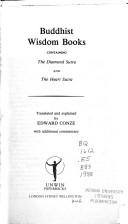
→ WHAT IT COVERS Jeff Warren guides a Zen meditation practice called don't know mind to release the need for certainty and combat overthinking, perfectionism, and worry patterns. → KEY INSIGHTS - **Don't Know Mind Technique:** When thoughts or worries arise, repeat the phrase don't know, don't need to know, then return attention to a simple anchor like breath or sound sensations. - **Direct Experience Focus:** Connect with raw sensory experience rather than mental labels or concepts—feel the actual tingle of sensation, hear sounds closely, without forming opinions or narratives about them. - **Non-Attachment Practice:** Cultivate a mind that dwells nowhere, meaning avoid fixing on things needing to be a specific way, which creates freedom to respond flexibly rather than rigidly to life circumstances. → NOTABLE MOMENT Warren references the Diamond Sutra teaching that a mind dwelling nowhere becomes free to go anywhere, reframing uncertainty from threatening to liberating for practitioners struggling with control. 💼 SPONSORS [{"name": "Altra Running", "url": "https://altrarunning.com"}, {"name": "Quince", "url": "https://quince.com/happier"}] 🏷️ Meditation Practice, Zen Buddhism, Anxiety Management

AI Summary

→ WHAT IT COVERS Meditation teacher Jeff Warren explains how to adapt meditation practice to individual brain wiring, particularly for ADHD, bipolar, OCD, and autism presentations, emphasizing that neurodiversity is universal and requires personalized approaches. → KEY INSIGHTS - **Practice experimentation framework:** Test different meditation objects systematically—breath focus, whole body awareness, open awareness, movement practices—to discover what reduces claustrophobia and restlessness rather than forcing one traditional method that may not suit your nervous system's specific wiring. - **Three-skill foundation:** Build clarity about your current state and needs, concentration by choosing where to place attention intentionally, and equanimity by holding self-understanding lightly. These skills apply whether practicing formal meditation, taking baths, journaling, or walking in nature as regulation tools. - **Self-communication strategy:** Proactively inform others about your neurological needs upfront—like immediately writing down names due to ADHD memory limitations—to prevent downstream suffering and misunderstandings. This requires first developing insight into your own patterns through observation and learning from neurodiversity literature. - **Presence litmus test:** Evaluate any practice by asking whether it helps you feel more settled, available, and present in the current moment rather than chasing special meditation effects. The measure of success is increased real-life availability for what wants to happen next, not adherence to tradition. → NOTABLE MOMENT Warren describes neurodiversity as nature creating solutions to modern demands through nervous system variation, but emphasizes these diverse brains only solve problems when individuals learn self-regulation—otherwise they add to collective challenges rather than resolving them. 💼 SPONSORS [{"name": "Airbnb", "url": "https://airbnb.com/host"}] 🏷️ Neurodiversity, ADHD Meditation, Personalized Practice, Self-Regulation

Explore More

Never miss Jeff Warren's insights

Subscribe to get AI-powered summaries of Jeff Warren's podcast appearances delivered to your inbox weekly.

Start Free Today

No credit card required • Free tier available