How To Regulate Your Nervous System: Anxiety, Relationships, and the Baggage You Didn't Ask For | Dr. Bruce Perry
Episode
76 min
Read time
3 min
Topics
Productivity, Health & Wellness, Relationships
AI-Generated Summary
Key Takeaways
- ✓Trauma Redefinition: Trauma operates across three dimensions — the event, the internal experience of that event, and the long-term effects. Two people in identical situations can have vastly different outcomes based on perceived safety and available support. This framework, developed by SAMHSA, means trauma cannot be assessed by the event alone, making self-dismissal of "smaller" experiences neurobiologically inaccurate and counterproductive to healing.
- ✓Relational Neurobiology and Safety: The brain's stress response systems are tightly linked to relational neurobiology. Being socially marginalized — through exclusion, mockery, or othering — produces the same physiological stress cascade as capital-T trauma events. Creating environments where people feel genuinely included is not a social nicety but a measurable biological intervention that reduces risk for physical illness, mental health disorders, and social dysfunction.
- ✓Pattern Repetitive Rhythmic Activity: EMDR, walking, drumming, dancing, swimming, and even needlework all activate the same deeply encoded prenatal neural memory associating rhythmic bilateral stimulation with safety. Thirty one-minute doses of movement produce more neurological change than one 30-minute session. Perry recommends intentional walks in nature as the single most accessible, dose-flexible tool for anxiety, depression, demoralization, and trauma recovery.
- ✓Rupture and Repair in Relationships: Human connection is characterized more by disconnection than sustained attunement. Relationships strengthen not through prolonged connection but through repeated cycles of brief rupture and conscious repair — similar to piano keys requiring repeated strikes to produce music. Recognizing a partner's relational history through the "what happened to you" lens prevents well-intentioned gestures from triggering trauma responses and escalating conflict unnecessarily.
- ✓Controllable, Moderate Challenge Builds Resilience: Stress response systems that become overactive through uncontrollable trauma can be recalibrated through predictable, moderate challenges where the individual controls timing and intensity. Travel, learning a new physical skill, or performing publicly all qualify. Willingness to be temporarily incompetent at something new is the mechanism through which adults continue building neurological resilience rather than plateauing.
What It Covers
Dr. Bruce Perry, neuroscientist and co-author of *What Happened to You?* with Oprah Winfrey, explains how reframing trauma from "what's wrong with you" to "what happened to you" shifts clinical and personal understanding of behavior. He covers nervous system regulation, inherited trauma, EMDR, rupture and repair in relationships, and practical daily tools for healing across 76 minutes.
Key Questions Answered
- •Trauma Redefinition: Trauma operates across three dimensions — the event, the internal experience of that event, and the long-term effects. Two people in identical situations can have vastly different outcomes based on perceived safety and available support. This framework, developed by SAMHSA, means trauma cannot be assessed by the event alone, making self-dismissal of "smaller" experiences neurobiologically inaccurate and counterproductive to healing.
- •Relational Neurobiology and Safety: The brain's stress response systems are tightly linked to relational neurobiology. Being socially marginalized — through exclusion, mockery, or othering — produces the same physiological stress cascade as capital-T trauma events. Creating environments where people feel genuinely included is not a social nicety but a measurable biological intervention that reduces risk for physical illness, mental health disorders, and social dysfunction.
- •Pattern Repetitive Rhythmic Activity: EMDR, walking, drumming, dancing, swimming, and even needlework all activate the same deeply encoded prenatal neural memory associating rhythmic bilateral stimulation with safety. Thirty one-minute doses of movement produce more neurological change than one 30-minute session. Perry recommends intentional walks in nature as the single most accessible, dose-flexible tool for anxiety, depression, demoralization, and trauma recovery.
- •Rupture and Repair in Relationships: Human connection is characterized more by disconnection than sustained attunement. Relationships strengthen not through prolonged connection but through repeated cycles of brief rupture and conscious repair — similar to piano keys requiring repeated strikes to produce music. Recognizing a partner's relational history through the "what happened to you" lens prevents well-intentioned gestures from triggering trauma responses and escalating conflict unnecessarily.
- •Controllable, Moderate Challenge Builds Resilience: Stress response systems that become overactive through uncontrollable trauma can be recalibrated through predictable, moderate challenges where the individual controls timing and intensity. Travel, learning a new physical skill, or performing publicly all qualify. Willingness to be temporarily incompetent at something new is the mechanism through which adults continue building neurological resilience rather than plateauing.
- •Microinteractions as the Primary Healing Variable: Current quality and density of relational interactions is a stronger predictor of psychological wellbeing than history of adversity or family mental illness history. Three seconds of genuine, undivided attention — a teacher meaningfully acknowledging a student, a neighbor asking about a child's basketball tryout — produces measurable physiological reward. Thirty brief positive relational moments outperform one extended therapeutic session neurologically.
Notable Moment
Perry observes that virtually everyone, including visibly successful people, navigates life feeling privately inadequate. He argues that recognizing this universal fog — that no one escapes hardship regardless of appearances — is itself a therapeutic reframe that generates generosity toward others and reduces the self-punishment that blocks genuine behavioral change.
Episode Transcript
This is the Ten Percent Happier podcast. I'm Dan Harris. Hello, everybody. How we doing? One way for me to judge the power of an interview that I've done for this show is how voluminous are my notes afterward. Using that yardstick, the interview you're about to hear was a very powerful one. Let me start by giving credit to my wife, doctor Bianca Harris, who is my co interviewer for this episode. She suggested that we, recruit doctor Bruce Perry as a guest after she read a book that Bruce coauthored with Oprah Winfrey. It's called what happened to you? And it's about, in part, the radical shift in perspective that can come when we change our question from what's wrong with you to what happened to you? We can apply this question to ourselves and to other people. Essentially, we're talking here about trauma, but not just big t trauma, a concept that may not apply to everyone, but also small t trauma, what my friend doctor Marc Epstein calls the trauma of everyday life, the trauma that comes from living in a world characterized by impermanence and entropy. That kind of trauma is universal. And Doctor. Perry, who is the principal of the Neurosequential Network and professor in the Departments of Psychiatry and Behavioral Sciences at the Feinberg School of Medicine at Northwestern University. Doctor. Perry has some incredibly interesting thoughts about how to heal. What I found interesting is that healing, which can sound like a kind of grandiose or maybe out of reach concept, is a much more down to earth process in doctor Perry's view. Part of his prescription is to focus on small moments, what some researchers call microinteractions. He also talks about the value of moderate challenges like travel, how to get better at making up after arguments with people, which psychologists call rupture and repair. We also talk about the concept of safety, which can be controversial and sound to some like PC nonsense, but from a neurobiological standpoint, it makes a lot of sense. And it made me reflect quite a bit on how to get the most out of my relationships. Oh, and we also talk about where personal responsibility fits into all of this. So like I said, fascinating interview, doctor Bruce Perry. Just to say before we dive in, this episode originally ran in May 2024, but we're bringing it out of the archives because it was that good. A few things before we hear from our sponsors. I've got exciting news. If you love this show but do not love listening to the advertisements, a subscription to my app, Ten Percent with Dan Harris, now includes a private ad free feed of the Ten Percent Happier podcast available on whatever platform you choose, whether that's Apple Podcasts, Spotify, or right inside the app itself. Plus, along with an ad free listening experience, the app also gives you a growing library of meditations from world class teachers, …
Get the full transcript (13,832 words) + summary by email — free
One-time email with the complete transcript and AI summary of this episode. No account needed.
One email, no spam. We’ll also show you what SignalCast does.

You just read a 3-minute summary of a 73-minute episode.
Get 10% Happier with Dan Harris summarized like this every Monday — plus up to 2 more podcasts, free.
Pick Your Podcasts — FreeKeep Reading
More from 10% Happier with Dan Harris
Annoying Partners, Aging Parents, Impossible Coworkers: Buddhist Advice for Conflict, Communication, and "Patience with Teeth" | devon and nico hase
Sep 30 · 72 min

The Bootstrapped Founder
379: Anne-Laure Le Cunff — Tiny Experiments
Mar 5
More from 10% Happier with Dan Harris
Your 'Inner Child' Runs Your Life. Here's How To Spot It and Take Back the Wheel. | Dr. Galit Atlas
Sep 28 · 59 min

Huberman Lab
Essentials: Use Sleep to Enhance Learning, Memory & Emotional State | Dr. Gina Poe
Sep 3
Books, tools, and gear mentioned in this episode
SignalCast may earn commission on purchases via these links. As an Amazon Associate, SignalCast earns from qualifying purchases.
Books
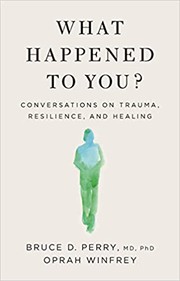 What Happened to You?By guest
by Bruce Perry and Oprah Winfrey
“Dr. Bruce Perry, neuroscientist and co-author of *What Happened to You?* with Oprah Winfrey, explains how reframing trauma from "what's wrong with you" to "what happened to you" shifts clinical and personal understanding of behavior.”
More from 10% Happier with Dan Harris
We summarize every new episode. Want them in your inbox?
Annoying Partners, Aging Parents, Impossible Coworkers: Buddhist Advice for Conflict, Communication, and "Patience with Teeth" | devon and nico hase
Your 'Inner Child' Runs Your Life. Here's How To Spot It and Take Back the Wheel. | Dr. Galit Atlas
Your Inner Critic Won't Stop Adding Rules. Here's The Fix. | Julian Shapiro-Barnum
Amanda Knox On: Finding Meaning in Tragedy, Not Needing an Apology, and Refusing to Own What Other People Think
The Science Of Emotion Regulation: A Five-Step Plan For Not Losing Your Sh*t | Marc Brackett
Similar Episodes
Related episodes from other podcasts

The Bootstrapped Founder
Mar 5
379: Anne-Laure Le Cunff — Tiny Experiments

Huberman Lab
Sep 3
Essentials: Use Sleep to Enhance Learning, Memory & Emotional State | Dr. Gina Poe

TED Radio Hour
Aug 21
How the creator economy is making you talk like the internet

The Diary of a CEO
Aug 7
Most Replayed Moment: Alzheimer's Starts 20 Years Before Symptoms! How To Protect Your Brain Now

The Daily (NYT)
Jul 26
Why Do Some Memories Survive Dementia?
Explore Related Topics
This podcast is featured in Best Health Podcasts (2026) — ranked and reviewed with AI summaries.
Read this week's Health & Longevity Podcast Insights — cross-podcast analysis updated weekly.
You're clearly into 10% Happier with Dan Harris.
Every Monday, we deliver AI summaries of the latest episodes from 10% Happier with Dan Harris and 192+ other podcasts. Free for one show.
Start My Monday DigestNo credit card · Unsubscribe anytime