How to manufacture a billionaire childhood
Episode
55 min
Read time
2 min
Topics
Career Growth, Productivity, Investing
AI-Generated Summary
Key Takeaways
- ✓Childhood Specialization Window: Neuroscience suggests ages 8–18 represent a critical development period where deep specialization produces outsized adult performers. Bill Gates, Mark Zuckerberg, and MrBeast all pursued singular obsessions during this window. As a parent or mentor, the actionable move is identifying and feeding a child's specific obsession rather than enforcing broad generalist curricula.
- ✓Confidence Through Adversity: Confidence is not built through affirmation but through accumulated adventure and adversity. Each unfamiliar situation survived — even without winning — lowers the perceived threat of the next challenge. The practical implication: deliberately seek uncomfortable, novel situations to build a hardened baseline of self-trust that transfers across professional and personal contexts.
- ✓Reverse-Engineer Your Childhood Signals: Robert Greene's framework suggests reverting mentally to age 12 — before social pressure and self-editing — to identify natural inclinations. Shaan traces his current investing and podcasting work directly to franchise-mode video gaming and improv competitions. Auditing pre-adolescent obsessions can reveal career alignment that reduces friction and increases output quality.
- ✓TikTok UGC Commerce Model: Ecommerce brands now seed products to thousands of non-famous creators who produce content on commission — typically 15–20% of revenue — rather than paying upfront Facebook ad spend. This crowdsources creative testing at 3,000–5,000 assets monthly versus a traditional in-house team's 10–20, dramatically accelerating what content formats convert while keeping marketing costs performance-based.
- ✓Leverage B2C Tactics in B2B: B2B companies systematically underuse proven B2C marketing playbooks, including UGC seeding, affiliate commission structures, and brand-building through content. The skill gap exists because most B2B operators never worked in consumer. Deliberately borrowing even a fraction of consumer-brand tactics — affiliate programs, creator seeding, drop-style launches — represents a largely untapped competitive arbitrage in B2B markets.
What It Covers
Sam Parr and Shaan Puri explore how childhood experiences shape adult success, using billionaire Jim Ratcliffe's origin story, Warren Buffett's racetrack habits, Dan Brown's treasure-map Christmases, and the rise of TikTok UGC commerce as connecting threads across entrepreneurship and identity formation.
Key Questions Answered
- •Childhood Specialization Window: Neuroscience suggests ages 8–18 represent a critical development period where deep specialization produces outsized adult performers. Bill Gates, Mark Zuckerberg, and MrBeast all pursued singular obsessions during this window. As a parent or mentor, the actionable move is identifying and feeding a child's specific obsession rather than enforcing broad generalist curricula.
- •Confidence Through Adversity: Confidence is not built through affirmation but through accumulated adventure and adversity. Each unfamiliar situation survived — even without winning — lowers the perceived threat of the next challenge. The practical implication: deliberately seek uncomfortable, novel situations to build a hardened baseline of self-trust that transfers across professional and personal contexts.
- •Reverse-Engineer Your Childhood Signals: Robert Greene's framework suggests reverting mentally to age 12 — before social pressure and self-editing — to identify natural inclinations. Shaan traces his current investing and podcasting work directly to franchise-mode video gaming and improv competitions. Auditing pre-adolescent obsessions can reveal career alignment that reduces friction and increases output quality.
- •TikTok UGC Commerce Model: Ecommerce brands now seed products to thousands of non-famous creators who produce content on commission — typically 15–20% of revenue — rather than paying upfront Facebook ad spend. This crowdsources creative testing at 3,000–5,000 assets monthly versus a traditional in-house team's 10–20, dramatically accelerating what content formats convert while keeping marketing costs performance-based.
- •Leverage B2C Tactics in B2B: B2B companies systematically underuse proven B2C marketing playbooks, including UGC seeding, affiliate commission structures, and brand-building through content. The skill gap exists because most B2B operators never worked in consumer. Deliberately borrowing even a fraction of consumer-brand tactics — affiliate programs, creator seeding, drop-style launches — represents a largely untapped competitive arbitrage in B2B markets.
Notable Moment
Dan Brown's father, a math teacher, never placed gifts under the Christmas tree. Instead, he left treasure maps requiring his son to follow clues across the house and neighborhood. That single repeated ritual directly shaped the cipher-cracking, puzzle-solving structure found throughout Brown's 200-million-copy catalog.
Episode Transcript
I got something, Sean. I just had the craziest thing happen to me. One of the craziest things that have ever happened to me. Do you wanna hear a story? Does it have to do with those glasses? No. But I am a cool guy, so that's why I decided to wear them. Okay. I had one of the craziest things happened literally just forty five minutes ago. I was walking down the street in New York City near my house. And do you know Honey I Shrunk the Kids? Yeah. The movie from back in the day. Of course. Rick, what's his name? I know his name first name is Rick. I had to look up his last name because really your dad? Yeah. I saw him walking. I saw him walking down the street, and I felt bold. And I walked up to him, and I said, excuse me, sir. I just like, huge fan. I grew up watching your movies. And I kid you not, he was like, what's up, man? I appreciate that. Also, I've seen your videos. You, you're cool. You know? I like MFM. And I was like, are you kidding me? And, I go, Rick, I'm here talking to you now. Like, if you know MFM, then you know that this like, it's part of the shtick. Like, did you just kill it in the nineties with movies? And he goes, I killed it. I go, really? Like, really good? He goes, do you have a few minutes? I go, yeah, Rick. I got a few minutes. He goes, let me show you something. Brings me up to his apartment, this beautiful apartment overlooking Central Park. Beautiful. I'm like, you really did well, And he was like, yeah. So, like, you know, I bought this from Harrison Ford. It's a beautiful apartment. And, he's like, look. In the nineties, VHS were just pieces of plastic, and they were $25 apiece. Of course, I killed it. And I walk and I'm, like, walking through his apartment, and I'm like, Rick, is that an original Salvador Dali painting? And he goes he points at it. He goes, Ghostbusters. And and he just kept walking. So awesome. None of that happened. I I did see him walk by though, and I none of that happened. He did walk by he did walk by me, though, and I I imagined that that could have happened, though. What a roller coaster of emotions you just took me on. That was fantastic. What? So you even see the guy, or the entire thing was fictitious? I saw him. He lives he lives near me. I did see him. And in my head, I went through all these things. Like, you know, when someone, like, insults you and you think of a comeback, like, thirty seconds later? I, like, thought of all these things that could have happened if I said hi to him, but I didn't. Yeah. I'll I'll …
Get the full transcript (11,935 words) + summary by email — free
One-time email with the complete transcript and AI summary of this episode. No account needed.
One email, no spam. We’ll also show you what SignalCast does.

You just read a 3-minute summary of a 52-minute episode.
Get My First Million summarized like this every Monday — plus up to 2 more podcasts, free.
Pick Your Podcasts — FreeKeep Reading
More from My First Million
There’s 98 days until 2027...Do this and you’ll thank yourself on Jan 1st
Sep 25 · 55 min

Masters in Business
Why a Joint Account Can Be a Sign of Healthy Marriage
Feb 13
More from My First Million
Whatnot founder: This is the future of e-commerce
Sep 21 · 62 min

The School of Greatness
Why Your Relationship Keeps Repeating the Same Pattern | Gary John Bishop
Jul 10
Books, tools, and gear mentioned in this episode
SignalCast may earn commission on purchases via these links. As an Amazon Associate, SignalCast earns from qualifying purchases.
Books
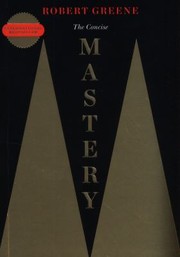
by Robert Greene
“Robert Greene's framework suggests reverting mentally to age 12 — before social pressure and self-editing — to identify natural inclinations.”
More from My First Million
We summarize every new episode. Want them in your inbox?
There’s 98 days until 2027...Do this and you’ll thank yourself on Jan 1st
Whatnot founder: This is the future of e-commerce
Coach for SpaceX & OpenAI destroys your limiting beliefs for 88 minutes straight
i got internet famous... if i started again from scratch, here's what I'd do this time
David Rubenstein: We took $5M and turned it into $500B
Similar Episodes
Related episodes from other podcasts

Masters in Business
Feb 13
Why a Joint Account Can Be a Sign of Healthy Marriage

The School of Greatness
Jul 10
Why Your Relationship Keeps Repeating the Same Pattern | Gary John Bishop

The Mel Robbins Podcast
Apr 27
Do THIS Every Day to Rewire Your Brain From Stress and Anxiety

10% Happier with Dan Harris
Apr 6
Gabor Maté: Five Steps To Stop Scrolling, Bingeing, and Self-Medicating — And Reclaim Your Brain
10% Happier with Dan Harris
Mar 13
Anderson Cooper and Michelle Obama: Navigating Grief, Making Loss Less Lonely, and How to Know the People You Love Before It's Too Late
Explore Related Topics
This podcast is featured in Best Startup Podcasts (2026) — ranked and reviewed with AI summaries.
Read this week's Investing & Markets Podcast Insights — cross-podcast analysis updated weekly.
You're clearly into My First Million.
Every Monday, we deliver AI summaries of the latest episodes from My First Million and 192+ other podcasts. Free for one show.
Start My Monday DigestNo credit card · Unsubscribe anytime