How to find your thing
Episode
54 min
Read time
2 min
Topics
Career Growth, Health & Wellness, Relationships
AI-Generated Summary
Key Takeaways
- ✓Follow Your Blisters Framework: Joseph Campbell's lesser-known revision of "follow your bliss" argues that the right path is identified not by joy alone but by suffering you willingly repeat. If you endure consistent hardship toward something without forcing yourself through pure willpower, that involuntary pull is a reliable signal worth pursuing seriously.
- ✓Pick Your Sales Motion, Not Your Industry: Founders spend roughly 85% of their time on growth, hiring, and team management — not the product itself. Choosing a business based on industry or product type is therefore less useful than identifying which growth mechanism you enjoy most, whether content, paid ads, enterprise sales, or SEO, and building around that.
- ✓Name the Blisters Before Committing: Before pursuing any path, explicitly list the repetitive hardships involved, not just the desired outcome. For fitness, that means early wake-ups, training on low-motivation days, and dietary discipline. Deciding upfront whether you accept those specific costs predicts follow-through far more accurately than excitement about the end result.
- ✓Find the Loop You Love: Every career reduces to a repeatable loop done thousands of times. A doctor diagnoses and treats pain daily for decades. A founder cycles through building, selling, and team management indefinitely. Identifying which loop gives you energy rather than draining it — and whether you want more of it after doing it twice — is the practical test for fit.
- ✓Passion Is a Byproduct of Mastery, Not a Starting Point: Cal Newport's framework holds that passion follows mastery, and mastery requires enduring enthusiasm to accumulate the necessary hours. The chain runs: sustained enthusiasm
What It Covers
Sam Parr and Shaan Puri respond to a 24-year-old's question about finding direction after school. They dismantle "follow your passion" advice and replace it with a framework built around enthusiasm, deliberate suffering, repeatable work loops, and gut-level self-observation to identify genuinely fulfilling career paths.
Key Questions Answered
- •Follow Your Blisters Framework: Joseph Campbell's lesser-known revision of "follow your bliss" argues that the right path is identified not by joy alone but by suffering you willingly repeat. If you endure consistent hardship toward something without forcing yourself through pure willpower, that involuntary pull is a reliable signal worth pursuing seriously.
- •Pick Your Sales Motion, Not Your Industry: Founders spend roughly 85% of their time on growth, hiring, and team management — not the product itself. Choosing a business based on industry or product type is therefore less useful than identifying which growth mechanism you enjoy most, whether content, paid ads, enterprise sales, or SEO, and building around that.
- •Name the Blisters Before Committing: Before pursuing any path, explicitly list the repetitive hardships involved, not just the desired outcome. For fitness, that means early wake-ups, training on low-motivation days, and dietary discipline. Deciding upfront whether you accept those specific costs predicts follow-through far more accurately than excitement about the end result.
- •Find the Loop You Love: Every career reduces to a repeatable loop done thousands of times. A doctor diagnoses and treats pain daily for decades. A founder cycles through building, selling, and team management indefinitely. Identifying which loop gives you energy rather than draining it — and whether you want more of it after doing it twice — is the practical test for fit.
- •Passion Is a Byproduct of Mastery, Not a Starting Point: Cal Newport's framework holds that passion follows mastery, and mastery requires enduring enthusiasm to accumulate the necessary hours. The chain runs: sustained enthusiasm
Notable Moment
A hospice nurse who worked with thousands of dying patients found that the single most common regret, by a wide margin, was not living a life true to oneself rather than one shaped by others' expectations — outranking regrets about overworking, unexpressed feelings, or lost friendships.
Episode Transcript
Dude, when you use the word stack, I get all fired up. Dude, why don't we just describe our podcast that way? Us, founders acquired. It's the most potent stack up to stop user boosting for founders. Yeah. I feel like I can rule the world. Alright. So, Sam, I was in Austin last week, and I was at a restaurant. So we're sitting down at the table. Guy comes up, and he's a fan of the podcast. And he says, hi. And he was like, oh, yeah. I love the episodes to you and Sam. Blah blah blah. And I asked him. I go, what's one thing you want us to talk about? We're getting it we're almost a thousand episodes in. He need a little inspiration. And so I said, what's one thing you want us to talk about? And he goes, well, I don't know what other people want, but here's what I want. And he told me he's, he's 24 years old. He's like, I know I'm smart. I know I'm hard hardworking. I just don't know kinda which lane to go in. I'm ready to swim, but I don't know which lane to go in. And what he said was he's like, you know, basically the generic advice is like, yo, just follow your passion. And he basically described this problem, which is like, I've been in school. My teachers, my parents, like, I was told what to do. You gotta take these classes. You gotta get take these tests. You gotta get these marks. And that's it's, like, super structured. All of a sudden, graduates. Now he's just on his own. So went from super structured to completely unstructured. And he's like, I know that I should be doing something. My friends are all doing this. I don't think I wanna do that banking, consulting type of jobs. And his question was basically they say follow your passion, but how? How do you actually do that? Like, what would you guys actually do if you could go back? So that's what I wanted to talk about. Why I think that follow your passion is terrible advice and what you should do instead. Great. I think I I will mostly it sounds like I based off your one line response right there, I might agree with you on everything. First of all, I wanna hear what advice you gave him. But you told me that you wanted to you also looked at the history of following your passion. Is that true? Well, I have a historical kinda reference. So I was reading this thing by Joseph Campbell. He famously came up with a hero's journey. So Yeah. Yeah. Yeah. The circle that explains how Star Wars works and Harry Potter and all the great stories, they sort of start with the same structure. So this guy, Joseph Campbell, he gave a lot of interviews about, his philosophy. And he had this better this phrase that …
Get the full transcript (11,948 words) + summary by email — free
One-time email with the complete transcript and AI summary of this episode. No account needed.
One email, no spam. We’ll also show you what SignalCast does.

You just read a 3-minute summary of a 51-minute episode.
Get My First Million summarized like this every Monday — plus up to 2 more podcasts, free.
Pick Your Podcasts — FreeKeep Reading
More from My First Million
Decoding Tony Hawk’s mindset in 72 minutes
Sep 9 · 73 min

The Prof G Pod
How to Resist the Attention Economy — with Bill Burnett and Dave Evans
May 18
More from My First Million
How we scaled to $100M in under a year (ft. IM8 co-founder Danny Yeung)
Sep 7 · 54 min

10% Happier with Dan Harris
The Psychology Of Success | Guy Raz
Sep 4
Books, tools, and gear mentioned in this episode
SignalCast may earn commission on purchases via these links. As an Amazon Associate, SignalCast earns from qualifying purchases.
Books
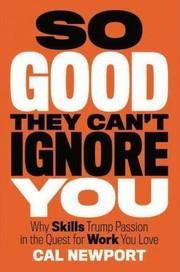 So Good They Can't Ignore YouRecommended
by Cal Newport
“Cal Newport's framework holds that passion follows mastery, and mastery requires enduring enthusiasm to accumulate the necessary hours.”
More from My First Million
We summarize every new episode. Want them in your inbox?
Decoding Tony Hawk’s mindset in 72 minutes
How we scaled to $100M in under a year (ft. IM8 co-founder Danny Yeung)
How to naturally monetize what you love
7 things MrBeast, Bezos & Thiel do that you don’t
How a $5B founder is using AI (3 tutorials)
Similar Episodes
Related episodes from other podcasts

The Prof G Pod
May 18
How to Resist the Attention Economy — with Bill Burnett and Dave Evans

10% Happier with Dan Harris
Sep 4
The Psychology Of Success | Guy Raz

The Joe Rogan Experience
Aug 26
#2546 - Michael Button

Investing for Beginners
Aug 25
AAR64 - The Personal Finance Time Machine
10% Happier with Dan Harris
Aug 24
Longevity Secrets (And Controversies) From The Blue Zones | Dan Buettner
Explore Related Topics
This podcast is featured in Best Startup Podcasts (2026) — ranked and reviewed with AI summaries.
Read this week's Health & Longevity Podcast Insights — cross-podcast analysis updated weekly.
You're clearly into My First Million.
Every Monday, we deliver AI summaries of the latest episodes from My First Million and 192+ other podcasts. Free for one show.
Start My Monday DigestNo credit card · Unsubscribe anytime