TIP817: Simple Investing Beats Complexity
Episode
68 min
Read time
3 min
Topics
Productivity, Personal Finance, Relationships
AI-Generated Summary
Key Takeaways
- ✓Index Fund Superiority: Data shows 90% of large-cap U.S. fund managers underperformed the S&P 500 over 15 years, with Canadian equity managers performing even worse at 98% failure to beat the S&P/TSX. Rather than competing against professionals who still lose, individual investors should dollar-cost average monthly into a low-cost global index fund and automate transfers before money reaches a spending account, removing behavioral decision points entirely.
- ✓Pay Yourself First System: Treat savings as a non-negotiable fixed expense before any consumption occurs. If earning $100,000, redirect $10,000 immediately to a low-cost index fund. When income rises by $20,000, redirect the full increase rather than expanding lifestyle. Fagan and his wife formalize this as a "personal spending plan" — earn, save, pay taxes, then spend the remainder without guilt or micro-managing individual purchases.
- ✓Munger's Complexity Warning: Charlie Munger's concept of "feblesment" describes how unnecessary product complexity — not outright fraud — quietly destroys investor wealth. His actionable rule: reject any financial product carrying a large upfront commission or a 200-page prospectus. A real client case illustrates this: a whole life insurance policy carried a $125,000 year-one commission when a $3,000 term policy would have covered the same need, leaving $147,000 free to compound in equities.
- ✓Occam's Razor Plus Irreducibility Framework: Apply two mental models together when making financial or business decisions. Occam's razor demands starting with the simplest explanation before adding complexity. Irreducibility identifies the non-negotiable core elements that cannot be removed without system failure. In wealth building, saving is the irreducible foundation — nothing compounds without it. Once saving is established, Occam's razor guides toward the simplest growth vehicle: low-cost, diversified, evidence-based index funds.
- ✓Focus as Subtraction: Business and investment performance compounds when practitioners define what they will not do. Fagan's accounting firm narrowed exclusively to owner-managed clients, which deepened pattern recognition, reduced errors, and increased client value over decades. Southwest Airlines applied the same logic — single aircraft type, point-to-point routes, no first class — achieving roughly 40 consecutive profitable years pre-pandemic. Each deliberate "no" removes entropy before it accumulates into organizational dysfunction.
What It Covers
David Fagan, managing partner at MBF Chartered Professional Accountants in Nova Scotia, joins host Stig Brodersen to examine why investors and business owners gravitate toward complexity despite evidence that simple strategies consistently outperform. The episode draws on behavioral psychology, mental models like Occam's razor, and real client case studies to build a case for disciplined simplicity across investing, business, and personal finance.
Key Questions Answered
- •Index Fund Superiority: Data shows 90% of large-cap U.S. fund managers underperformed the S&P 500 over 15 years, with Canadian equity managers performing even worse at 98% failure to beat the S&P/TSX. Rather than competing against professionals who still lose, individual investors should dollar-cost average monthly into a low-cost global index fund and automate transfers before money reaches a spending account, removing behavioral decision points entirely.
- •Pay Yourself First System: Treat savings as a non-negotiable fixed expense before any consumption occurs. If earning $100,000, redirect $10,000 immediately to a low-cost index fund. When income rises by $20,000, redirect the full increase rather than expanding lifestyle. Fagan and his wife formalize this as a "personal spending plan" — earn, save, pay taxes, then spend the remainder without guilt or micro-managing individual purchases.
- •Munger's Complexity Warning: Charlie Munger's concept of "feblesment" describes how unnecessary product complexity — not outright fraud — quietly destroys investor wealth. His actionable rule: reject any financial product carrying a large upfront commission or a 200-page prospectus. A real client case illustrates this: a whole life insurance policy carried a $125,000 year-one commission when a $3,000 term policy would have covered the same need, leaving $147,000 free to compound in equities.
- •Occam's Razor Plus Irreducibility Framework: Apply two mental models together when making financial or business decisions. Occam's razor demands starting with the simplest explanation before adding complexity. Irreducibility identifies the non-negotiable core elements that cannot be removed without system failure. In wealth building, saving is the irreducible foundation — nothing compounds without it. Once saving is established, Occam's razor guides toward the simplest growth vehicle: low-cost, diversified, evidence-based index funds.
- •Focus as Subtraction: Business and investment performance compounds when practitioners define what they will not do. Fagan's accounting firm narrowed exclusively to owner-managed clients, which deepened pattern recognition, reduced errors, and increased client value over decades. Southwest Airlines applied the same logic — single aircraft type, point-to-point routes, no first class — achieving roughly 40 consecutive profitable years pre-pandemic. Each deliberate "no" removes entropy before it accumulates into organizational dysfunction.
- •Stop-Start-Continue Annual Review: Before adding any new commitment — professional, personal, or financial — run an annual three-part audit: identify what to stop, what to start, and what to continue. Fagan applies a companion rule of removing one existing commitment before accepting anything new. This prevents calendar and portfolio drift, where accumulated "yeses" create complexity that feels like productivity but functions as noise, obscuring the few high-value activities that actually drive compounding results.
Notable Moment
A Canadian bank portfolio manager, when asked whether he could manage a $5 million portfolio using just three or four ETFs with a small fixed-income component, admitted he could not — not because the strategy was flawed, but because it would appear insufficiently complex to justify his role and fees to clients.
Episode Transcript
You're listening to TIP. In today's episode, I joined by my close friend, David Fagan. David is the managing partner at MBF Chartered Professional Accountants in Nova Scotia, Canada. And for decades, he has advised countless business owners on investing, financial planning, and long term wealth creation. We discuss why so many investors feel drawn towards sophisticated strategies, complicated portfolios, and endless optimization, even when the simple approach is often the better one. A personal highlight from this episode is when David shares a story about a portfolio manager of one of the large banks in Canada who admitted he couldn't manage a multimillion dollar portfolio using just a few ETFs because, in his words, it would look too simple. And with that, we open a much deeper conversation about incentives, status, human behavior, and why complexity often disguise itself as sophistication. If you sometimes feel that the financial markets and life are becoming increasingly complex, this is an episode you don't want to miss out on. Since 2014, with more than 200,000,000 downloads, we have interviewed the world's best investors, studied deeply the principles of value investing, and uncovered many compelling investment opportunities. We focus on understanding businesses and intrinsic value, investing accordingly and sharing everything we learn with you. This show is not investment advice. It's intended for informational and entertainment purposes only. All opinions expressed by hosts and guests are solely their own, and they may have investments in the securities discussed. Now for your host, Stig Brodersen. Welcome to The Investor's Podcast. I'm your host, Stig Brodersen. And today I'm here with David Fagan again. David, how are you? David Fagan (one zero one:thirty seven): I'm doing lovely. Just finished an intense tax season and ready to go. Stig Brodersen (one zero one:thirty nine): That's amazing. Now, David, today's topic is simplicity beats complexity, and I think I'll just throw it right over to you here at the very top of the show, so please take it away. David Collum (zero zero three:thirty nine): Lovely. Let's jump right in. Let's do a little bit of a different type of deep dive today, Stig, not on an individual stock, but on one facet of life that can affect the businesses we run, the investments we choose, and even some of the personal decisions that we make. When I think of simplicity in one's life, we don't wake up planning to overcomplicate it. It just sort of happens one decision at a time. I've found that if you're not intentional about solving complexity, it can actually take over sometimes. Choosing simplicity when making decisions is not something that I arrived at right away. I would think it would be hard for any of us in our twenties to believe that the best answers are sometimes the easiest ones. But with age, and I'm not sure what comes first, a bit of wisdom or a few setbacks in life, you start to see things differently. You only have to …
Get the full transcript (12,543 words) + summary by email — free
One-time email with the complete transcript and AI summary of this episode. No account needed.
One email, no spam. We’ll also show you what SignalCast does.

You just read a 3-minute summary of a 65-minute episode.
Get We Study Billionaires summarized like this every Monday — plus up to 2 more podcasts, free.
Pick Your Podcasts — FreeKeep Reading
More from We Study Billionaires
TIP852: Hermès and LVMH Stock: Time to Buy Luxury? w/ Daniel Mahncke & Shawn O'Malley
Oct 8 · 75 min

Masters of Scale
Rapid Response: On's 16-year overnight success: Zendaya, Federer, and outrunning competition
Sep 12
More from We Study Billionaires
TIP851: HEICO Vs. TransDigm: Whose Aerospace Monopoly Is Better? w/ Kyle Grieve & Shawn O'Malley
Oct 4 · 77 min

a16z Podcast
David George & Jack Altman on AI, Autonomy, and the Next $25 Trillion
Oct 4
Books, tools, and gear mentioned in this episode
SignalCast may earn commission on purchases via these links. As an Amazon Associate, SignalCast earns from qualifying purchases.
Books
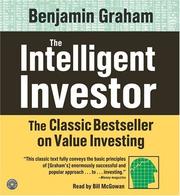
by Benjamin Graham
“Munger's Complexity Warning: Charlie Munger's concept of 'feblesment' describes how unnecessary product complexity — not outright fraud — quietly destroys investor wealth.”
Tools
“Canadian equity managers performing even worse at 98% failure to beat the S&P/TSX.”
- S&P 500Recommended
“Data shows 90% of large-cap U.S. fund managers underperformed the S&P 500 over 15 years, with Canadian equity managers performing even worse at 98% failure to beat the S&P/TSX. Rather than competing against professionals who still lose, individual investors should dollar-cost average monthly into a low-cost global index fund.”
More from We Study Billionaires
We summarize every new episode. Want them in your inbox?
TIP852: Hermès and LVMH Stock: Time to Buy Luxury? w/ Daniel Mahncke & Shawn O'Malley
TIP851: HEICO Vs. TransDigm: Whose Aerospace Monopoly Is Better? w/ Kyle Grieve & Shawn O'Malley
TIP850: Walmart (WMT): From Discount Retailer to eCommerce Powerhouse w/ Kyle Grieve & Shawn O'Malley
TIP849: Average Returns Can Still Make You Wealthy w/ David Fagan
TIP848: Meta (META): What the Market Misses? w/ Daniel Mahncke & Shawn O'Malley
Similar Episodes
Related episodes from other podcasts

Masters of Scale
Sep 12
Rapid Response: On's 16-year overnight success: Zendaya, Federer, and outrunning competition

a16z Podcast
Oct 4
David George & Jack Altman on AI, Autonomy, and the Next $25 Trillion
a16z Podcast
Sep 25
The Reputation Graph of Silicon Valley | Introducing Cosign

10% Happier with Dan Harris
Sep 18
Comedian Josh Johnson On: Handling News Cycle Anxiety, His Insane Work Ethic, and Why AI is BS

The Jordan Harbinger Show
Sep 11
1380: Is Victim at Fault for Scopolamine Assault? | Feedback Friday
Explore Related Topics
This podcast is featured in Best Investing Podcasts (2026) — ranked and reviewed with AI summaries.
You're clearly into We Study Billionaires.
Every Monday, we deliver AI summaries of the latest episodes from We Study Billionaires and 192+ other podcasts. Free for one show.
Start My Monday DigestNo credit card · Unsubscribe anytime