#421 Jony Ive
Episode
52 min
Read time
2 min
Topics
Career Growth, Relationships, Investing
AI-Generated Summary
Key Takeaways
- ✓Design Story First: Before sketching a single line, Ive starts every product by asking "what is the story of this product?" — defining what it should be for users emotionally, not what engineering constraints allow. This starting point prevented the Newton's core failure: a device with no relatable metaphor that users could grasp in daily life.
- ✓Radical Simplification as Strategy: Jobs reduced Apple from 40 products across four confusing computer lines to exactly four machines on a 2×2 grid — consumer/professional by portable/desktop. This cut inventory by $300M in one year, shrank headcount from 12,000 to 6,000, and freed resources to build premium-margin products rather than competing on commodity pricing.
- ✓Design Authority Over Engineering: Before Jobs returned, engineers dictated product specs and designers applied cosmetic skins. Jobs and Ive reversed this entirely — Ive's industrial design group held final say on everything, and telling them "no" was never an option. Product development cycles dropped from three years to nine months as a direct result.
- ✓Hiring to the Point of Intimidation: Ive's 16-person design team used one hiring filter: recruit someone who makes you feel a trace of competitive fear. Investor Graham Duncan independently articulates the same principle — the best hires display an obsessive intensity that signals they will outwork and eventually surpass their interviewer, compounding advantage over time.
- ✓Humanizing Technology Through Touch: Ive added a recessed handle to the first iMac not for portability but to psychologically invite physical contact, reducing user anxiety around unfamiliar technology. This cost significantly more to manufacture and faced 38 engineering objections, but Jobs overruled them. The iMac sold 278,000 units in its first six weeks and 800,000 by year-end.
What It Covers
David Senra examines Leander Kahney's biography of Jony Ive, tracing how an English art school graduate with dyslexia became Apple's design chief, and how his partnership with Steve Jobs transformed Apple from a consensus-driven bureaucracy into a design-led company that produced the iMac, iPod, iPhone, and iPad.
Key Questions Answered
- •Design Story First: Before sketching a single line, Ive starts every product by asking "what is the story of this product?" — defining what it should be for users emotionally, not what engineering constraints allow. This starting point prevented the Newton's core failure: a device with no relatable metaphor that users could grasp in daily life.
- •Radical Simplification as Strategy: Jobs reduced Apple from 40 products across four confusing computer lines to exactly four machines on a 2×2 grid — consumer/professional by portable/desktop. This cut inventory by $300M in one year, shrank headcount from 12,000 to 6,000, and freed resources to build premium-margin products rather than competing on commodity pricing.
- •Design Authority Over Engineering: Before Jobs returned, engineers dictated product specs and designers applied cosmetic skins. Jobs and Ive reversed this entirely — Ive's industrial design group held final say on everything, and telling them "no" was never an option. Product development cycles dropped from three years to nine months as a direct result.
- •Hiring to the Point of Intimidation: Ive's 16-person design team used one hiring filter: recruit someone who makes you feel a trace of competitive fear. Investor Graham Duncan independently articulates the same principle — the best hires display an obsessive intensity that signals they will outwork and eventually surpass their interviewer, compounding advantage over time.
- •Humanizing Technology Through Touch: Ive added a recessed handle to the first iMac not for portability but to psychologically invite physical contact, reducing user anxiety around unfamiliar technology. This cost significantly more to manufacture and faced 38 engineering objections, but Jobs overruled them. The iMac sold 278,000 units in its first six weeks and 800,000 by year-end.
Notable Moment
When Jobs returned to Apple and addressed staff, he declared the products had lost all appeal. Ive, sitting at the back and already planning to resign, paused when Jobs stated Apple's goal was making great products — not money. That single sentence kept Ive at the company.
Episode Transcript
I just wanted a sound bite, but he launched into a passionate twenty minute description about his latest work. I could barely get a word in edgewise. He couldn't help himself. Design is his passion. He began telling me how keeping things simple was the overall design philosophy for the machine. He said, we wanted to get rid of anything other than what was absolutely essential, but you don't see that effort. We kept going back to the beginning again and again and again. Do we need this part? Can we get that part to perform the function of these other four parts? It became an exercise to reduce and reduce and reduce, but it makes it easier to build and easier for people to work with. In releasing new products, companies tended to add more bells and whistles, not take them away. But here, Johnny was saying the opposite. The purpose of this book is to answer the question, how did an English art school grad with dyslexia become the world's leading technology designer? In the pages that follow, we'll meet a brilliant but unassuming man, obsessed with design, whose immense and influential insights have no doubt altered the pattern of your life. That is an excerpt from the book that I'm gonna talk to you about today and the one I've read for the second time, which is called Jony Ive, the genius behind Apple's greatest products, and it's written by Leander Kane. I decided to reread this book. The first time I read this book was probably five years ago, and I wanted to read this book because I think it perfectly follows what you and I discussed last week where we just talked about Steve Jobs' time at Next. And so last week's book and last week's episode ended when Jobs comes back to Apple. And when Jobs comes back to Apple, that is when he meets Jony Ive. And here's this great quote from Steve Jobs about Jony Ive. He says he understands what we do at our core better than anyone. If I had a spiritual partner at Apple, it's Johnny. And Johnny is a great example of this maxim that repeats throughout these biographies that true interest is revealed early. And so this book says, as a young boy, Johnny exhibited a curiosity about the workings of things. He became fascinated by how objects were put together, carefully dismantling radios and cassette recorders, intrigued with how they were assembled and how the pieces fit together. Johnny's father, Mike, plays a massive role in Johnny's life. From a very young age, his father is encouraging his son's interest, and he would constantly have conversations about design. And And one of the best things that could have ever happened for Johnny's future career is the fact that his dad was actually hired to develop the standards for design education throughout The UK. And so this book says, Mike was among the most distinguished teachers plucked …
Get the full transcript (10,301 words) + summary by email — free
One-time email with the complete transcript and AI summary of this episode. No account needed.
One email, no spam. We’ll also show you what SignalCast does.

You just read a 3-minute summary of a 49-minute episode.
Get The Founders Podcast summarized like this every Monday — plus up to 2 more podcasts, free.
Pick Your Podcasts — FreeKeep Reading


Books, tools, and gear mentioned in this episode
SignalCast may earn commission on purchases via these links. As an Amazon Associate, SignalCast earns from qualifying purchases.
Books
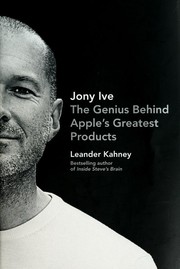
by Leander Kahney
“David Senra examines Leander Kahney's biography of Jony Ive, tracing how an English art school graduate with dyslexia became Apple's design chief”
More from The Founders Podcast
We summarize every new episode. Want them in your inbox?
Similar Episodes
Related episodes from other podcasts

Acquired
Oct 19
Seinfeld

David Senra
Oct 14
Lessons from Napoleon, Steve Jobs, Joan of Arc & Other Leaders | Ben Wilson
David Senra
Oct 4
How Mark Zuckerberg, Palmer Luckey, Josh Kushner & Scott Wu Think | Jeremy Stern
David Senra
Aug 23
Sam Altman on Building OpenAI & Betting on the Impossible
David Senra
Aug 9
Michael Ovitz, Co-founder of CAA
Explore Related Topics
This podcast is featured in Best Business Podcasts (2026) — ranked and reviewed with AI summaries.
Read this week's Investing & Markets Podcast Insights — cross-podcast analysis updated weekly.
You're clearly into The Founders Podcast.
Every Monday, we deliver AI summaries of the latest episodes from The Founders Podcast and 192+ other podcasts. Free for one show.
Start My Monday DigestNo credit card · Unsubscribe anytime