Episode #228 ... Albert Camus - Kafka and The Fall
Episode
30 min
Read time
2 min
Topics
Relationships, Psychology & Behavior, Philosophy & Wisdom
AI-Generated Summary
Key Takeaways
- ✓Judge-Penitent Strategy: Clemence judges himself harshly before others can, creating immunity from external criticism by preemptively confessing his flaws, then using this moral low ground to justify judging others while appearing self-aware and humble about his own shortcomings.
- ✓Political Inflation Problem: Politics should handle housekeeping like taxes and infrastructure, not provide complete worldviews about love, justice, and how to live. When politics expands beyond its proper scope, conversations become antagonistic battles where disagreement transforms neighbors into enemies.
- ✓Kafkaesque Modern Condition: Modern people outsource morality and decision-making to faceless bureaucrats and systems, following procedures for approval rather than exercising freedom. This compliance mirrors Kafka's protagonist Joseph K, who accepts absurd arrest without resistance, normalizing nightmare scenarios through institutional validation.
- ✓Compassion Over Judgment: Recognize that people using escape strategies to avoid existential confrontation are desperate, not lazy or evil. They are born into abstraction-dominated systems resembling Kafka novels. Compassion becomes the equivalent of solidarity when addressing shared human fallibility and judgment.
What It Covers
Camus explores human judgment and self-deception in The Fall, examining how modern people use elaborate rationalizations to avoid confronting their limitations, while Kafka's work reveals the absurd bureaucratic systems that trap individuals.
Key Questions Answered
- •Judge-Penitent Strategy: Clemence judges himself harshly before others can, creating immunity from external criticism by preemptively confessing his flaws, then using this moral low ground to justify judging others while appearing self-aware and humble about his own shortcomings.
- •Political Inflation Problem: Politics should handle housekeeping like taxes and infrastructure, not provide complete worldviews about love, justice, and how to live. When politics expands beyond its proper scope, conversations become antagonistic battles where disagreement transforms neighbors into enemies.
- •Kafkaesque Modern Condition: Modern people outsource morality and decision-making to faceless bureaucrats and systems, following procedures for approval rather than exercising freedom. This compliance mirrors Kafka's protagonist Joseph K, who accepts absurd arrest without resistance, normalizing nightmare scenarios through institutional validation.
- •Compassion Over Judgment: Recognize that people using escape strategies to avoid existential confrontation are desperate, not lazy or evil. They are born into abstraction-dominated systems resembling Kafka novels. Compassion becomes the equivalent of solidarity when addressing shared human fallibility and judgment.
Notable Moment
Camus describes opening random closets in Kafka's The Trial to find the two arresting guards shirtless, being whipped by a man in black, or discovering endless rows of dying legal clerks behind curtains—absurd scenes reflecting modern life's incomprehensible bureaucratic nightmares.
Episode Transcript
Hello, everyone. I'm Stephen West. This is philosophizethis. Patreon.com/philosophizethis. Also, if you're on Substack and you like to read philosophical writing on there, I've been taking some of the writing from this show, tightening it up so it reads well, and then posting it on Substack for people to find it there. There will be other philosophical writing that goes on there in the future. So if you wanna support the show, philosophize this on Substack is a way to go too. That said, I hope you love the show today. So this whole series so far has been about this project that Camus dedicated his life to, where he wants to affirm the kinds of creatures that we are without falling into the trap of system building. If in the myth of Sisyphus, Camus shows us the importance of lucidity in the face of the absurd, If in the plague, he shows us how when we take seriously the kinds of creatures we are, it leads to solidarity with our fellow people. If in the rebel, he shows us how, as creatures, we have certain lines that can't be crossed, and that by saying no to something, we affirm the lines that cannot be crossed in the human dignity of others. If these are all uncontroversial statements to make about what it is to be a human being, then in Camus's next book, The Fall, he's gonna extend this line of reasoning to the concepts of judgment and human error, or or fallenness, you could say, if you want to put it in more religious terms. The nobody out there is beyond judgment or beyond making mistakes. But man, isn't it so common for people to rationalize their behavior or create elaborate systems in their life, all in an attempt to avoid both of these things. Do you know anybody like that in your life? Should be said, we've already talked about the plot points of the fall on this podcast. It was episode 170. It was part of the creation of meaning series. Just saying I'm focusing less on the plot here and more on what the characters and story mean within the larger project of Camus. Because if you listen to that episode, then you know that the main character of the book, Clemence, starts the book talking about what he used to be like, where in his stories, he looks like the perfect example of what Camus laid out in his essay, the rebel we just talked about. Clemence is the picture of solidarity with others through lucid rebellion. He's a lawyer. He takes on only cases where he helps the downtrodden of society. In his spare time, he likes to help old ladies cross the street. He does balloon animals for the kids at a party. This is a man who is very visibly, on the surface at least, a morally good person, someone who seems to sacrifice a lot in his life in the …
Get the full transcript (6,791 words) + summary by email — free
One-time email with the complete transcript and AI summary of this episode. No account needed.
One email, no spam. We’ll also show you what SignalCast does.

You just read a 3-minute summary of a 27-minute episode.
Get Philosophize This! summarized like this every Monday — plus up to 2 more podcasts, free.
Pick Your Podcasts — FreeKeep Reading
More from Philosophize This!
Episode #252 ... Slaughterhouse-Five - Kurt Vonnegut
Aug 29 · 34 min

Modern Wisdom
Why Life Feels So Dull All The Time (and how to fix it) - Robert Greene - #1162
Oct 12
More from Philosophize This!
Episode #251 ... You Must Change Your Life, Pt. 2 - The Worlds That Make Us
Aug 8 · 35 min

Huberman Lab
What Humans, Animals and Plants Tell Us About Consciousness | Michael Pollan
Sep 28
Books, tools, and gear mentioned in this episode
SignalCast may earn commission on purchases via these links. As an Amazon Associate, SignalCast earns from qualifying purchases.
Books

by Franz Kafka
“Camus describes opening random closets in Kafka's The Trial to find the two arresting guards shirtless, being whipped by a man in black, or discovering endless rows of dying legal clerks behind curtains—absurd scenes reflecting modern life's incomprehensible bureaucratic nightmares.”
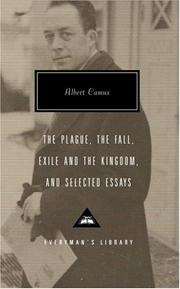
by Albert Camus
“Camus explores human judgment and self-deception in The Fall, examining how modern people use elaborate rationalizations to avoid confronting their limitations, while Kafka's work reveals the absurd bureaucratic systems that trap individuals.”
More from Philosophize This!
We summarize every new episode. Want them in your inbox?
Episode #252 ... Slaughterhouse-Five - Kurt Vonnegut
Episode #251 ... You Must Change Your Life, Pt. 2 - The Worlds That Make Us
Episode #250 ... You Must Change Your Life. - Peter Sloterdijk
Episode #249 ... The Trap of Modern Cynicism - Peter Sloterdijk
Episode #248 ... What philosophers say about lying.
Similar Episodes
Related episodes from other podcasts

Modern Wisdom
Oct 12
Why Life Feels So Dull All The Time (and how to fix it) - Robert Greene - #1162

Huberman Lab
Sep 28
What Humans, Animals and Plants Tell Us About Consciousness | Michael Pollan

The Jordan Harbinger Show
Sep 17
1383: Christopher Ryan | The Dark Side of Civilization and Progress

The Diary of a CEO
Jul 24
Most Replayed Moment: Matthew McConaughey - The Comfort Crisis Is Destroying Your Potential!

The Futur
Feb 4
The Hidden Cost of Hustle Culture w/ Panache Desai | Ep 418
Explore Related Topics
This podcast is featured in Best Philosophy Podcasts (2026) — ranked and reviewed with AI summaries.
You're clearly into Philosophize This!.
Every Monday, we deliver AI summaries of the latest episodes from Philosophize This! and 192+ other podcasts. Free for one show.
Start My Monday DigestNo credit card · Unsubscribe anytime