Episode #243 ... Hamlet - William Shakespeare
Episode
30 min
Read time
2 min
Topics
Relationships, Psychology & Behavior, Philosophy & Wisdom
AI-Generated Summary
Key Takeaways
- ✓Knowledge Paralysis: Hamlet cannot act because he sees through moral rationalizations people use to justify their behavior. Unlike Oedipus who acts in ignorance, Hamlet's insight into complexity prevents any decision, demonstrating how understanding can kill the ability to take action in the world.
- ✓Surveillance State Structure: The play functions as a drama of omnipresent espionage where external surveillance by Claudius's spy network produces internal self-surveillance in Hamlet. This creates neuroticism and constant self-analysis as a survival mechanism within a police state environment that eliminates free space.
- ✓Ophelia as Tragic Hero: Ophelia represents genuine vulnerability and love capacity that Hamlet lacks. Her death becomes a protest act exposing how the royal court reduced her to nothing through manipulation. Unlike Hamlet's paralysis, she maintains the ability to act despite having no control.
- ✓Hell as Lovelessness: Hamlet embodies Dostoevsky's concept that hell is the inability to love. His constant retreat into intellectual analysis and need for rational control prevents vulnerability. Every approach of love triggers humor, cruelty, or social performance to avoid showing need or emotional exposure.
What It Covers
Stephen West explores Shakespeare's Hamlet through a modern philosophical lens, examining how the play addresses surveillance states, moral paralysis, and the relationship between knowledge and action through interpretations by Simon Critchley and Jameson Webster.
Key Questions Answered
- •Knowledge Paralysis: Hamlet cannot act because he sees through moral rationalizations people use to justify their behavior. Unlike Oedipus who acts in ignorance, Hamlet's insight into complexity prevents any decision, demonstrating how understanding can kill the ability to take action in the world.
- •Surveillance State Structure: The play functions as a drama of omnipresent espionage where external surveillance by Claudius's spy network produces internal self-surveillance in Hamlet. This creates neuroticism and constant self-analysis as a survival mechanism within a police state environment that eliminates free space.
- •Ophelia as Tragic Hero: Ophelia represents genuine vulnerability and love capacity that Hamlet lacks. Her death becomes a protest act exposing how the royal court reduced her to nothing through manipulation. Unlike Hamlet's paralysis, she maintains the ability to act despite having no control.
- •Hell as Lovelessness: Hamlet embodies Dostoevsky's concept that hell is the inability to love. His constant retreat into intellectual analysis and need for rational control prevents vulnerability. Every approach of love triggers humor, cruelty, or social performance to avoid showing need or emotional exposure.
Notable Moment
The episode reframes the famous soliloquy as representing modern existence where people constantly question and second-guess themselves. Even the seemingly simple question of continuing life becomes an endless internal debate for those trapped in perpetual analysis without moral certainty.
Episode Transcript
Hello everyone. I'm Stephen West. This is Philosophize This. Patreon.com/philosophize This. Philosophical writing on Substack at Philosophize This on there. I hope you love the show today. So today we're talking about the play Hamlet by Shakespeare. And this being the third episode we've done on his work, I want to do something a little more inspirational this time. See, usually we talk about the events of the play. We give analysis from people who have dedicated their lives to Shakespeare, and both those will certainly be in this episode. But the thing I want to do that's a bit more today is to inspire you to read classic literature like this a bit differently. I want to talk about reading this play more like a philosopher might be reading it. If part of the job of a philosopher is to take concepts that seem really familiar to us, something like love or justice, and if part of what they do is work through them and show us a whole other side of the thing that can help us see the world in a new way, well, then Hamlet is a very familiar play from classic literature. Right? So what if a philosopher reworked an entire play to similarly give us an exciting new way of seeing it that breathes life into the work and makes it even more relevant? Building on what Nietzsche, Hegel, Benjamin, and others thought about Hamlet as a play, philosopher Simon Critchley and psychoanalyst Jameson Webster are going to team up and interpret Hamlet as a play through a much more modern, tragic philosophical lens than you typically hear about. And while they're not against more traditional takes on the play, they just call them a kind of biscuit box Shakespeare. That's the term they used in an interview one time. Meaning, it's kinda generic. Right? Like, there's a take on Hamlet that everybody knows. It's the kind of reading of the play that'll get you an A on your test in school. There's nothing evil about that. But they do think that Shakespeare should shake something up in people if it can. And the reading of the play they lay out in their book called Stay Illusion, The Hamlet Doctrine, is gonna be something that does just that by the end of this episode here today. Anyway, lot to cover, so let's get right into the events of the play. The play begins at the front walls of a castle in Denmark. Now, the guards of this castle, stationed up in the watchtowers at night, for the last few nights, they've seen something that's been kind of freaking them out a bit. There's a ghost that's been visiting them on the front platform of the castle that when it shows up, it just comes up to them, stares them in the face, and when they try to go up to talk to it, it turns around and leaves, just like everyone in my elementary …
Get the full transcript (6,507 words) + summary by email — free
One-time email with the complete transcript and AI summary of this episode. No account needed.
One email, no spam. We’ll also show you what SignalCast does.

You just read a 3-minute summary of a 27-minute episode.
Get Philosophize This! summarized like this every Monday — plus up to 2 more podcasts, free.
Pick Your Podcasts — FreeKeep Reading
More from Philosophize This!
Episode #252 ... Slaughterhouse-Five - Kurt Vonnegut
Aug 29 · 34 min

The Diary of a CEO
No.1 Christianity Expert: The Truth About Christianity! The Case For Jesus (Historian's Proof)
Mar 9
More from Philosophize This!
Episode #251 ... You Must Change Your Life, Pt. 2 - The Worlds That Make Us
Aug 8 · 35 min

Stuff You Should Know
SYSK Gets Weird Playlist: Dragons: As Real as Mermaids
Sep 18
Books, tools, and gear mentioned in this episode
SignalCast may earn commission on purchases via these links. As an Amazon Associate, SignalCast earns from qualifying purchases.
Books
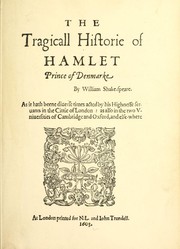
by William Shakespeare
“Stephen West explores Shakespeare's Hamlet through a modern philosophical lens, examining how the play addresses surveillance states, moral paralysis, and the relationship between knowledge and action through interpretations by Simon Critchley and Jameson Webster.”
More from Philosophize This!
We summarize every new episode. Want them in your inbox?
Episode #252 ... Slaughterhouse-Five - Kurt Vonnegut
Episode #251 ... You Must Change Your Life, Pt. 2 - The Worlds That Make Us
Episode #250 ... You Must Change Your Life. - Peter Sloterdijk
Episode #249 ... The Trap of Modern Cynicism - Peter Sloterdijk
Episode #248 ... What philosophers say about lying.
Similar Episodes
Related episodes from other podcasts

The Diary of a CEO
Mar 9
No.1 Christianity Expert: The Truth About Christianity! The Case For Jesus (Historian's Proof)

Stuff You Should Know
Sep 18
SYSK Gets Weird Playlist: Dragons: As Real as Mermaids
Stuff You Should Know
Jun 19
How Occam's Razor Works

How to Take Over the World
Sep 22
Nietzsche and the Death of God (Part 1)

The Rich Roll Podcast
Oct 5
Journalist Anand Giridharadas On The Lost Art Of Empathy, Compassion, & Understanding Each Other
Explore Related Topics
This podcast is featured in Best Philosophy Podcasts (2026) — ranked and reviewed with AI summaries.
You're clearly into Philosophize This!.
Every Monday, we deliver AI summaries of the latest episodes from Philosophize This! and 192+ other podcasts. Free for one show.
Start My Monday DigestNo credit card · Unsubscribe anytime