Episode #241 ... The Tragedy of Julius Caesar - William Shakespeare
Episode
31 min
Read time
2 min
Topics
Psychology & Behavior, Philosophy & Wisdom, Books & Authors
AI-Generated Summary
Key Takeaways
- ✓Political Violence Paradox: Assassinating leaders in republics strengthens their cause rather than ending it. Violence angers supporters, transforms victims into symbols, and contradicts the peaceful political process conspirators claim to protect through their actions.
- ✓Honor as Manipulation Tool: Living by honor codes without moral deliberation makes people easily manipulated. Cassius uses fake letters from citizens and questions Brutus's honor to override his rational thinking and recruit him into the assassination plot.
- ✓Rhetoric Determines Power: In republics, political power depends on persuasive rhetoric, not truth. Mark Antony's emotional speech reverses the crowd's support from Brutus's rational arguments within minutes, forcing conspirators to flee Rome immediately.
- ✓Four Rhetoric Types: Shakespeare demonstrates four persuasion styles: Brutus uses rational narratives, Mark Antony wields emotion as a weapon, Cassius employs private Machiavellian tactics, and Caesar commands through authority to achieve different political outcomes.
What It Covers
Shakespeare's Julius Caesar explores political violence, rhetoric's power in republics, and how moral idealism makes leaders vulnerable to manipulation. Brutus represents stoicism conflicting with loyalty, while conspirators' assassination backfires catastrophically.
Key Questions Answered
- •Political Violence Paradox: Assassinating leaders in republics strengthens their cause rather than ending it. Violence angers supporters, transforms victims into symbols, and contradicts the peaceful political process conspirators claim to protect through their actions.
- •Honor as Manipulation Tool: Living by honor codes without moral deliberation makes people easily manipulated. Cassius uses fake letters from citizens and questions Brutus's honor to override his rational thinking and recruit him into the assassination plot.
- •Rhetoric Determines Power: In republics, political power depends on persuasive rhetoric, not truth. Mark Antony's emotional speech reverses the crowd's support from Brutus's rational arguments within minutes, forcing conspirators to flee Rome immediately.
- •Four Rhetoric Types: Shakespeare demonstrates four persuasion styles: Brutus uses rational narratives, Mark Antony wields emotion as a weapon, Cassius employs private Machiavellian tactics, and Caesar commands through authority to achieve different political outcomes.
Notable Moment
Brutus bathes in Caesar's blood believing future historians will celebrate this visual as tyranny's defeat, demonstrating how revolutionaries construct nostalgic fantasies about republics that never existed while committing violence they claim prevents.
Episode Transcript
Hello, everyone. I'm Stephen West. This is Philosophize This. Patreon.com/philosophizethis. Philosophical writing on Substack at Philosophize This on there. Hope you love the show today. So the following here is a guide for someone that's wanting to know more about the philosophy written into the tragedy of Julius Caesar, a play written by William Shakespeare. Because there's a lot he wanted to say in this play about political violence, about the irony of living your life based on a moral ideal, about the importance of actually asking the correct questions when it comes to rhetoric and its impact on mass psychology. And out of respect to your time, I just want to get right into the story today and talk about how Shakespeare makes a drama or a tragic play out of the actual assassination of Julius Caesar that occurred in the real world. Should be said, there's certainly plenty about this play that's not historically accurate. But look, it is truly impressive how much Shakespeare works in real people and events that were close to Julius Caesar when he was killed. All of this Shakespeare takes mostly from the historian Plutarch, for whatever it's worth, and his description of what happened in Rome all those years ago. Anyway, all these characters are going to be critical for understanding what he was going for, and we'll understand it by the end of this episode. The play begins, the curtain opens, and the first thing we see is a giant party that's going on in the streets of Rome. A mass of people have taken to the streets and are cheering and celebrating the return of Julius Caesar and his army. See, Rome's a society at this point. It's in a pretty messy situation internally. In the decades leading up to this moment, Rome has had a few civil wars. Tyrants have ascended to power. They've been overthrown by other tyrants. There's a lot of infighting about what the direction is that the country should be going in. But in the current moment, though, Rome is a republic, at least for now. And the whole point of a republic to Rome is that no one person is gonna run everything. Power is something that gets spread out across multiple different offices and councils, and the people of a republic are supposed to show up and argue on behalf of what they think is best for the city. In other words, despite whatever real fundamental differences may exist between the citizens, there's importantly always in a republic an agreement among them that they want to find a way to work together on it. But when Caesar's returning with his army here and the people are in the streets celebrating it, the play begins with two elected officials that are watching this party going on, and they're commenting on how dangerous this all seems to be for the health of the Republic. Look at how fickle and easily influenced the crowd is, they …
Get the full transcript (6,795 words) + summary by email — free
One-time email with the complete transcript and AI summary of this episode. No account needed.
One email, no spam. We’ll also show you what SignalCast does.

You just read a 3-minute summary of a 28-minute episode.
Get Philosophize This! summarized like this every Monday — plus up to 2 more podcasts, free.
Pick Your Podcasts — FreeKeep Reading
More from Philosophize This!
Episode #252 ... Slaughterhouse-Five - Kurt Vonnegut
Aug 29 · 34 min

The Bulwark Podcast
Bill Kristol: A Weekend of Tragedy
Dec 15
More from Philosophize This!
Episode #251 ... You Must Change Your Life, Pt. 2 - The Worlds That Make Us
Aug 8 · 35 min

How to Take Over the World
Cleopatra (Part 1)
Nov 11
Books, tools, and gear mentioned in this episode
SignalCast may earn commission on purchases via these links. As an Amazon Associate, SignalCast earns from qualifying purchases.
Books
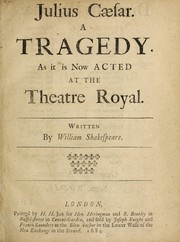
by William Shakespeare
“Shakespeare's Julius Caesar explores political violence, rhetoric's power in republics, and how moral idealism makes leaders vulnerable to manipulation.”
More from Philosophize This!
We summarize every new episode. Want them in your inbox?
Episode #252 ... Slaughterhouse-Five - Kurt Vonnegut
Episode #251 ... You Must Change Your Life, Pt. 2 - The Worlds That Make Us
Episode #250 ... You Must Change Your Life. - Peter Sloterdijk
Episode #249 ... The Trap of Modern Cynicism - Peter Sloterdijk
Episode #248 ... What philosophers say about lying.
Similar Episodes
Related episodes from other podcasts


Explore Related Topics
This podcast is featured in Best Philosophy Podcasts (2026) — ranked and reviewed with AI summaries.
You're clearly into Philosophize This!.
Every Monday, we deliver AI summaries of the latest episodes from Philosophize This! and 192+ other podcasts. Free for one show.
Start My Monday DigestNo credit card · Unsubscribe anytime