Episode #226 - Albert Camus - The Rebel
Episode
31 min
Read time
2 min
Topics
Health & Wellness, Philosophy & Wisdom, Science & Discovery
AI-Generated Summary
Key Takeaways
- ✓Rebellion as affirmation: When a person says no to oppression, they simultaneously affirm a universal borderline of human dignity that cannot be crossed for themselves or others, creating justice without abstract philosophical systems through lived experience.
- ✓Revolution versus rebellion: Genuine rebellion maintains limits on action and respects human dignity, while revolution removes these constraints through abstract ideologies, transforming movements like the French Revolution or Stalinism from dignity preservation into systematic oppression and murder.
- ✓Death penalty contradiction: Capital punishment represents premeditated murder disguised as justice, requiring months of planning and ceremony to kill someone, which exceeds any criminal's premeditation and violates the very human dignity it claims to protect through legal abstractions.
- ✓Artist as model rebel: Artists demonstrate proper rebellion by rejecting the world as it is while respecting constraints of their medium, never imposing total chaos or following rigid rules, offering a template for political action that transforms reality without destroying human limits.
What It Covers
Albert Camus argues in The Rebel that authentic rebellion against injustice requires internal limits rooted in human dignity, not abstract ideological systems that justify violence and oppression in the name of higher causes.
Key Questions Answered
- •Rebellion as affirmation: When a person says no to oppression, they simultaneously affirm a universal borderline of human dignity that cannot be crossed for themselves or others, creating justice without abstract philosophical systems through lived experience.
- •Revolution versus rebellion: Genuine rebellion maintains limits on action and respects human dignity, while revolution removes these constraints through abstract ideologies, transforming movements like the French Revolution or Stalinism from dignity preservation into systematic oppression and murder.
- •Death penalty contradiction: Capital punishment represents premeditated murder disguised as justice, requiring months of planning and ceremony to kill someone, which exceeds any criminal's premeditation and violates the very human dignity it claims to protect through legal abstractions.
- •Artist as model rebel: Artists demonstrate proper rebellion by rejecting the world as it is while respecting constraints of their medium, never imposing total chaos or following rigid rules, offering a template for political action that transforms reality without destroying human limits.
Notable Moment
Camus describes how his father supported capital punishment in theory but became physically ill after witnessing an actual execution, revealing how philosophical abstractions allow people to endorse violence they could never personally carry out face-to-face.
Episode Transcript
Hello, everyone. I'm Stephen West. This is philosophize this. So this is part three of this series we've been doing on the work of Albert Camus. Consider listening to the last two before this one, but, you know, I'm not gonna tell you how to live your life. Solidarity was the concept that Camus laid out in his book, The Plague, where he says that affirming life as it is means affirming that other human beings live in the same world that you do. And that when the absurd comes knocking at your door, whatever it is, solidarity means to affirm that these people face a similar set of existential dilemmas that you do as a being, that to ignore the people around you or to justify their suffering with reasons for why they deserve it. Well, to Camus, this is fundamentally to deny something important about the reality that you live in. Now as we know, none of this is grounded for him in a philosophical system. As we've talked about, this emerges for him simply from a lucid affirmation of our own nature and the nature of the universe, the tension between those two. And as I teased at the end of last episode, this concept of solidarity will become the foundation for extending what he thinks we can say from this place of lucid revolt. Solidarity is gonna allow him to make a case for justice. But it can be confusing to hear that at first. Like, how in God's name is he gonna pull something like this off? Justice requires laws. Laws are theoretical abstractions. Camus is the kind of guy on Halloween that'll steal candy from someone dressed up as a theoretical abstraction. He doesn't like them. Certainly not when they claim to be universal. He lays out his case for this justice of his in a very long essay he wrote in 1951 called The Rebel. It should be said the same way Dostoevsky might be most famous for writing Crime and Punishment, but that superfans of his always have one of his other books as their top favorite. Camus may be most known for writing The Stranger or The Myth of Sisyphus, but this essay, The Rebel's The One, that people really serious about his work will often say contains his biggest contribution to human thought. Just saying this is a highly respected book we're talking about today. Camus starts the rebel coming out swinging. He's got no time to lollygag around anymore, not in a world that has no theory of justice yet. He's gotta do something. And immediately, he gives us one of those powerful images he's known for in his work. He gets us to picture a slave who spent their whole life taking orders, and they suddenly decide they're not gonna obey some new order they've been given. They say no to the master that's trying to force them to do something. Well, Camus asks in the first line …
Get the full transcript (6,157 words) + summary by email — free
One-time email with the complete transcript and AI summary of this episode. No account needed.
One email, no spam. We’ll also show you what SignalCast does.

You just read a 3-minute summary of a 28-minute episode.
Get Philosophize This! summarized like this every Monday — plus up to 2 more podcasts, free.
Pick Your Podcasts — FreeKeep Reading
More from Philosophize This!
Episode #252 ... Slaughterhouse-Five - Kurt Vonnegut
Aug 29 · 34 min

The Rest is History
648. The Fall of the Incas: Battle for the Sacred City (Part 5)
Mar 2
More from Philosophize This!
Episode #251 ... You Must Change Your Life, Pt. 2 - The Worlds That Make Us
Aug 8 · 35 min

Everything Everywhere Daily
The Boxer Rebellion (Encore)
Dec 31
Books, tools, and gear mentioned in this episode
SignalCast may earn commission on purchases via these links. As an Amazon Associate, SignalCast earns from qualifying purchases.
Books
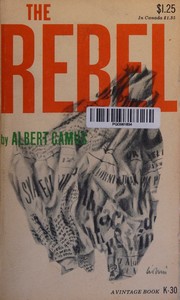 The RebelBy guest
by Albert Camus
“Albert Camus argues in The Rebel that authentic rebellion against injustice requires internal limits rooted in human dignity, not abstract ideological systems that justify violence and oppression in the name of higher causes.”
More from Philosophize This!
We summarize every new episode. Want them in your inbox?
Episode #252 ... Slaughterhouse-Five - Kurt Vonnegut
Episode #251 ... You Must Change Your Life, Pt. 2 - The Worlds That Make Us
Episode #250 ... You Must Change Your Life. - Peter Sloterdijk
Episode #249 ... The Trap of Modern Cynicism - Peter Sloterdijk
Episode #248 ... What philosophers say about lying.
Similar Episodes
Related episodes from other podcasts

The Rest is History
Mar 2
648. The Fall of the Incas: Battle for the Sacred City (Part 5)

Everything Everywhere Daily
Dec 31
The Boxer Rebellion (Encore)

Pod Save America
Nov 25
How Many Republicans Will Follow MTG?

Hardcore History
Jan 2
Show 72 - Mania for Subjugation II

Lenny's Podcast
Aug 16
OpenAI’s Head of Design: This is the best time in history to be a designer | Ian Silber
Explore Related Topics
This podcast is featured in Best Philosophy Podcasts (2026) — ranked and reviewed with AI summaries.
Read this week's Health & Longevity Podcast Insights — cross-podcast analysis updated weekly.
You're clearly into Philosophize This!.
Every Monday, we deliver AI summaries of the latest episodes from Philosophize This! and 192+ other podcasts. Free for one show.
Start My Monday DigestNo credit card · Unsubscribe anytime