Episode #225 ... Albert Camus - The Plague
Episode
30 min
Read time
2 min
Topics
Software Development, Philosophy & Wisdom
AI-Generated Summary
Key Takeaways
- ✓Metaphysical rebellion over ethics: Camus presents solidarity as descriptive metaphysical rebellion, not moral prescription. Humans naturally care about their immediate environment and extend empathy to others facing shared existential struggles, without requiring abstract moral systems to justify compassionate action toward suffering people.
- ✓Absurd hero framework: Heroism emerges from ordinary proportional action within one's station, not superhuman efforts. Doctor Rieu performs daily house calls and medical care during plague outbreak, demonstrating that measured persistence against senseless destruction constitutes authentic revolt, avoiding totalitarian impulse to violently solve unsolvable problems.
- ✓Silence enables injustice: Propaganda and abuse require barriers between people to prevent lucid understanding. Open communication and free speech become essential tools for confronting reality as it exists, since restrictive systems depend on narrow framing and limited contact to maintain control over populations and justify suffering.
- ✓Provisional meaning suffices: Lived experience provides valid ground for action without universal abstractions. Visceral response to child drowning in puddle offers provisional meaning that functions practically like universal principle for most humans, revised moment by moment, avoiding dangerous moral systems that enable fascism while addressing exceptional cases individually.
What It Covers
Albert Camus' novel The Plague explores how communities confront absurdity through solidarity rather than individual revolt, depicting characters who respond to epidemic crisis with empathy, duty, and measured action instead of philosophical abstraction or denial.
Key Questions Answered
- •Metaphysical rebellion over ethics: Camus presents solidarity as descriptive metaphysical rebellion, not moral prescription. Humans naturally care about their immediate environment and extend empathy to others facing shared existential struggles, without requiring abstract moral systems to justify compassionate action toward suffering people.
- •Absurd hero framework: Heroism emerges from ordinary proportional action within one's station, not superhuman efforts. Doctor Rieu performs daily house calls and medical care during plague outbreak, demonstrating that measured persistence against senseless destruction constitutes authentic revolt, avoiding totalitarian impulse to violently solve unsolvable problems.
- •Silence enables injustice: Propaganda and abuse require barriers between people to prevent lucid understanding. Open communication and free speech become essential tools for confronting reality as it exists, since restrictive systems depend on narrow framing and limited contact to maintain control over populations and justify suffering.
- •Provisional meaning suffices: Lived experience provides valid ground for action without universal abstractions. Visceral response to child drowning in puddle offers provisional meaning that functions practically like universal principle for most humans, revised moment by moment, avoiding dangerous moral systems that enable fascism while addressing exceptional cases individually.
Notable Moment
Camus recounts his father attending a public execution as death penalty supporter, then returning home to vomit uncontrollably. This image reveals the profound gap between abstract theoretical support for capital punishment and the visceral reality of witnessing state-sanctioned killing firsthand.
Episode Transcript
Hello, everyone. I'm Stephen West. This is Philosophize This. So this here is a philosophical companion for reading the book, The Plague by Albert Camus. Heads up, this episode builds off the one we just did before this on his book, The Stranger. So maybe listen to that one before you do this one. That said, coming into this episode, we already know a couple important things about Camus so far in this series. We know that Camus thought of himself as an artist and not a philosopher, that he didn't want to be a philosopher, that philosophers in his eyes are people that build systems out of theoretical abstractions, and that he thinks abstract argument not only misses something deeply important about the human condition, but that it sets a dangerous precedent for people to live their lives believing that philosophy can somehow provide some neat justification for things that go on in the world. But that this is all nonsense for Camus at some level. This is just philosophical suicide. So what we see instead in his work is him not being someone who wrote philosophical works where he might write out propositions and then try to organize them into a system, you know, more classic way philosophers have done things. Camus is much more interested in his work in presenting what he calls images of the human condition. His thinking is that by dramatizing these ideas and creating images, there won't be so much of a temptation for people to try to reduce them into some kind of delusional system of universals. As Camus himself once said, what is a novel, but just a philosophy expressed in images? Well, communicating in images like this is gonna be a big part of this radical project he's embarking on in his career, where he's refusing to ground his positions in theoretical abstractions of any type. Again, he sees himself as an artist and not a philosopher. This is why things like the myth of Sisyphus, famous essay by him. This is why he creates such powerful, memorable images in it. I mean, think about it. A man named Sisyphus that's condemned by the gods to push a boulder up a hill for all eternity. Only for when the boulder reaches the top of the hill to have it roll back down, forcing Sisyphus to start again, repeating this until the end of time. This is a powerful image and, fantastic for the glutes, by the way, if you're looking for a nice deep range of motion. But to understand this book we're talking about today, the plague, and why this marks such a major shift in his work, it's gonna be important to understand all that Camus was trying to say here at the end of the myth of Sisyphus with this powerful image he painted in his work. Because as it turns out, there's a really overrated line, I think, from the myth of Sisyphus that basically everyone …
Get the full transcript (6,718 words) + summary by email — free
One-time email with the complete transcript and AI summary of this episode. No account needed.
One email, no spam. We’ll also show you what SignalCast does.

You just read a 3-minute summary of a 27-minute episode.
Get Philosophize This! summarized like this every Monday — plus up to 2 more podcasts, free.
Pick Your Podcasts — FreeKeep Reading
More from Philosophize This!
Episode #252 ... Slaughterhouse-Five - Kurt Vonnegut
Aug 29 · 34 min

10% Happier with Dan Harris
Trudging Through Your Own Life? Here's the Stoic Fix | Maria Semple
Apr 17
More from Philosophize This!
Episode #251 ... You Must Change Your Life, Pt. 2 - The Worlds That Make Us
Aug 8 · 35 min

The Partially Examined Life
PEL Presents PMP#215: Hamnet Dramatizes Shakespeare
Feb 19
Books, tools, and gear mentioned in this episode
SignalCast may earn commission on purchases via these links. As an Amazon Associate, SignalCast earns from qualifying purchases.
Books
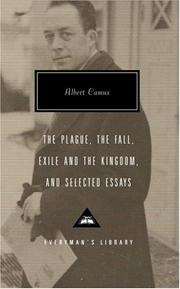 The PlagueRecommended
by Albert Camus
“Albert Camus' novel The Plague explores how communities confront absurdity through solidarity rather than individual revolt, depicting characters who respond to epidemic crisis with empathy, duty, and measured action instead of philosophical abstraction or denial.”
More from Philosophize This!
We summarize every new episode. Want them in your inbox?
Episode #252 ... Slaughterhouse-Five - Kurt Vonnegut
Episode #251 ... You Must Change Your Life, Pt. 2 - The Worlds That Make Us
Episode #250 ... You Must Change Your Life. - Peter Sloterdijk
Episode #249 ... The Trap of Modern Cynicism - Peter Sloterdijk
Episode #248 ... What philosophers say about lying.
Similar Episodes
Related episodes from other podcasts


Explore Related Topics
This podcast is featured in Best Philosophy Podcasts (2026) — ranked and reviewed with AI summaries.
Read this week's Software Engineering Podcast Insights — cross-podcast analysis updated weekly.
You're clearly into Philosophize This!.
Every Monday, we deliver AI summaries of the latest episodes from Philosophize This! and 192+ other podcasts. Free for one show.
Start My Monday DigestNo credit card · Unsubscribe anytime