Angela Duckworth on why grit isn’t enough
Episode
34 min
Read time
2 min
Topics
Career Growth, Productivity, Remote Work
AI-Generated Summary
Key Takeaways
- ✓Inside Game vs. Outside Game: Duckworth's original *Grit* framework established that effort outweighs natural talent, but her follow-up adds a second layer: the environment where effort is applied determines its return. High grit in a poor-fit situation yields diminishing results. Optimizing both personal drive and situational context is required to reach full potential.
- ✓Situational Change Strategy — Small Steps, Soft Knees: When circumstances feel impossible to change, Duckworth recommends starting with the smallest adjustable variable rather than imagining wholesale transformation. Audit what can be changed — people you spend time with, physical objects in your space, daily routines — and systematically work through that list. Incremental situational shifts compound into significant behavioral change over time.
- ✓Agglomeration Effect on Career Growth: Physical proximity to centers of excellence accelerates development in measurable ways. Duckworth, Adam Grant, and Katie Milkman co-authored their first study after a chance encounter at a Penn dental waiting room. Deliberately relocating to industry hubs — as AI founder Cody Coleman did by moving to the Bay Area — creates compounding advantages unavailable remotely.
- ✓Peer Accountability Over Authority: De La Salle High School's football team built a 151-game win streak using commitment cards — players write weekly goals on index cards, exchange them with a teammate, and receive a public pass/fail report the following week. Research and observation confirm peer accountability consistently outperforms top-down managerial accountability in sustaining high performance cultures.
- ✓Remote Work and Well-Being Data: A study published in *Science* compared workers in remote-compatible professions against those in roles requiring physical presence. Workers in remote-transitioned sectors reported measurably lower well-being. Duckworth recommends remote workers create physical work-to-home transitions, use co-working spaces, and budget for periodic in-person visits with colleagues to counteract isolation and cognitive blur.
What It Covers
Psychology researcher Angela Duckworth joins Masters of Scale to argue that grit alone is insufficient for achievement. Her follow-up book, *Situated*, contends that environment, peer culture, and physical location shape outcomes as powerfully as individual character traits, requiring mastery of both internal mindset and external circumstances.
Key Questions Answered
- •Inside Game vs. Outside Game: Duckworth's original *Grit* framework established that effort outweighs natural talent, but her follow-up adds a second layer: the environment where effort is applied determines its return. High grit in a poor-fit situation yields diminishing results. Optimizing both personal drive and situational context is required to reach full potential.
- •Situational Change Strategy — Small Steps, Soft Knees: When circumstances feel impossible to change, Duckworth recommends starting with the smallest adjustable variable rather than imagining wholesale transformation. Audit what can be changed — people you spend time with, physical objects in your space, daily routines — and systematically work through that list. Incremental situational shifts compound into significant behavioral change over time.
- •Agglomeration Effect on Career Growth: Physical proximity to centers of excellence accelerates development in measurable ways. Duckworth, Adam Grant, and Katie Milkman co-authored their first study after a chance encounter at a Penn dental waiting room. Deliberately relocating to industry hubs — as AI founder Cody Coleman did by moving to the Bay Area — creates compounding advantages unavailable remotely.
- •Peer Accountability Over Authority: De La Salle High School's football team built a 151-game win streak using commitment cards — players write weekly goals on index cards, exchange them with a teammate, and receive a public pass/fail report the following week. Research and observation confirm peer accountability consistently outperforms top-down managerial accountability in sustaining high performance cultures.
- •Remote Work and Well-Being Data: A study published in *Science* compared workers in remote-compatible professions against those in roles requiring physical presence. Workers in remote-transitioned sectors reported measurably lower well-being. Duckworth recommends remote workers create physical work-to-home transitions, use co-working spaces, and budget for periodic in-person visits with colleagues to counteract isolation and cognitive blur.
Notable Moment
Duckworth describes witnessing De La Salle football players walking onto the field in full gear holding hands with their accountability partners before each game — a ritual that visually captured how structured peer commitment, not coaching authority, drove the longest winning streak in American high school sports history.
Episode Transcript
Hey, folks. Jeff Berman here. I'm thrilled to share some of the new names who will be joining us at this year's Masters of Scale Summit. This may be our biggest stage yet. Reed Hastings, Meredith Whitaker, Van Jones, Amjad Masad, and more will be there with us October twentieth through twenty second in San Francisco. If you're building something great or you want to build something great, we want you there with us too. Join us at mastersofscale.com/apply20six. That's mastersofscale.com/apply20six. When human beings think about what determines behavior, they think intentions determine behavior. That's not wrong, but what social psychologists will point out is that we make an error when we forget about how powerful the situation is. I was astonished. I have never seen in all of my years of studying companies a culture where unvarnished negative feedback was taken with such maturity and even enthusiasm. I'm sure a lot of people hate me for saying so many you know, negative things about working in your home office all day. And I know there are upsides, but I have to say I have so many misgivings about it. The NFL may be, you know, the last bipartisan community builder we have. Whether you're red or blue, like, you know, e a g l e s. Go eagles. Like Oh, Angel, please. No. No. No. We can't. We can't. No. No. That's where we gotta cut it. We can't we can't have that. We're gonna edit that out. Fly, eagles. Fly. I'm a I'm a Philly girl. This is Masters of Scale. I'm Jeff Berman, your host. I am thrilled to be joined today by Angela Duckworth. Angela is a brilliant psychology professor and co director of the Penn Wharton Behavior Change for Good Institute. With millions of copies sold, it's a good bet that her first book, Grit, is already on your shelf. She is now back with a fascinating follow-up. Angela, welcome back to Masters of Scale. It is good to be back, and it's good to be talking to you again, Jeff. It is great to be talking to you. It occurred to me that maybe you perceived that the market overcorrected toward grit, and situated almost reads as a response to that overcorrection. Is that a fair way to talk about why situated is such an important follow-up to grit? Jeff, I think that the idea of this second book is maybe not a correction of grit, but it is a completion. I mean, I'm a psychologist who will always be obsessed with achievement. I think the completion of the story of grit says that for all the things that we need to work on so that the inside game, you know, our mental game, our mindset, our attitudes, our assumptions, our goals, the way we think about our goals, the inside game is always going to be important. If there's a message of grit, it's that effort matters, and effort matters arguably more than …
Get the full transcript (6,689 words) + summary by email — free
One-time email with the complete transcript and AI summary of this episode. No account needed.
One email, no spam. We’ll also show you what SignalCast does.

You just read a 3-minute summary of a 31-minute episode.
Get Masters of Scale summarized like this every Monday — plus up to 2 more podcasts, free.
Pick Your Podcasts — FreeKeep Reading
More from Masters of Scale
Reid Hoffman and OpenAI CFO Sarah Friar on where AI goes from here
Oct 22 · 28 min

Modern Wisdom
Willpower Expert: The Secret To Effortless Discipline - Angela Duckworth - #1158
Oct 3
More from Masters of Scale
REI’s secrets to sustaining a beloved brand and touching grass
Oct 20 · 28 min

10% Happier with Dan Harris
When Life's Not Working, Don't Try Harder. Change Your Situation Instead. | Angela Duckworth
Sep 2
Books, tools, and gear mentioned in this episode
SignalCast may earn commission on purchases via these links. As an Amazon Associate, SignalCast earns from qualifying purchases.
Books
by Angela Duckworth
“Her follow-up book, *Situated*, contends that environment, peer culture, and physical location shape outcomes as powerfully as individual character traits, requiring mastery of both internal mindset and external circumstances.”
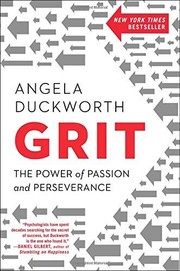
by Angela Duckworth
“Duckworth's original *Grit* framework established that effort outweighs natural talent, but her follow-up adds a second layer: the environment where effort is applied determines its return.”
More from Masters of Scale
We summarize every new episode. Want them in your inbox?
Reid Hoffman and OpenAI CFO Sarah Friar on where AI goes from here
REI’s secrets to sustaining a beloved brand and touching grass
Rich Roll’s ‘crash course’ in entrepreneurship
The AI race to save American science and reshape medicine forever
Pioneers of AI: OpenAI’s Tibo Sottiaux doesn’t want humans to be an ‘afterthought’
Similar Episodes
Related episodes from other podcasts

Modern Wisdom
Oct 3
Willpower Expert: The Secret To Effortless Discipline - Angela Duckworth - #1158

10% Happier with Dan Harris
Sep 2
When Life's Not Working, Don't Try Harder. Change Your Situation Instead. | Angela Duckworth

Cognitive Revolution
Sep 29
Obsolete or Irreplaceable? Garrison Lovely on Stopping the Race to Replace Human Labor

The Diary of a CEO
Aug 21
Most Replayed Moment: Better Sleep Doesn't Always Mean Longer Sleep! Fix These Habits Today
Modern Wisdom
Jul 9
Why You Feel Overwhelmed All The Time (and how to fix it) - David Epstein - #1121
Explore Related Topics
This podcast is featured in Best Business Podcasts (2026) — ranked and reviewed with AI summaries.
You're clearly into Masters of Scale.
Every Monday, we deliver AI summaries of the latest episodes from Masters of Scale and 192+ other podcasts. Free for one show.
Start My Monday DigestNo credit card · Unsubscribe anytime