Why You Feel Overwhelmed All The Time (and how to fix it) - David Epstein - #1121
Episode
78 min
Read time
3 min
Topics
Career Growth, Productivity, Relationships
AI-Generated Summary
Key Takeaways
- ✓Green Eggs and Ham Effect: Creativity increases when the easiest solution is blocked. Dr. Seuss wrote Cat in the Hat after being restricted to a 200-word vocabulary list, forcing him to develop his distinctive rhythm. Psychology research confirms this pattern: the brain defaults to familiar paths, so removing those defaults is the most reliable method for generating genuinely novel work.
- ✓Satisficing vs. Maximizing: People who set "good enough" thresholds and commit once reached report higher life satisfaction than maximizers who explore all options. Maximizers spend more time deciding, make no better choices, experience more regret, and prefer reversible decisions—which prevents full commitment. Herbert Simon, who coined "satisficing," wore identical clothing daily to preserve cognitive bandwidth for meaningful work.
- ✓Infinite Choice Causes Boredom: Since infinite scrolling was introduced, people report increasing boredom despite more entertainment options. In controlled experiments, participants given one video from a 20-item set reported less boredom than those who could choose freely. The brain as a comparison engine means awareness of alternatives actively undermines enjoyment of the present experience.
- ✓Sliding vs. Deciding in Relationships: Researcher Scott Stanley finds younger people increasingly "slide" through relationship escalation—cohabiting when a lease expires, acquiring pets together—without explicit commitment. Compared to people who make deliberate in-or-out decisions, sliders show higher divorce rates and lower relationship satisfaction, demonstrating that preserving optionality indefinitely produces worse outcomes than intentional choice.
- ✓Task-Switching Destroys Productivity: Gloria Mark's workplace research shows average task-switching intervals collapsed from three minutes in 2004 to 45 seconds by 2022. Each switch leaves cognitive residue that degrades subsequent focus. Critically, attention becomes trained to self-interrupt at the habitual rate even without external triggers. Batching email into three to seven daily blocks and ending each workday by designating tomorrow's first task counters this pattern.
What It Covers
David Epstein joins Modern Wisdom to examine why constraints—not freedom—drive creativity, better decisions, and focused work. Drawing on psychology research, historical case studies from Dr. Seuss to Marvel Comics, and cognitive science on task-switching, Epstein argues that removing options forces deeper exploration and produces superior outcomes across art, business, and daily life.
Key Questions Answered
- •Green Eggs and Ham Effect: Creativity increases when the easiest solution is blocked. Dr. Seuss wrote Cat in the Hat after being restricted to a 200-word vocabulary list, forcing him to develop his distinctive rhythm. Psychology research confirms this pattern: the brain defaults to familiar paths, so removing those defaults is the most reliable method for generating genuinely novel work.
- •Satisficing vs. Maximizing: People who set "good enough" thresholds and commit once reached report higher life satisfaction than maximizers who explore all options. Maximizers spend more time deciding, make no better choices, experience more regret, and prefer reversible decisions—which prevents full commitment. Herbert Simon, who coined "satisficing," wore identical clothing daily to preserve cognitive bandwidth for meaningful work.
- •Infinite Choice Causes Boredom: Since infinite scrolling was introduced, people report increasing boredom despite more entertainment options. In controlled experiments, participants given one video from a 20-item set reported less boredom than those who could choose freely. The brain as a comparison engine means awareness of alternatives actively undermines enjoyment of the present experience.
- •Sliding vs. Deciding in Relationships: Researcher Scott Stanley finds younger people increasingly "slide" through relationship escalation—cohabiting when a lease expires, acquiring pets together—without explicit commitment. Compared to people who make deliberate in-or-out decisions, sliders show higher divorce rates and lower relationship satisfaction, demonstrating that preserving optionality indefinitely produces worse outcomes than intentional choice.
- •Task-Switching Destroys Productivity: Gloria Mark's workplace research shows average task-switching intervals collapsed from three minutes in 2004 to 45 seconds by 2022. Each switch leaves cognitive residue that degrades subsequent focus. Critically, attention becomes trained to self-interrupt at the habitual rate even without external triggers. Batching email into three to seven daily blocks and ending each workday by designating tomorrow's first task counters this pattern.
- •Paired Constraints Drive Artistic Innovation: Psychologist Patricia Stokes identified a two-step pattern in major artistic breakthroughs: first a "preclude constraint" that explicitly blocks the current status quo technique, then a "promote constraint" that mandates a replacement approach. Monet banned black entirely and mandated pure color adjacency, producing Impressionism. Marvel Comics developed complex long-running characters only after rivals limited them to eight titles monthly.
Notable Moment
Epstein shares an email from 84-year-old novelist Isabel Allende, who has published a bestseller roughly every 18 months for 44 years using strict January 8th start rituals. After finishing a manuscript early, she described total creative freedom as "lethal" and begged Epstein for a constrained project idea to restore structure and meaning.
Episode Transcript
What's the green eggs and ham effect? That is a describes a finding in psychology that people become more creative when the easiest solution is taken away from them. So it is named after the doctor Seuss book, green eggs and ham, which he wrote on a bet that he couldn't write a children's book using only 50 words. And that restriction forced him to experiment with his rollicking rhythm, right, because he couldn't experiment with vocabulary. So it's it got that name in psychology because it represents this huge body of work that shows as a cognitive scientist Daniel Willingham likes to say, you may think your brain is made for thinking, but it's actually made for preventing you from having to think whenever possible because thinking is energetically costly. And so your brain wants to do the convenient thing, the easy thing, what neuroscientists call the path of least resistance. Mhmm. Like, just reach for stuff you've seen before. And so it actually becomes kind of impossible to be creative unless the easiest thing you would reach for is is blocked. Mhmm. So the thing that actually led to that bet with Theodore Geisel, aka doctor Seuss, was before that, he was asked if he could write a children's book using about 200 words from a from a vocabulary list for kids. Is that so that most kids would have access to it, not not be able to not comprehend? That's right. And there was a a kind of visionary publisher who correctly deemed children's literature at the time very boring. And so he wanted to it was an assault on illiteracy. He said, look, kids are not learning to read in as big of numbers as they should. Why don't we try making something interesting for them? And doctor Seuss takes this list, looks at it, realizes there are almost no adjectives, and starts complaining to his wife. He basically he makes this very fine, I think, Susie comment. He says it's like trying to make a strudel without any strudels. And then he just throws his hands up and says, I'm just gonna take the first two rhyming words on the list and write a book. First two rhyming words, cat and hat, and the rest is history. So that's what forced him originally to develop that rollicking rhythm that he became known for because the things he would have done otherwise were were blocked. And so that green eggs and ham effect that a psychologist named is is summarizing this huge body of work that shows that the best way to prompt creativity is to pull away the path of least resistance, the convenient thing that people would look for otherwise. What would be the convenient path of least resistance when it came to writing that book? Because what it sounds like is that it is more effort to work with fewer words. Yes. Definitely. It's it is more effort because the the things that …
Get the full transcript (16,446 words) + summary by email — free
One-time email with the complete transcript and AI summary of this episode. No account needed.
One email, no spam. We’ll also show you what SignalCast does.

You just read a 3-minute summary of a 75-minute episode.
Get Modern Wisdom summarized like this every Monday — plus up to 2 more podcasts, free.
Pick Your Podcasts — FreeKeep Reading
More from Modern Wisdom
4 Men Share How They Hit Rock Bottom (and got out) - Dr K, Joe Hudson & Connor Beaton - #1159
Oct 5 · 141 min

Masters of Scale
Author David Epstein on why constraints fuel innovation
May 14
More from Modern Wisdom
Willpower Expert: The Secret To Effortless Discipline - Angela Duckworth - #1158
Oct 3 · 101 min

The Jordan Harbinger Show
1345: David Epstein | How Constraints Make Us Better
Jun 16
Books, tools, and gear mentioned in this episode
SignalCast may earn commission on purchases via these links. As an Amazon Associate, SignalCast earns from qualifying purchases.
Books
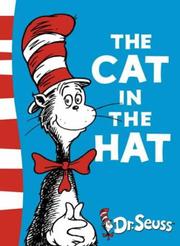
by Dr. Seuss
“Dr. Seuss wrote Cat in the Hat after being restricted to a 200-word vocabulary list, forcing him to develop his distinctive rhythm.”
More from Modern Wisdom
We summarize every new episode. Want them in your inbox?
4 Men Share How They Hit Rock Bottom (and got out) - Dr K, Joe Hudson & Connor Beaton - #1159
Willpower Expert: The Secret To Effortless Discipline - Angela Duckworth - #1158
How To Go Hard, Even When You Don’t Want To - Sam Sulek - #1157
James Sexton, Rick Glassman, Matt McCusker - Mostly Wise #4 - #1156
How To Make Your Creativity Beat The Algorithm (Live Performance) - Dylan Gossett - #1155
Similar Episodes
Related episodes from other podcasts

Masters of Scale
May 14
Author David Epstein on why constraints fuel innovation

The Jordan Harbinger Show
Jun 16
1345: David Epstein | How Constraints Make Us Better

The School of Greatness
May 25
The Science of Doing Less to Achieve More | David Epstein

We Study Billionaires
May 10
RWH068: How to Be Better in Work & Life w/ David Epstein

The Rich Roll Podcast
May 4
David Epstein On Why Constraints Drive Creativity, The Myth Of Productive Freedom, & How Limits Make Us Better
Explore Related Topics
This podcast is featured in Best Mindset Podcasts (2026) — ranked and reviewed with AI summaries.
You're clearly into Modern Wisdom.
Every Monday, we deliver AI summaries of the latest episodes from Modern Wisdom and 192+ other podcasts. Free for one show.
Start My Monday DigestNo credit card · Unsubscribe anytime