When Life's Not Working, Don't Try Harder. Change Your Situation Instead. | Angela Duckworth
Episode
64 min
Read time
3 min
Topics
Career Growth, Productivity, Health & Wellness
AI-Generated Summary
Key Takeaways
- ✓Situational Self-Control: Willpower is a fragile, unreliable mechanism for long-term behavior change. Research shows people who successfully maintain healthy habits restructure their environment before temptations develop, rather than resisting impulses in the moment. Removing unhealthy snacks from a workspace, for example, produces better dietary outcomes than repeatedly forcing yourself to choose fruit over chips through mental effort alone.
- ✓Phone Placement and Academic Performance: A Gallup-representative survey of U.S. middle and high school students found a direct correlation between phone distance during study and GPA — the farther the phone, the higher the grades. Placing your phone in another room creates enough friction to reduce compulsive checking significantly, making physical device placement one of the lowest-effort, highest-return situational changes available.
- ✓Reframing the Serenity Prayer: The cultural habit of looking outward for things you cannot change and inward for things you can is a mistake. Duckworth argues that agency and limitation exist on both sides — some internal traits (like genetic predispositions) are unchangeable, while many external circumstances are modifiable. The practical exercise: make two columns listing what you can and cannot change, then act on the second column.
- ✓Social Environment as Behavior Architecture: Alcoholics Anonymous works largely because it replaces a member's peer group — swapping drinking companions for a recovery community. Research by Wendy Wood confirms that even proximity to a liquor store increases alcoholism risk. Structuring who you spend time with functions as a behavioral intervention; joining a group pursuing the same goal (exercise, sobriety, learning) dramatically increases follow-through rates.
- ✓Declining Time Together: Americans are spending roughly one hour and fifty minutes more per day inside their homes compared to prior decades, a trend that predates COVID-19 and remote work. Data from the American Time Use Survey shows people report higher happiness during every activity — eating, resting, working — when another person is present. Deliberately scheduling in-person time functions as a direct wellbeing intervention.
What It Covers
Angela Duckworth, author of *Grit* and new book *Situated*, joins Dan Harris to argue that changing your external circumstances — physical environment, social networks, and daily settings — is more effective than relying on willpower alone. Research shows situational design outperforms self-control as a long-term strategy for behavior change, habit formation, and achieving meaningful goals.
Key Questions Answered
- •Situational Self-Control: Willpower is a fragile, unreliable mechanism for long-term behavior change. Research shows people who successfully maintain healthy habits restructure their environment before temptations develop, rather than resisting impulses in the moment. Removing unhealthy snacks from a workspace, for example, produces better dietary outcomes than repeatedly forcing yourself to choose fruit over chips through mental effort alone.
- •Phone Placement and Academic Performance: A Gallup-representative survey of U.S. middle and high school students found a direct correlation between phone distance during study and GPA — the farther the phone, the higher the grades. Placing your phone in another room creates enough friction to reduce compulsive checking significantly, making physical device placement one of the lowest-effort, highest-return situational changes available.
- •Reframing the Serenity Prayer: The cultural habit of looking outward for things you cannot change and inward for things you can is a mistake. Duckworth argues that agency and limitation exist on both sides — some internal traits (like genetic predispositions) are unchangeable, while many external circumstances are modifiable. The practical exercise: make two columns listing what you can and cannot change, then act on the second column.
- •Social Environment as Behavior Architecture: Alcoholics Anonymous works largely because it replaces a member's peer group — swapping drinking companions for a recovery community. Research by Wendy Wood confirms that even proximity to a liquor store increases alcoholism risk. Structuring who you spend time with functions as a behavioral intervention; joining a group pursuing the same goal (exercise, sobriety, learning) dramatically increases follow-through rates.
- •Declining Time Together: Americans are spending roughly one hour and fifty minutes more per day inside their homes compared to prior decades, a trend that predates COVID-19 and remote work. Data from the American Time Use Survey shows people report higher happiness during every activity — eating, resting, working — when another person is present. Deliberately scheduling in-person time functions as a direct wellbeing intervention.
- •Cold Outreach for Mentorship: Duckworth describes receiving unsolicited emails from strangers that led to real professional connections, and her husband hiring a full-time employee who initially cold-emailed requesting a brief conversation. The strategy: send 10 politely worded, specific emails to slightly less prominent figures in your target field, request five to fifteen minutes, include your phone number, and explain clearly how the conversation would help you.
Notable Moment
Duckworth reveals her marriage nearly ended around 2008 — not from conflict, but from both partners applying maximum effort to a broken situation. Her husband worked 100-hour weeks with diminishing returns. The turning point came when they stopped trying harder and instead restructured everything: fewer hours, mentor advisory boards, collaborative research models, and three separate therapists.
Episode Transcript
Hello, everybody. Welcome to the 10% happier podcast. I'm your host, Dan Harris. As many of you know, I am, very interested in, perhaps too interested in, the topic of success. And when we think about success, we often think about things like hard work or luck or smarts or emotional regulation. But I think quite infrequently, I'll I'll speak for myself, do we think about, your situation, like, people you're surrounded by and your physical location? Turns out, there's a bunch of research to show that your situation matters a ton. So how do you influence your situation? That's what my guest is gonna talk about today. Said guest is Angela Duckworth. You may know her from her huge bestselling book, Grit. She's got a new book out called Situated. She is also a professor at the University of Pennsylvania. Angela Duckworth, welcome back to the show. Dan, it's good to be with you again. You made a big name outside of academic circles. You already had a big name in academic circles when you wrote a book called Grit. You gave a TED talk on it. You published a bunch of research on it. Chapter one in this new book, which again is called situated, is called, I believe, beyond grit. So what what's that all about? I studied high achievers from my very first day of graduate school, and and my first preoccupation with them was everything that they have in their heads that that makes them different. You know? Who wins multiple gold medals over multiple Olympics? I mean, who who takes home, you know, the Grammy, the Oscar? And I really wanted to know psychologically what is different about their mindsets, their habits, the way they organize their goals. And I still believe in all of that, Dan. I still believe that there is an inside game to achieving your potential, and I wrote a book about it. I tried to write down responsibly everything I knew about what I had learned from these achievers, not just by interviewing them, but by doing, you know, large scale longitudinal research. Then I became interested in, as you said, everything that's around a person that is equally a common denominator of achieving your potential. And and that, it turns out, is is actually harder, I think, to think about, to write about, to study. But there is a a great deal of research, including my own, that shows that the situations we are in powerfully shape everything we do think and feel. And I think if there's one maybe non obvious take home of this book, it is that you can change your situation. We're often taught not to think about our circumstances because we should look inside for what we can control. And I want people to look inside and outside for what they can control. When you say situation, what are you referring to specifically? Well, what I'm referring to is everything, Dan. So so, …
Get the full transcript (13,015 words) + summary by email — free
One-time email with the complete transcript and AI summary of this episode. No account needed.
One email, no spam. We’ll also show you what SignalCast does.

You just read a 3-minute summary of a 61-minute episode.
Get 10% Happier with Dan Harris summarized like this every Monday — plus up to 2 more podcasts, free.
Pick Your Podcasts — FreeKeep Reading
More from 10% Happier with Dan Harris
Terry Bradshaw On: Clinical Depression, Crying on the Field, and the Mother He Could Never Please
Oct 23 · 51 min

Masters of Scale
Angela Duckworth on why grit isn’t enough
Sep 3
More from 10% Happier with Dan Harris
Live Without Regrets: Buddhist Strategies for Facing Aging, Illness, and Loss | Sister Dang Nghiem
Oct 21 · 51 min

Modern Wisdom
Willpower Expert: The Secret To Effortless Discipline - Angela Duckworth - #1158
Oct 3
Books, tools, and gear mentioned in this episode
SignalCast may earn commission on purchases via these links. As an Amazon Associate, SignalCast earns from qualifying purchases.
Books
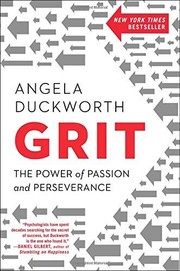
by Angela Duckworth
“Angela Duckworth, author of *Grit* and new book *Situated*, joins Dan Harris to argue that changing your external circumstances...”
- SituatedBy guest
by Angela Duckworth
“Angela Duckworth, author of *Grit* and new book *Situated*, joins Dan Harris to argue that changing your external circumstances...”
More from 10% Happier with Dan Harris
We summarize every new episode. Want them in your inbox?
Terry Bradshaw On: Clinical Depression, Crying on the Field, and the Mother He Could Never Please
Live Without Regrets: Buddhist Strategies for Facing Aging, Illness, and Loss | Sister Dang Nghiem
A Stoic Mantra For Your Sh*ttiest Moments (And Other Ancient Wisdom That Holds Up) | Jonathan Haidt
How To Feel Safer In A Chaotic World | Dr. Raj Panjabi
Adam Grant Says You're Doing Relationships Wrong
Similar Episodes
Related episodes from other podcasts

Masters of Scale
Sep 3
Angela Duckworth on why grit isn’t enough

Modern Wisdom
Oct 3
Willpower Expert: The Secret To Effortless Discipline - Angela Duckworth - #1158

Odd Lots
Oct 17
David Byrne Explains How Forgotten Ideas Come Back to Life

The School of Greatness
Jul 10
Why Your Relationship Keeps Repeating the Same Pattern | Gary John Bishop
The School of Greatness
Jun 19
The Secret Skill of People Who Never Feel Lonely | Charles Duhigg
Explore Related Topics
This podcast is featured in Best Health Podcasts (2026) — ranked and reviewed with AI summaries.
Read this week's Health & Longevity Podcast Insights — cross-podcast analysis updated weekly.
You're clearly into 10% Happier with Dan Harris.
Every Monday, we deliver AI summaries of the latest episodes from 10% Happier with Dan Harris and 192+ other podcasts. Free for one show.
Start My Monday DigestNo credit card · Unsubscribe anytime