A Stoic Mantra For Your Sh*ttiest Moments (And Other Ancient Wisdom That Holds Up) | Jonathan Haidt
Episode
54 min
Read time
2 min
Topics
Relationships, Leadership, Software Development
AI-Generated Summary
Key Takeaways
- ✓Stoic Challenge Framework: When setbacks occur, saying "stoic challenge" aloud creates a cognitive pause that interrupts the automatic second wave of suffering. William Irvine's book of the same name teaches this technique. One MBA student transformed a recurring subway delay from a source of frustration into uninterrupted reading time using this single phrase.
- ✓Rider and Elephant Model: Dan Kahneman's System 1 and System 2 thinking maps onto an elephant-and-rider metaphor: automatic neural processing controls most behavior while conscious reasoning plays a minor role. Behavioral change requires training the elephant through small, immediate rewards rather than relying on willpower or verbal resolutions, which consistently fail.
- ✓Passionate vs. Companionate Love: Romantic relationships contain two distinct psychological systems. Passionate love spikes quickly and fades within months, while companionate love grows slowly as lives intertwine. Long-term relationship success depends primarily on companionate love development, not initial passion intensity. Mistaking the passion drop for incompatibility is a leading driver of unnecessary relationship dissolution.
- ✓Antifragility and Child Development: Immune systems, muscles, and bones all strengthen through stress exposure, not protection. Haidt applies Nassim Taleb's antifragility concept to argue that children require independent play, manageable risk, and recoverable failure to develop psychological resilience. Removing all obstacles produces fragility, not safety, with measurable consequences for anxiety rates in adolescents.
- ✓Attachment System in Adult Relationships: Research by Phil Shaver in the 1970s and 1980s established that adult romantic bonding reuses the same cognitive models formed during childhood attachment. Insecure childhood attachment patterns — anxious or avoidant — directly shape adult relationship behavior, making early caregiving responsiveness a significant predictor of adult romantic functioning decades later.
What It Covers
Social psychologist Jonathan Haidt joins Dan Harris to examine his book The Happiness Hypothesis, now in a revised 20th-anniversary edition, testing ancient wisdom from Stoicism, Buddhism, and philosophy against modern psychological research to identify practical frameworks for flourishing in contemporary life.
Key Questions Answered
- •Stoic Challenge Framework: When setbacks occur, saying "stoic challenge" aloud creates a cognitive pause that interrupts the automatic second wave of suffering. William Irvine's book of the same name teaches this technique. One MBA student transformed a recurring subway delay from a source of frustration into uninterrupted reading time using this single phrase.
- •Rider and Elephant Model: Dan Kahneman's System 1 and System 2 thinking maps onto an elephant-and-rider metaphor: automatic neural processing controls most behavior while conscious reasoning plays a minor role. Behavioral change requires training the elephant through small, immediate rewards rather than relying on willpower or verbal resolutions, which consistently fail.
- •Passionate vs. Companionate Love: Romantic relationships contain two distinct psychological systems. Passionate love spikes quickly and fades within months, while companionate love grows slowly as lives intertwine. Long-term relationship success depends primarily on companionate love development, not initial passion intensity. Mistaking the passion drop for incompatibility is a leading driver of unnecessary relationship dissolution.
- •Antifragility and Child Development: Immune systems, muscles, and bones all strengthen through stress exposure, not protection. Haidt applies Nassim Taleb's antifragility concept to argue that children require independent play, manageable risk, and recoverable failure to develop psychological resilience. Removing all obstacles produces fragility, not safety, with measurable consequences for anxiety rates in adolescents.
- •Attachment System in Adult Relationships: Research by Phil Shaver in the 1970s and 1980s established that adult romantic bonding reuses the same cognitive models formed during childhood attachment. Insecure childhood attachment patterns — anxious or avoidant — directly shape adult relationship behavior, making early caregiving responsiveness a significant predictor of adult romantic functioning decades later.
Notable Moment
Haidt describes a student who had survived brain cancer and multiple surgeries, then returned to university. During a class discussion on adversity, she argued that certain levels of engagement with life and depth of appreciation are only accessible to people who have experienced severe suffering — and she considered her illness the source of that access.
Episode Transcript
Hey. Hey, everybody. Welcome to the 10% happier podcast. I'm your host, Dan Harris. This whole show, and in fact, my my whole post TV news anchorman career, is based on the mix of ancient wisdom and modern science, which really are two great tastes that taste great together, as they used to say in the Reese's peanut butter cups ads when I was a kid. And there's so much to be learned at the intersection of of these two fields, which is why I was really excited when I heard from Jonathan Haidt, who wanted to come on to talk about his book, The Happiness Hypothesis, which really takes pillars of ancient wisdom and then pressure tests them against modern research. You might know Jonathan Haidt. He is a social psychologist at New York University's Stern School of Business. He has written many, many best selling books, including The Anxious Generation. But today, we're really gonna focus on the happiness hypothesis, which is actually twenty years old. It's celebrating its twentieth anniversary, and he has just put out a revised edition of the book. Jonathan Haidt, welcome back to the show. Dan, thanks so much for having me on. Tell me about the idea for this book of... I think I might have given away the headline, but the basic idea, as I said, is let's look at some pillars of ancient wisdom and see how they hold up in light of today's science. Mhmm. That's right. So the book grows out of my teaching psych one zero one at the University of Virginia. My first academic job beginning in 1995 was there. I was assigned to teach psych one zero one. I have to teach a room of three hundred 19 year olds, everything from physiological psychology through love and dieting, everything. And I would often quote, you know, Shakespeare or Buddha. So it was clear that, like, there are certain ideas. Like, for example, there's nothing good or bad, but thinking makes it so Mhmm. From Hamlet. And that is the foundation of stoicism, of Buddhism, of cognitive therapy, like that idea. And when I was coming up for tenure, I didn't have a lot of of experimental publications, and I thought I might not get tenure. And if I don't get tenure, don't wanna just transfer to a lower ranked university. You know what? I'll I'll drop out, and I'll try to write up this trade book. Collect all these ideas and and write it up. So I did get tenure, although it was just barely. I happened to know my vote because they made a mistake and revealed it to me accidentally. But, anyway, I I got tenure at UVA, and I decided to write the book anyway. And it was so much fun. I basically just read every work from ancient China, India, everything that... You know, religious texts, anything that had sort of statements about humanity in it. And I had a big …
Get the full transcript (12,145 words) + summary by email — free
One-time email with the complete transcript and AI summary of this episode. No account needed.
One email, no spam. We’ll also show you what SignalCast does.

You just read a 3-minute summary of a 51-minute episode.
Get 10% Happier with Dan Harris summarized like this every Monday — plus up to 2 more podcasts, free.
Pick Your Podcasts — FreeKeep Reading
More from 10% Happier with Dan Harris
How To Feel Safer In A Chaotic World | Dr. Raj Panjabi
Oct 16 · 57 min

TED Radio Hour
Did social media break a generation — or just change it?
Feb 20
More from 10% Happier with Dan Harris
Adam Grant Says You're Doing Relationships Wrong
Oct 14 · 60 min

The Diary of a CEO
Brain Rot Emergency: These Internal Documents Prove They’re Controlling You!
Feb 16
Books, tools, and gear mentioned in this episode
SignalCast may earn commission on purchases via these links. As an Amazon Associate, SignalCast earns from qualifying purchases.
Books
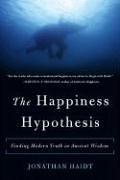
by Jonathan Haidt
“Social psychologist Jonathan Haidt joins Dan Harris to examine his book The Happiness Hypothesis, now in a revised 20th-anniversary edition, testing ancient wisdom from Stoicism, Buddhism, and philosophy against modern psychological research.”
 Stoic ChallengeRecommended
by William Irvine
“William Irvine's book of the same name teaches this technique. One MBA student transformed a recurring subway delay from a source of frustration into uninterrupted reading time using this single phrase.”

by Nassim Taleb
“Haidt applies Nassim Taleb's antifragility concept to argue that children require independent play, manageable risk, and recoverable failure to develop psychological resilience.”
More from 10% Happier with Dan Harris
We summarize every new episode. Want them in your inbox?
How To Feel Safer In A Chaotic World | Dr. Raj Panjabi
Adam Grant Says You're Doing Relationships Wrong
Stressed, Anxious, or Drained at Work? Here's How To Follow Your Energy, Take Smart Risks, and Find Work You Actually Like | Molly Graham
Calm Your Nervous System: Simple Daily Practices for When You're Wired, Hangry, or Too Busy to Rest | Nadia Narain & Katia Narain Phillips
Anxious? Rushed? Reaching for Your Phone? Four Buddhist Phrases To Bring You Back | Brother Phap Dung and Kaira Jewel Lingo
Similar Episodes
Related episodes from other podcasts

TED Radio Hour
Feb 20
Did social media break a generation — or just change it?

The Diary of a CEO
Feb 16
Brain Rot Emergency: These Internal Documents Prove They’re Controlling You!

The School of Greatness
Jul 24
The Real Reason Stress Is Hurting You | Kelly McGonigal

Modern Wisdom
Apr 27
The Extreme Crisis of Young Women - Freya India - #1090

WorkLife with Adam Grant
Mar 10
ReThinking: How to spot psychopaths and narcissists, with Leanne ten Brinke
Explore Related Topics
This podcast is featured in Best Health Podcasts (2026) — ranked and reviewed with AI summaries.
Read this week's Software Engineering Podcast Insights — cross-podcast analysis updated weekly.
You're clearly into 10% Happier with Dan Harris.
Every Monday, we deliver AI summaries of the latest episodes from 10% Happier with Dan Harris and 192+ other podcasts. Free for one show.
Start My Monday DigestNo credit card · Unsubscribe anytime