TIP796: Die with Zero & Linde Stock Analysis w/ Clay Finck
Episode
55 min
Read time
2 min
Topics
Productivity, Health & Wellness, Personal Finance
AI-Generated Summary
Key Takeaways
- ✓Consumption Smoothing: Rather than saving rigidly during low-income years, align spending with your expected lifetime earnings trajectory. Perkins learned this lesson earning $18,000 annually on Wall Street — his boss argued that hoarding $1,000 made no sense given his clear upward earnings path. Transfer wealth from future abundance into present experiences while health and energy allow full enjoyment.
- ✓Inheritance Timing: Federal Reserve data shows the typical inheritance reaches children around age 60, when utility of money is lowest. A $25,000 gift at age 30 — when someone is buying a home and starting a family — delivers more life impact than a $250,000 inheritance at 60. Giving earlier maximizes both enjoyment and practical value per dollar transferred.
- ✓Retiree Spending Reality: Data shows median retirees with $500,000 or more at retirement spend down only 12% of assets within 20 years. One-third actually increase net worth post-retirement. This pattern reveals most people over-save relative to what they actually consume, effectively wasting years of labor on wealth that generates no lived experience or personal benefit.
- ✓Linde's Pricing Power Structure: Linde's industrial gases represent roughly 2% of customer cost structures but carry high failure costs, creating exceptional pricing power and near-zero churn. On-site contracts run 10–20 years with mandatory minimum purchases and price escalation clauses. This structure lets Linde pass through input cost inflation contractually while maintaining 30% EBIT margins and 20%+ return on invested capital.
- ✓Linde's Earnings Growth Formula: Even with near-zero volume growth since 2021, Linde targets 10–12% annual EPS growth by combining 2–4% volume growth, 2–3% price increases, margin expansion through productivity initiatives, and share buybacks consuming roughly one-third of cash flow. Management guided 6–9% EPS growth for the current period despite describing a two-year industrial recession in their core end markets.
What It Covers
Clay Finck covers two topics: Bill Perkins' book *Die with Zero*, which argues that money should fund life experiences rather than accumulate indefinitely, and a stock analysis of Linde PLC, the world's largest industrial gas company that has compounded at 12% annually since 1993 versus the S&P 500's 8%.
Key Questions Answered
- •Consumption Smoothing: Rather than saving rigidly during low-income years, align spending with your expected lifetime earnings trajectory. Perkins learned this lesson earning $18,000 annually on Wall Street — his boss argued that hoarding $1,000 made no sense given his clear upward earnings path. Transfer wealth from future abundance into present experiences while health and energy allow full enjoyment.
- •Inheritance Timing: Federal Reserve data shows the typical inheritance reaches children around age 60, when utility of money is lowest. A $25,000 gift at age 30 — when someone is buying a home and starting a family — delivers more life impact than a $250,000 inheritance at 60. Giving earlier maximizes both enjoyment and practical value per dollar transferred.
- •Retiree Spending Reality: Data shows median retirees with $500,000 or more at retirement spend down only 12% of assets within 20 years. One-third actually increase net worth post-retirement. This pattern reveals most people over-save relative to what they actually consume, effectively wasting years of labor on wealth that generates no lived experience or personal benefit.
- •Linde's Pricing Power Structure: Linde's industrial gases represent roughly 2% of customer cost structures but carry high failure costs, creating exceptional pricing power and near-zero churn. On-site contracts run 10–20 years with mandatory minimum purchases and price escalation clauses. This structure lets Linde pass through input cost inflation contractually while maintaining 30% EBIT margins and 20%+ return on invested capital.
- •Linde's Earnings Growth Formula: Even with near-zero volume growth since 2021, Linde targets 10–12% annual EPS growth by combining 2–4% volume growth, 2–3% price increases, margin expansion through productivity initiatives, and share buybacks consuming roughly one-third of cash flow. Management guided 6–9% EPS growth for the current period despite describing a two-year industrial recession in their core end markets.
Notable Moment
Hedge fund billionaire John Arnold told Perkins he would stop trading once he hit $15 million — then kept moving the goalpost to $25 million, $100 million, and ultimately $4 billion before retiring at 38. Perkins argues Arnold retired too late, having permanently missed his children's early years.
Episode Transcript
You're listening to TIP. Today's episode will be broken up into two segments. During the first segment, I'll be discussing the book, Die with Zero by Bill Perkins. It's a book that challenges some of the core assumptions that we have related to money and living a good life. As investors, we spend a lot of time thinking about compounding, delayed gratification, and long term wealth creation, but Perkins flips the script and asks a different question. What's the point of accumulating wealth if you don't use it to create meaningful experiences along the way? Perkins' core idea is simple. Money should be a tool for maximizing life experiences, not a scorecard you optimize until the very end. He encourages readers to think carefully about the timing of our spending and the reality that our ability to enjoy experiences declines as we age. During the second segment, we'll shift gears to talk about a boring, but stable compounder in the stock market, Lendy PLC. From 1993 to year end twenty twenty four, Lendy's stock has compounded at 12% per annum versus the S and P 500 returning 8% over that same time period. Lendi is the world's largest industrial gas company supplying essential products like oxygen, nitrogen, and hydrogen, and it touches so many parts of our modern day economy. We'll explore its business model, competitive advantages, capital allocation, and what sort of returns shareholders can expect from here going forward. So with that, I hope you enjoy today's episode. Since 2014 and through more than 190,000,000 downloads, we break down the principles of value investing and sit down with some of the world's best asset managers. We uncover potential opportunities in the market and explore the intersection between money, happiness, and the art of living a good life. This show is not investment advice. It's intended for informational and entertainment purposes only. All opinions expressed by hosts and guests are solely their own, and they may have investments in the securities discussed. Now for your host, Clay Fink. Hey, everybody. Welcome back to The Investor's Podcast. I'm your host, Clay Finck. And during this first segment, I'll be sharing what I learned from reading the book, Die With Zero by Bill Perkins. I initially came across this book after my best friend told me that it was a must read. I thought this would be an interesting book to cover on the show because I found that many value investors think about more than just wealth accumulation. Living a good life is also about how we choose to spend our time, who we choose to spend our time with, and how we spend our money. Many people who enjoy accumulating wealth use money as their scorecard for success. And the main takeaway that Perkins wanted readers to walk away with was to realize that money should be used as a tool for creating memorable experiences, not just a scorecard to maximize until death. Perhaps controversially, he encourages readers to …
Get the full transcript (10,374 words) + summary by email — free
One-time email with the complete transcript and AI summary of this episode. No account needed.
One email, no spam. We’ll also show you what SignalCast does.

You just read a 3-minute summary of a 52-minute episode.
Get We Study Billionaires summarized like this every Monday — plus up to 2 more podcasts, free.
Pick Your Podcasts — FreeKeep Reading
More from We Study Billionaires
TIP844: Uber (UBER): The Autonomy Referendum — Is Mr. Market Completely Wrong? w/ Daniel Mahncke & Shawn O’Malley
Sep 6 · 66 min

The School of Greatness
Why Your Retirement Plan Is Wasting Your Life | Bill Perkins
Jun 5
More from We Study Billionaires
TIP843: AppLovin (APP): The 30-Bagger Down More Than Half w/ Kyle Grieve & Shawn O'Malley
Sep 3 · 90 min

The Prof G Pod
No Mercy / No Malice: Little Tobacco Moment
Sep 5
Books, tools, and gear mentioned in this episode
SignalCast may earn commission on purchases via these links. As an Amazon Associate, SignalCast earns from qualifying purchases.
Books
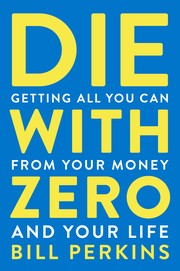 Die With ZeroRecommended
by Bill Perkins
“Clay Finck covers two topics: Bill Perkins' book *Die with Zero*, which argues that money should fund life experiences rather than accumulate indefinitely”
company
“a stock analysis of Linde PLC, the world's largest industrial gas company that has compounded at 12% annually since 1993 versus the S&P 500's 8%”
More from We Study Billionaires
We summarize every new episode. Want them in your inbox?
TIP844: Uber (UBER): The Autonomy Referendum — Is Mr. Market Completely Wrong? w/ Daniel Mahncke & Shawn O’Malley
TIP843: AppLovin (APP): The 30-Bagger Down More Than Half w/ Kyle Grieve & Shawn O'Malley
TIP842: Comfort Systems USA (FIX): The Five-Bagger We Passed On w/ Kyle Grieve & Shawn O'Malley
TIP841: Palantir – Palantir is Cheaper than I Thought! w/ Daniel Mahncke & Shawn O’Malley
TIP840: CATL: Powering EVs, Power Grids, and AI w/ Stig Brodersen, Manish Karira & Ralph Summerford
Similar Episodes
Related episodes from other podcasts

The School of Greatness
Jun 5
Why Your Retirement Plan Is Wasting Your Life | Bill Perkins

The Prof G Pod
Sep 5
No Mercy / No Malice: Little Tobacco Moment

The Diary of a CEO
Aug 31
Top White House Advisor: The US Empire Is DYING And Socialism Is Coming Next! | David Friedberg

The Daily (NYT)
Aug 27
A Historic Settlement Over Social Media Addiction
The Diary of a CEO
Aug 27
The Man Who Calls BS On AI: AI Is The World’s Greatest SCAM, And They All Know It! | Ed Zitron
Explore Related Topics
This podcast is featured in Best Investing Podcasts (2026) — ranked and reviewed with AI summaries.
Read this week's Health & Longevity Podcast Insights — cross-podcast analysis updated weekly.
You're clearly into We Study Billionaires.
Every Monday, we deliver AI summaries of the latest episodes from We Study Billionaires and 192+ other podcasts. Free for one show.
Start My Monday DigestNo credit card · Unsubscribe anytime