TIP789: The Story of Uber w/ Clay Finck
Episode
76 min
Read time
3 min
Topics
Career Growth, Relationships, Investing
AI-Generated Summary
Key Takeaways
- ✓Founder equity negotiations: Travis Kalanick negotiated his equity stake from 12% to 23% when transitioning from advisor to CEO in November 2010, demonstrating how early leadership changes require careful equity rebalancing. Ryan Graves, the first CEO, accepted demotion and stayed with the company, while lead developer Oscar Salazar received equity-only compensation as a non-US citizen, later worth $250 million at IPO.
- ✓Pricing flywheel mechanics: Uber cut prices 30% in multiple markets to trigger a growth flywheel where lower fares increased rider demand, which attracted more drivers, which enabled further price cuts. This strategy forced competitors like Lyft to match cuts without equivalent capital reserves. The company grew 30-40% monthly even at scale, with negative churn where users spent more over time.
- ✓Regulatory confrontation strategy: Rather than seeking compromise with taxi regulators, Kalanick believed superior product quality would make customers demand Uber's existence and defend it politically. This proved correct when 10,000 London taxi drivers struck and Uber signups jumped 800%, while 200,000 customers signed petitions supporting Uber against proposed restrictions, vastly outnumbering opposition.
- ✓Driver supply optimization: Uber solved peak demand challenges through dynamic pricing that increased rates during high-demand periods like 2AM Saturday nights, incentivizing drivers to work unconventional hours. The company also financed vehicle leases for drivers lacking cars or credit, simultaneously increasing supply and ensuring driver loyalty to Uber over competitors by tying earnings to lease payments.
- ✓Market expansion methodology: Uber deployed three-person teams to each new city: a general manager accountable for growth, an operations manager handling driver recruitment and supply-demand matching, and a community manager for marketing. Teams launched with celebrity partnerships and launch parties, then held general managers accountable to match or exceed growth trajectories from previous city launches.
What It Covers
Clay Finck examines Uber's origin story from Brad Stone's book "The Upstarts," tracing the company's evolution from a 2008 San Francisco idea to a global transportation platform. The episode covers founder dynamics between Garrett Camp and Travis Kalanick, regulatory battles, competitive warfare with Lyft and Didi, fundraising rounds from $5 million to $42 billion valuation, and Kalanick's eventual departure in 2017.
Key Questions Answered
- •Founder equity negotiations: Travis Kalanick negotiated his equity stake from 12% to 23% when transitioning from advisor to CEO in November 2010, demonstrating how early leadership changes require careful equity rebalancing. Ryan Graves, the first CEO, accepted demotion and stayed with the company, while lead developer Oscar Salazar received equity-only compensation as a non-US citizen, later worth $250 million at IPO.
- •Pricing flywheel mechanics: Uber cut prices 30% in multiple markets to trigger a growth flywheel where lower fares increased rider demand, which attracted more drivers, which enabled further price cuts. This strategy forced competitors like Lyft to match cuts without equivalent capital reserves. The company grew 30-40% monthly even at scale, with negative churn where users spent more over time.
- •Regulatory confrontation strategy: Rather than seeking compromise with taxi regulators, Kalanick believed superior product quality would make customers demand Uber's existence and defend it politically. This proved correct when 10,000 London taxi drivers struck and Uber signups jumped 800%, while 200,000 customers signed petitions supporting Uber against proposed restrictions, vastly outnumbering opposition.
- •Driver supply optimization: Uber solved peak demand challenges through dynamic pricing that increased rates during high-demand periods like 2AM Saturday nights, incentivizing drivers to work unconventional hours. The company also financed vehicle leases for drivers lacking cars or credit, simultaneously increasing supply and ensuring driver loyalty to Uber over competitors by tying earnings to lease payments.
- •Market expansion methodology: Uber deployed three-person teams to each new city: a general manager accountable for growth, an operations manager handling driver recruitment and supply-demand matching, and a community manager for marketing. Teams launched with celebrity partnerships and launch parties, then held general managers accountable to match or exceed growth trajectories from previous city launches.
- •China market exit economics: Uber and Didi each burned through $1 billion annually subsidizing rides in China, with Uber capturing only 30% market share across 100 cities versus Didi's 80% across 400 cities. Institutional investors pressured Kalanick to negotiate a truce. Uber exchanged its China operations for a 17% stake in Didi plus a $1 billion Didi investment in Uber.
Notable Moment
Naval Ravikant attempted to invest $100,000 in Uber's first funding round but delayed his commitment. By the time he confirmed, only $25,000 remained available in the round. That reduced stake still became worth hundreds of millions at IPO. Ravikant later reflected that Silicon Valley success involves such randomness that founders must make peace with it or lose sleep.
Episode Transcript
You're listening to TIP. On today's episode, we're telling the story of Uber. I recently picked up this book titled The Upstarts by Brad Stone, which tells the story of how companies like Uber and Airbnb reshaped entire industries almost overnight. Brad Stone is one of the most respected technology journalists of our time, and the book gives a front seat to the chaos, ambition, and conviction required to build the world's largest ride hailing company. Rather than focusing on polished success stories, Stone takes us inside the messy early days when Uber had the odds stacked against them. What's remarkable about Uber's story is just how quickly it went from a Silicon Valley idea to a service that's become ubiquitous in less than a decade. It was by no means an easy ride for the company as they face constant pressure from the taxi industry, regulators, and competitors. I thoroughly enjoyed covering this book on the show, so I hope you enjoy the story of Uber as much as I did. Since 2014 and through more than 190,000,000 downloads, we break down the principles of value investing and sit down with some of the world's best asset managers. We uncover potential opportunities in the market and explore the intersection between money, happiness, and the art of living a good life. This show is not investment advice. It's intended for informational and entertainment purposes only. All opinions expressed by hosts and guests are solely their own, and they may have investments in the securities discussed. Now for your host, Clay Fink. Hey, everybody. Welcome back to The Investor's Podcast. I'm your host, Clay Finck, and I'm really excited to bring you today's episode sharing the story of Uber. But before we get into the story, I wanted to mention that I'll be hosting a call later this month with our TIP Mastermind community, discussing the investment case for Uber. I have not made an investment in the company, but I'd like to use this as an opportunity to learn more about the business and better understand where this business is heading over the next five to ten years. If you're interested in joining the call or tuning into the recording after the fact, you can apply to join the community at theinvestorspodcast.com/mastermind, or you can just click the link in the show notes below. All right. So Brad Stone wrote this excellent book back in 2017, titled The Upserts, How Uber, Airbnb, and the Killer Companies of the New Silicon Valley Are Changing the World. In the not too distant past, the idea of getting into a stranger's car or sleeping in a stranger's home would've seemed bizarre and dangerous, but today it's as common as ordering a book online. Uber and Airbnb have ushered in a new era that is redefining the way we travel, move from point A to point B. So the book of course dives into both the story of Airbnb and Uber. But since this …
Get the full transcript (13,440 words) + summary by email — free
One-time email with the complete transcript and AI summary of this episode. No account needed.
One email, no spam. We’ll also show you what SignalCast does.

You just read a 3-minute summary of a 73-minute episode.
Get We Study Billionaires summarized like this every Monday — plus up to 2 more podcasts, free.
Pick Your Podcasts — FreeKeep Reading
More from We Study Billionaires
TIP854: GE Aerospace: Chris Hohn’s Biggest Bet w/ Daniel Mahncke & Shawn O'Malley
Oct 22 · 72 min

The Joe Rogan Experience
#2468 - Luke Grimes
Mar 13
More from We Study Billionaires
RWH074: True Wealth w/ Matt Ludmer
Oct 18 · 153 min

WorkLife with Adam Grant
ReThinking: Margaret Atwood on what AI can’t replace
Dec 16
Books, tools, and gear mentioned in this episode
SignalCast may earn commission on purchases via these links. As an Amazon Associate, SignalCast earns from qualifying purchases.
Books
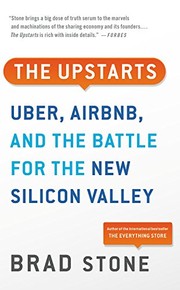
by Brad Stone
“Clay Finck examines Uber's origin story from Brad Stone's book "The Upstarts," tracing the company's evolution from a 2008 San Francisco idea to a global transportation platform.”
More from We Study Billionaires
We summarize every new episode. Want them in your inbox?
TIP854: GE Aerospace: Chris Hohn’s Biggest Bet w/ Daniel Mahncke & Shawn O'Malley
RWH074: True Wealth w/ Matt Ludmer
TIP853: Aritzia (ATZ.TO): The Women's Apparel Brand Conquering the US, plus Nike, Lulu, and More w/ Kyle Grieve & Shawn O'Malley
RWH073: Unstoppable w/ Sir Michael Moritz
TIP852: Hermès and LVMH Stock: Time to Buy Luxury? w/ Daniel Mahncke & Shawn O'Malley
Similar Episodes
Related episodes from other podcasts

The Joe Rogan Experience
Mar 13
#2468 - Luke Grimes

WorkLife with Adam Grant
Dec 16
ReThinking: Margaret Atwood on what AI can’t replace

Stuff You Should Know
Oct 22
The Twilight Zone Episode

Huberman Lab
Oct 19
What Makes Great Leaders & How to Live an Extraordinary Life | Dr. Jared Diamond

Modern Wisdom
Oct 19
Forgotten War Heroes Who Changed The World - The Fat Electrician - #1165
Explore Related Topics
This podcast is featured in Best Investing Podcasts (2026) — ranked and reviewed with AI summaries.
Read this week's Investing & Markets Podcast Insights — cross-podcast analysis updated weekly.
You're clearly into We Study Billionaires.
Every Monday, we deliver AI summaries of the latest episodes from We Study Billionaires and 192+ other podcasts. Free for one show.
Start My Monday DigestNo credit card · Unsubscribe anytime