TIP786: Zero to One by Peter Thiel
Episode
57 min
Read time
2 min
Topics
Productivity, Investing, Startups
AI-Generated Summary
Key Takeaways
- ✓Monopoly vs Competition: Google captures 21% profit margins in search with 90% market share, while US airlines generate only 37 cents per passenger despite $160 billion in revenue. Monopolies create value and capture it through pricing power, while competitive markets destroy profits through constant price wars and operational pressure that leaves no room for innovation.
- ✓10X Improvement Rule: Proprietary technology must deliver at least 10 times better performance than alternatives to establish monopolistic advantage. PayPal made eBay transactions 10x faster by enabling instant payment versus seven-to-ten day check processing. Amazon offered 10x more book titles than physical stores by eliminating inventory requirements and ordering from suppliers on demand.
- ✓Market Selection Strategy: Start with small, concentrated markets before expanding to adjacent segments. PayPal targeted eBay's few thousand power sellers first, capturing 25% within months. Amazon deliberately began with books for customers far from bookstores before gradually adding categories. Dominating a niche market beats claiming 1% of a $100 billion market.
- ✓Founder Compensation Signal: Startups with CEOs earning under $150,000 annually perform better than those paying higher salaries. Low CEO pay indicates focus on equity value creation rather than defending status quo. High salaries incentivize maintaining current compensation over aggressive problem-solving and risk-taking necessary for breakthrough growth and market dominance.
- ✓Power Law in Venture Returns: Facebook returned more than all other investments combined in Founders Fund's 2005 round, demonstrating venture capital's extreme concentration of returns. This reality means investors should only back companies capable of returning the entire fund value, eliminating most opportunities. Specialization and focus on potential winners beats diversification across mediocre prospects.
What It Covers
Peter Thiel's Zero to One framework challenges investors to identify monopolies that create entirely new markets rather than compete in existing ones. The episode examines how companies like Google, PayPal, and Amazon achieved dominance through 10x improvements, network effects, and strategic market selection, with Uber analyzed as a current zero-to-one case study.
Key Questions Answered
- •Monopoly vs Competition: Google captures 21% profit margins in search with 90% market share, while US airlines generate only 37 cents per passenger despite $160 billion in revenue. Monopolies create value and capture it through pricing power, while competitive markets destroy profits through constant price wars and operational pressure that leaves no room for innovation.
- •10X Improvement Rule: Proprietary technology must deliver at least 10 times better performance than alternatives to establish monopolistic advantage. PayPal made eBay transactions 10x faster by enabling instant payment versus seven-to-ten day check processing. Amazon offered 10x more book titles than physical stores by eliminating inventory requirements and ordering from suppliers on demand.
- •Market Selection Strategy: Start with small, concentrated markets before expanding to adjacent segments. PayPal targeted eBay's few thousand power sellers first, capturing 25% within months. Amazon deliberately began with books for customers far from bookstores before gradually adding categories. Dominating a niche market beats claiming 1% of a $100 billion market.
- •Founder Compensation Signal: Startups with CEOs earning under $150,000 annually perform better than those paying higher salaries. Low CEO pay indicates focus on equity value creation rather than defending status quo. High salaries incentivize maintaining current compensation over aggressive problem-solving and risk-taking necessary for breakthrough growth and market dominance.
- •Power Law in Venture Returns: Facebook returned more than all other investments combined in Founders Fund's 2005 round, demonstrating venture capital's extreme concentration of returns. This reality means investors should only back companies capable of returning the entire fund value, eliminating most opportunities. Specialization and focus on potential winners beats diversification across mediocre prospects.
Notable Moment
The episode reveals how Uber transformed from an unprofitable company losing $5 billion in 2019 to generating over $8 billion in free cash flow today, with Bill Ackman building a $3 billion position. Despite autonomous vehicle concerns, Uber's fifteen-year head start and partnerships with AV providers position it as the global demand aggregator.
Episode Transcript
You're listening to TIP. On today's episode, we'll be exploring the book Zero to One by Peter Thiel. Zero to One is one of my favorite books on the topic of innovation, monopolies, and what it really takes to build something that's enduring. Thiel has one of the most interesting backgrounds of any investor I've come across. At his core, Thiel is an entrepreneur. The first team that Thiel built became known as the PayPal mafia because so many of his former colleagues went on to help each other start and invest in successful tech companies. Thiel challenges the idea that progress comes from simply doing more of what already works. Instead, he argues that the biggest breakthroughs happen when someone creates something entirely new or in his words, when a business goes from zero to one. I wanted to cover this book because it forces investors to look beyond the spreadsheets and the near term metrics and instead think deeply about competitive advantages, long term value creation, and the future of an industry. Much like investing, it's easy to assume that success comes from following the crowd and competing in familiar markets. But as Thiel explains, competition often destroys profits while truly great businesses escape competition altogether. Zero to one is a reminder that the most valuable companies are not built by copying what already exists. They're built by seeing the world differently and acting on that insight. At the end of the episode, I'll also share my thoughts around a company that had its own zero to one moment, and that company is Uber. There's a lot of debate currently around the strength of Uber's moat, and I find it to be one of the most interesting case studies in today's market. So with that, I hope you enjoy today's episode on Zero to One by Peter Thiel. Since 2014 and through more than 190,000,000 downloads, we break down the principles of value investing and sit down with some of the world's best asset managers. We uncover potential opportunities in the market and explore the intersection between money, happiness, and the art of living a good life. This show is not investment advice. It's intended for informational and entertainment purposes only. All opinions expressed by hosts and guests are solely their own, and they may have investments in the securities discussed. Now for your host, Clay Finck. Hey, everybody. Welcome back to The Investor's Podcast. I'm your host, Clay Finck. On today's episode, I'll be chatting about the book Zero to One by Peter Thiel. Peter Thiel is one of the most successful and unconventional investors of the modern era. In 2005, Thiel launched the Founders Fund, which sought to invest in founders who were building revolutionary technologies. His unconventional investment style led him to make successful venture capital investments in companies like SpaceX, Facebook, PayPal, Palantir, and Stripe in their infancy. His book Zero to One matters because it distills the mental models he used to spot …
Get the full transcript (10,603 words) + summary by email — free
One-time email with the complete transcript and AI summary of this episode. No account needed.
One email, no spam. We’ll also show you what SignalCast does.

You just read a 3-minute summary of a 54-minute episode.
Get We Study Billionaires summarized like this every Monday — plus up to 2 more podcasts, free.
Pick Your Podcasts — FreeKeep Reading
More from We Study Billionaires
TIP854: GE Aerospace: Chris Hohn’s Biggest Bet w/ Daniel Mahncke & Shawn O'Malley
Oct 22 · 72 min

How to Take Over the World
Zero to One
Oct 31
More from We Study Billionaires
RWH074: True Wealth w/ Matt Ludmer
Oct 18 · 153 min

The Founders Podcast
#424 Peter Thiel on How to Build a Creative Monopoly
Jul 10
Books, tools, and gear mentioned in this episode
SignalCast may earn commission on purchases via these links. As an Amazon Associate, SignalCast earns from qualifying purchases.
Books
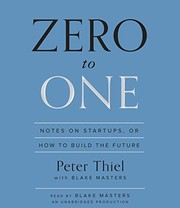
by Peter Thiel
“Peter Thiel's Zero to One framework challenges investors to identify monopolies that create entirely new markets rather than compete in existing ones. The episode examines how companies like Google, PayPal, and Amazon achieved dominance through 10x improvements, network effects, and strategic market selection.”
More from We Study Billionaires
We summarize every new episode. Want them in your inbox?
TIP854: GE Aerospace: Chris Hohn’s Biggest Bet w/ Daniel Mahncke & Shawn O'Malley
RWH074: True Wealth w/ Matt Ludmer
TIP853: Aritzia (ATZ.TO): The Women's Apparel Brand Conquering the US, plus Nike, Lulu, and More w/ Kyle Grieve & Shawn O'Malley
RWH073: Unstoppable w/ Sir Michael Moritz
TIP852: Hermès and LVMH Stock: Time to Buy Luxury? w/ Daniel Mahncke & Shawn O'Malley
Similar Episodes
Related episodes from other podcasts

How to Take Over the World
Oct 31
Zero to One

The Founders Podcast
Jul 10
#424 Peter Thiel on How to Build a Creative Monopoly

The James Altucher Show
Dec 21
Why Peter Thiel’s Founder Rules Keep Paying Off

20VC (20 Minute VC)
Nov 10
20VC: Benchmark's Newest General Partner Ev Randle on Why Margins Matter Less in AI | Why Mega Funds Will Not Produce Good Returns | OpenAI vs Anthropic: What Happens and Who Wins Coding | Investing Lessons from Peter Thiel and Mamoon Hamid

Odd Lots
Jun 19
Anthropic's Co-Founder and Top Economist on Doing Research at the AI Frontier
Explore Related Topics
This podcast is featured in Best Investing Podcasts (2026) — ranked and reviewed with AI summaries.
Read this week's Investing & Markets Podcast Insights — cross-podcast analysis updated weekly.
You're clearly into We Study Billionaires.
Every Monday, we deliver AI summaries of the latest episodes from We Study Billionaires and 192+ other podcasts. Free for one show.
Start My Monday DigestNo credit card · Unsubscribe anytime