Try it For 1 Week: Small Ways to Make Your Life Fun & Exciting Again
Episode
73 min
Read time
3 min
Topics
Health & Wellness, Remote Work, Relationships
AI-Generated Summary
Key Takeaways
- ✓Define Purpose Before Gathering: Before any gathering — family dinner, Zoom call, or reunion — ask one question: "What is the need here?" Parker breaks purpose into three layers: specific (tied to a concrete occasion or need), unique (relevant to this moment in time, not a repeated default), and disputable (not for everyone, with a clear point of view). Skipping this step is the single biggest mistake hosts make, leading to underwhelming, disconnected experiences.
- ✓Magical Questions as Conversation Tools: A "magical question" is one where every person in the group wants to answer it and wants to hear others' answers. Examples include: "What do you own that no one else here owns?", "What's your favorite way to eat a potato?", and "What's the naughtiest thing you've done that was worth it — before age 12?" These questions bypass small talk and generate unexpected, memorable exchanges across all age groups.
- ✓Talk Is Not Always the Right Tool for Connection: Dialogue can reinforce existing relationship patterns and create distance rather than closeness, especially in families. Parker cites her mentor Hal Saunders, a professional dialogue facilitator, who advised that sometimes people need a soccer game, a walk, or a dance party instead of conversation. Shared activities — cooking competitions, sound baths, or bluegrass festivals — provide a third element that reduces tension and generates organic connection.
- ✓Unhealthy Peace Damages Relationships: Parker distinguishes unhealthy conflict from unhealthy peace — the pattern of avoiding difficult conversations out of fear of loss. Unhealthy peace causes resentment to accumulate silently until people ghost, exit, or explode. The first step to breaking this pattern is recognizing that conflict signals relevance: people only fight about things they care about. Facilitators look for "relational longing" — the desire to remain connected — as the entry point for healthy heat.
- ✓The First 5% of a Gathering Sets the Tone: How a gathering opens determines how participants behave throughout. Practical tactics include: standing at the door to greet arrivals personally, assigning two or three friends as a greeting committee, posting a magical question in a Zoom chat before the meeting starts, and rotating who asks the opening question weekly to build leadership and group familiarity. On Zoom, the host functions like a live sportscaster — actively warming up the group through language.
What It Covers
Priya Parker, author of *The Art of Gathering* and conflict resolution facilitator, explains why most gatherings fail and provides a three-part framework for creating meaningful connections with family, friends, and colleagues. The conversation covers defining gathering purpose, using "magical questions," navigating unhealthy peace, and structuring openings and closings to transform any shared experience.
Key Questions Answered
- •Define Purpose Before Gathering: Before any gathering — family dinner, Zoom call, or reunion — ask one question: "What is the need here?" Parker breaks purpose into three layers: specific (tied to a concrete occasion or need), unique (relevant to this moment in time, not a repeated default), and disputable (not for everyone, with a clear point of view). Skipping this step is the single biggest mistake hosts make, leading to underwhelming, disconnected experiences.
- •Magical Questions as Conversation Tools: A "magical question" is one where every person in the group wants to answer it and wants to hear others' answers. Examples include: "What do you own that no one else here owns?", "What's your favorite way to eat a potato?", and "What's the naughtiest thing you've done that was worth it — before age 12?" These questions bypass small talk and generate unexpected, memorable exchanges across all age groups.
- •Talk Is Not Always the Right Tool for Connection: Dialogue can reinforce existing relationship patterns and create distance rather than closeness, especially in families. Parker cites her mentor Hal Saunders, a professional dialogue facilitator, who advised that sometimes people need a soccer game, a walk, or a dance party instead of conversation. Shared activities — cooking competitions, sound baths, or bluegrass festivals — provide a third element that reduces tension and generates organic connection.
- •Unhealthy Peace Damages Relationships: Parker distinguishes unhealthy conflict from unhealthy peace — the pattern of avoiding difficult conversations out of fear of loss. Unhealthy peace causes resentment to accumulate silently until people ghost, exit, or explode. The first step to breaking this pattern is recognizing that conflict signals relevance: people only fight about things they care about. Facilitators look for "relational longing" — the desire to remain connected — as the entry point for healthy heat.
- •The First 5% of a Gathering Sets the Tone: How a gathering opens determines how participants behave throughout. Practical tactics include: standing at the door to greet arrivals personally, assigning two or three friends as a greeting committee, posting a magical question in a Zoom chat before the meeting starts, and rotating who asks the opening question weekly to build leadership and group familiarity. On Zoom, the host functions like a live sportscaster — actively warming up the group through language.
- •Gatherings Need Intentional Closings: Most gatherings stop rather than end, leaving participants without a sense of closure. Parker recommends treating the final moments as deliberately as the opening: walk guests out, issue a "last call" signal, invite people to name the best moment of the evening, or ask what they learned. Summer camps and improv theater both model this well. A closing ritual honors the temporary world created during the gathering and provides a meaningful transition back to everyday life.
Notable Moment
Parker reveals that her parents' marriage ended not from conflict but from its complete absence — they never fought. This taught her that relationships can be as damaged by avoiding tension as by explosive arguments. She now teaches that healthy communities require healthy heat, and that conflict is actually a form of intimacy.
Episode Transcript
Hey. It's your friend, Mel, and welcome to the Mel Robbins podcast. Okay. I have a question for you. Why don't we have more fun? I mean, remember the good old days? Now I'm sounding like a grandparent, but you know what I mean. Barbecues, weekend plans, movie nights with friends. Why are we not doing more of that? I really miss it. Don't you? So here's what I did. I called in the expert on how to create real meaningful connections with your friends and with your family to help you and me out. Her name, Priya Parker. Priya is going to teach you how to deepen your relationships with the people that you care about most, even if you don't get along with them. And she's gonna start the conversation by asking you a very specific question. And this is a question that you're gonna need to ask yourself anytime. You're gonna see your family, your friends. You need to ask yourself this question before you even start a Zoom call. You're gonna love this. Because the truth is, time is ticking. If you're lucky for your parents or your siblings to be alive, you may only see them a handful of times every year like I do because we don't live near each other. And when you do get together with family, there's so often this tension that you just wish wasn't there. And guess what? They wish it wasn't there either. That's why this episode matters. It's gonna help you make every moment you have with other people so much better. Whether at work, whether around the dining room table, whether you're talking about your friends or your neighbors. And don't we all deserve to have meaningful conversations, better connections, and a whole lot more fun? Of course, we do. And that's exactly what we're gonna know how to do after our episode today. Before we get started, I wanted to encourage you to stick around later in the episode to hear a special segment sponsored by Verizon because I'm gonna share with you how important it is to raise your standards. So stick around. You're gonna love it. Did you know that you can buy your car completely online on AutoTrader? Really? Just go to autotrader.com and get picky. Search through dealer listings for the make, model, color, all the features that matter. Then all you need to do is drop in your info, and you'll only see cars that fit your budget. Really. Once you find the one, do the whole deal online and either pick the car up at the dealership or have it delivered right to your driveway. AutoTrader. Buy your car online. Really. Support for this podcast and the following message come from MidiHealth. Women's midlife health issues have been trivialized and ignored. It's time for a change. It's time for Midi. Midi is covered by major insurance, making expert care accessible. Clinicians provide one on one consultations, listen to your …
Get the full transcript (14,543 words) + summary by email — free
One-time email with the complete transcript and AI summary of this episode. No account needed.
One email, no spam. We’ll also show you what SignalCast does.

You just read a 3-minute summary of a 70-minute episode.
Get The Mel Robbins Podcast summarized like this every Monday — plus up to 2 more podcasts, free.
Pick Your Podcasts — FreeKeep Reading
More from The Mel Robbins Podcast
Let Them: How to Handle Difficult People & Take Back Your Peace and Power
Sep 21 · 47 min

The Daily (NYT)
An Expert on Conflict Says Your Relationships Are Doomed Without It
Aug 22
More from The Mel Robbins Podcast
Oprah Winfrey: How to Find Your Unique Purpose, Authentic Power, and Calling In Life
Sep 17 · 79 min

The Ezra Klein Show
Is Your Social Life Missing Something? This Is For You.
Feb 3
Books, tools, and gear mentioned in this episode
SignalCast may earn commission on purchases via these links. As an Amazon Associate, SignalCast earns from qualifying purchases.
Books
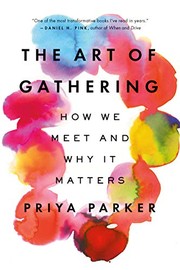 The Art of GatheringBy guest
by Priya Parker
“Priya Parker, author of *The Art of Gathering* and conflict resolution facilitator, explains why most gatherings fail and provides a three-part framework for creating meaningful connections with family, friends, and colleagues.”
More from The Mel Robbins Podcast
We summarize every new episode. Want them in your inbox?
Let Them: How to Handle Difficult People & Take Back Your Peace and Power
Oprah Winfrey: How to Find Your Unique Purpose, Authentic Power, and Calling In Life
How to Protect Your Focus, Motivation, & Mental Health: The $17.1 Billion Wake-Up Call
Stanford Psychologist: 7 Small Things You Can Do Right Now to Enjoy Life More
Stop Making Excuses: How to Change Your Life Right Now
Similar Episodes
Related episodes from other podcasts

The Daily (NYT)
Aug 22
An Expert on Conflict Says Your Relationships Are Doomed Without It

The Ezra Klein Show
Feb 3
Is Your Social Life Missing Something? This Is For You.

Odd Lots
Mar 28
Anthropic, the Pentagon, and the Future of Autonomous Weapons

Hidden Brain
Oct 6
Love 2.0: How to Fix Your Marriage, Part 2

Philosophize This!
Jan 27
Episode #194 ... Do we really need the police? - Anarchism pt. 3 - (Gelderloos, Security)
Explore Related Topics
This podcast is featured in Best Mindset Podcasts (2026) — ranked and reviewed with AI summaries.
Read this week's Health & Longevity Podcast Insights — cross-podcast analysis updated weekly.
You're clearly into The Mel Robbins Podcast.
Every Monday, we deliver AI summaries of the latest episodes from The Mel Robbins Podcast and 192+ other podcasts. Free for one show.
Start My Monday DigestNo credit card · Unsubscribe anytime