Is Your Social Life Missing Something? This Is For You.
Episode
91 min
Read time
3 min
Topics
Relationships, Leadership, Software Development
AI-Generated Summary
Key Takeaways
- ✓Disputable Purpose Framework: Effective gatherings require a specific, disputable purpose that not everyone would agree with, rather than vague intentions. When University of Virginia dialogue groups paired specific opposing communities like College Republicans with LGBTQ students or Jewish and Arab American students, conversations became transformative because clear boundaries defined why people gathered. Generic diverse groups without specific tension produced superficial conversations where participants disengaged when topics didn't directly involve them.
- ✓Generous Authority in Hosting: Hosts must practice generous authority by using their power to protect guests from each other and enforce structures that serve the gathering's purpose. This means priming guests before arrival through invitations that communicate expectations, creating pop-up rules, and scaffolding interactions. Robin's neighborhood gathering succeeded because she sent advance invitations with questions, created name tags with interesting facts from other neighbors, and revealed their collective 342 years on the block, transforming strangers into community.
- ✓Group Help vs Self Help: American culture overemphasizes individual boundaries and self-optimization through apps, step counts, and therapy language, creating isolation. The boundary revolution teaches separation rather than repair tools. Successful communities balance the I, the we, and the relationship between them. Groups sustain commitment when members feel they valuably contribute to the group and the group valuably contributes to them. Without group help tools, people end up isolated, door-dashing food alone rather than navigating relationship friction.
- ✓Lower Barriers Through Structure: The half-assed potluck model removes hosting obstacles by establishing clear rules: bring whatever's in your fridge, wear sweats, don't clean, use paper plates, everyone home by 8:30pm. Pablo Johnson's twenty-year Monday night dinners in New Orleans served the same menu every week, red beans and cornbread, at his grandmother's table. Consistent, low-effort structures with clear expectations enable regular gathering rather than aspirational perfection that never happens.
- ✓Time Creates Depth: Extended gatherings reveal authentic connection that brief interactions cannot. The I Am Here Days involved twelve-hour neighborhood explorations on foot without phones. The first four hours featured polite behavior, the middle four hours saw people splitting into subgroups, and by hour eight people became cranky and vulnerable, leading to conversations resembling late-night college talks. Modern gatherings often end before reaching this transformative depth where guards drop and real relationship emerges.
What It Covers
Priya Parker, author of The Art of Gathering, explores why Americans struggle to host and connect despite widespread loneliness. She examines how modern individualism, therapy culture, and perfectionism create barriers to gathering, while offering practical frameworks for creating meaningful community through intentional hosting, disputable purposes, and generous authority in both personal and political contexts.
Key Questions Answered
- •Disputable Purpose Framework: Effective gatherings require a specific, disputable purpose that not everyone would agree with, rather than vague intentions. When University of Virginia dialogue groups paired specific opposing communities like College Republicans with LGBTQ students or Jewish and Arab American students, conversations became transformative because clear boundaries defined why people gathered. Generic diverse groups without specific tension produced superficial conversations where participants disengaged when topics didn't directly involve them.
- •Generous Authority in Hosting: Hosts must practice generous authority by using their power to protect guests from each other and enforce structures that serve the gathering's purpose. This means priming guests before arrival through invitations that communicate expectations, creating pop-up rules, and scaffolding interactions. Robin's neighborhood gathering succeeded because she sent advance invitations with questions, created name tags with interesting facts from other neighbors, and revealed their collective 342 years on the block, transforming strangers into community.
- •Group Help vs Self Help: American culture overemphasizes individual boundaries and self-optimization through apps, step counts, and therapy language, creating isolation. The boundary revolution teaches separation rather than repair tools. Successful communities balance the I, the we, and the relationship between them. Groups sustain commitment when members feel they valuably contribute to the group and the group valuably contributes to them. Without group help tools, people end up isolated, door-dashing food alone rather than navigating relationship friction.
- •Lower Barriers Through Structure: The half-assed potluck model removes hosting obstacles by establishing clear rules: bring whatever's in your fridge, wear sweats, don't clean, use paper plates, everyone home by 8:30pm. Pablo Johnson's twenty-year Monday night dinners in New Orleans served the same menu every week, red beans and cornbread, at his grandmother's table. Consistent, low-effort structures with clear expectations enable regular gathering rather than aspirational perfection that never happens.
- •Time Creates Depth: Extended gatherings reveal authentic connection that brief interactions cannot. The I Am Here Days involved twelve-hour neighborhood explorations on foot without phones. The first four hours featured polite behavior, the middle four hours saw people splitting into subgroups, and by hour eight people became cranky and vulnerable, leading to conversations resembling late-night college talks. Modern gatherings often end before reaching this transformative depth where guards drop and real relationship emerges.
- •Repair Over Forgiveness: American culture overemphasizes Christian forgiveness concepts while lacking Jewish repair and repentance tools from Maimonides' twelfth-century framework. Social movements like Me Too and Black Lives Matter revealed power imbalances but created no structural pathways for people to understand their harm, change behavior, make amends, and reintegrate into community. Without repair mechanisms, people who caused harm have nowhere to go, while communities lack tools to help members adopt new ways of being.
- •Political Gathering as Community: Zoran Mamdani's mayoral campaign succeeded by treating politics as joyful gathering rather than transactional organizing. Events included shredding parties with DJs where New Yorkers disposed of paper while experiencing government service, and thousand-person scavenger hunts with clues based on past mayors' transit policies. Voters supported Mamdani not because they became social democrats overnight, but because the campaign created parties they wanted to attend, combining serious policy with serious vibes and excellent merch.
Notable Moment
Parker describes a baby shower where friends came over with sponges and music to scrub the pregnant host's walls while having fun. The gathering went viral because it demonstrated people being of use rather than used. Most people feel lonely and don't believe anyone needs them. Creating gatherings where people tangibly help addresses real needs while building connection through shared purpose and reciprocal contribution.
Episode Transcript
This episode was supposed to be our second episode of the year. We had taped it. I loved taping it. It was one of my favorite conversations in a while. It's all ready to go. And then the news cycle just It's all ready to go. And then the news cycle just accelerated and never stopped. Trump administration attacked Venezuela and arrested the country's president. We began to have shootings in the streets of Minneapolis. It just never felt like the right time for it. And at the same time, I don't think this episode, which is about gathering and community and what it means to be more deeply together within similarities and alliances and differences and disagreements, I don't think this is a break from politics. I think this is actually in some ways the core of politics. My motivation for this episode was a little bit more personal. One of my resolutions this year is to spend more time hosting, to make those gatherings more meaningful, to be a better member of my own community. And so the person I'd wanted to talk with about that is Priya Parker, who's the author of this beautiful book, The Art of Gathering, how we meet and why it matters and the substat group life. And she just thinks about gathering and hosting and community in a different way than anyone I've met. The way that the Zoran Mamdani campaign thought about community and built community, which is one of its most beautiful aspects, was partially built on her work and her advice. So I wanted to share this episode now because it is both not at all the right time for it and absolutely the perfect time for it. 2026 is going to be a long year. These next years are going to be long years. I'm tempted to say we're gonna need to take breaks and and that is true, but we're also just going to need each other. And so thinking about how we pull the people we love closer and how we are more in community rather than less, more together rather than more alone is I think as essential as any political or civic discipline or personal discipline could possibly be right now. As always my email is reclineshow@nytimes.com. Priya Parker, welcome to the show. Thank you for having me. So I wanted to begin with treating the decision not to gather as rational, not to host as rational. What makes gathering hard, intimidating? Why why do people choose? Because we are choosing not to do it. We are busy. We are, many of us, overworked. We are constantly tethered to our phones. We are suffering from a childcare crisis. We no longer live with intergenerational families that allow us to also intergenerationally gather. We have beliefs about what we need to do or be in order to host other people that, by the way, are very modern beliefs. Our ancestors, whichever community you come from, …
Get the full transcript (17,052 words) + summary by email — free
One-time email with the complete transcript and AI summary of this episode. No account needed.
One email, no spam. We’ll also show you what SignalCast does.

You just read a 3-minute summary of a 88-minute episode.
Get The Ezra Klein Show summarized like this every Monday — plus up to 2 more podcasts, free.
Pick Your Podcasts — FreeKeep Reading
More from The Ezra Klein Show
Trumpism Is Backfiring
Oct 20 · 77 min

The Mel Robbins Podcast
Try it For 1 Week: Small Ways to Make Your Life Fun & Exciting Again
Jun 22
More from The Ezra Klein Show
Is There an A.I. Bubble? A Debate.
Oct 16 · 67 min

Pivot
Camp Donald, Bezos's AI Fantasy, and Desperately Seeking Kara Swisher
Oct 9
Books, tools, and gear mentioned in this episode
SignalCast may earn commission on purchases via these links. As an Amazon Associate, SignalCast earns from qualifying purchases.
Books
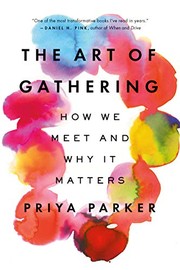
by Priya Parker
“Priya Parker, author of The Art of Gathering, explores why Americans struggle to host and connect despite widespread loneliness.”
More from The Ezra Klein Show
We summarize every new episode. Want them in your inbox?
Similar Episodes
Related episodes from other podcasts

The Mel Robbins Podcast
Jun 22
Try it For 1 Week: Small Ways to Make Your Life Fun & Exciting Again

Pivot
Oct 9
Camp Donald, Bezos's AI Fantasy, and Desperately Seeking Kara Swisher

The Daily (NYT)
Aug 22
An Expert on Conflict Says Your Relationships Are Doomed Without It

Freakonomics Radio
Jul 9
681. How to Host a Talk Show, with Dick Cavett
The Daily (NYT)
Jun 12
1979: How the U.S. and Iran Went From Allies to Enemies
Explore Related Topics
This podcast is featured in Best Politics Podcasts (2026) — ranked and reviewed with AI summaries.
Read this week's Software Engineering Podcast Insights — cross-podcast analysis updated weekly.
You're clearly into The Ezra Klein Show.
Every Monday, we deliver AI summaries of the latest episodes from The Ezra Klein Show and 192+ other podcasts. Free for one show.
Start My Monday DigestNo credit card · Unsubscribe anytime