Anthropic, the Pentagon, and the Future of Autonomous Weapons
Episode
51 min
Read time
2 min
Topics
Investing, Fundraising & VC, Leadership
AI-Generated Summary
Key Takeaways
- ✓Autonomous weapons definition: The meaningful threshold is a weapon that selects its own targets without human approval, not AI-assisted planning tools. Today's military AI, including Anthropic's Claude deployed via Palantir's Maven Smart System, helps analysts query fused satellite, signals, and geolocation data — humans still approve every strike decision, though that boundary is eroding.
- ✓AI-human loop quality: Nominal human oversight is not meaningful oversight. When thousands of targets are processed rapidly, analysts may rubber-stamp AI outputs rather than genuinely vet them. The school strike early in the Iran conflict, attributed to outdated Defense Intelligence Agency targeting data, illustrates how data quality failures compound when AI accelerates target generation at scale.
- ✓Anthropic-Pentagon dispute mechanics: The core disagreement is not about autonomous weapons today but about contract language. The Pentagon's January AI strategy demanded rights to use vendor AI for any lawful purpose, conflicting with Anthropic's acceptable-use policies. OpenAI accepted similar terms, creating a dynamic where the lab with fewer safety restrictions wins the $200 million contract.
- ✓Why government cannot build its own AI: The Pentagon cannot replicate frontier AI internally because AI talent concentrates in commercial firms offering higher compensation, and private capital has mobilized far more investment into data centers and model training than defense budgets allow. The commercial market for AI dwarfs defense applications, making the military a relatively minor customer for leading labs.
- ✓Flash-crash escalation risk: Autonomous systems interacting at machine speed in contested environments risk emergent, unintended escalation analogous to algorithmic trading flash crashes. Financial markets installed circuit breakers to halt runaway algorithms; no equivalent mechanism exists in warfare. Cyberspace and drone swarms represent the most plausible near-term environments where this failure mode could trigger unintended conflict escalation.
What It Covers
Paul Scharre, executive vice president at the Center for a New American Security and author of *Army of None*, explains how the US military currently uses AI in the Iran conflict, what autonomous weapons actually means, and why the Anthropic-Pentagon contract dispute centers on who sets usage rules rather than immediate deployment of killer robots.
Key Questions Answered
- •Autonomous weapons definition: The meaningful threshold is a weapon that selects its own targets without human approval, not AI-assisted planning tools. Today's military AI, including Anthropic's Claude deployed via Palantir's Maven Smart System, helps analysts query fused satellite, signals, and geolocation data — humans still approve every strike decision, though that boundary is eroding.
- •AI-human loop quality: Nominal human oversight is not meaningful oversight. When thousands of targets are processed rapidly, analysts may rubber-stamp AI outputs rather than genuinely vet them. The school strike early in the Iran conflict, attributed to outdated Defense Intelligence Agency targeting data, illustrates how data quality failures compound when AI accelerates target generation at scale.
- •Anthropic-Pentagon dispute mechanics: The core disagreement is not about autonomous weapons today but about contract language. The Pentagon's January AI strategy demanded rights to use vendor AI for any lawful purpose, conflicting with Anthropic's acceptable-use policies. OpenAI accepted similar terms, creating a dynamic where the lab with fewer safety restrictions wins the $200 million contract.
- •Why government cannot build its own AI: The Pentagon cannot replicate frontier AI internally because AI talent concentrates in commercial firms offering higher compensation, and private capital has mobilized far more investment into data centers and model training than defense budgets allow. The commercial market for AI dwarfs defense applications, making the military a relatively minor customer for leading labs.
- •Flash-crash escalation risk: Autonomous systems interacting at machine speed in contested environments risk emergent, unintended escalation analogous to algorithmic trading flash crashes. Financial markets installed circuit breakers to halt runaway algorithms; no equivalent mechanism exists in warfare. Cyberspace and drone swarms represent the most plausible near-term environments where this failure mode could trigger unintended conflict escalation.
Notable Moment
Scharre recounts the 1983 Soviet nuclear false alarm where officer Stanislav Petrov overrode a satellite warning of five incoming US missiles based on gut skepticism about newly deployed, unreliable hardware. The direct question posed: what would an AI system have done in that same moment?
Episode Transcript
Running a business means dealing with a lot of overly complicated software, and most CRMs tend to follow the same pattern. They're packed with endless features you'll never use, interfaces that feel clunky, and teams end up spending way too much time just trying to find basic information. Today's sponsor, Pipedrive, is a simple CRM tool designed for small and medium businesses. Pipedrive brings you entire sales processes into one dashboard, giving you a crystal clear complete view of sales processes and customer information designed to help teams stay in control and close more deals faster. It all centers around the visual sales pipeline where you could see every deal, what stage it's in, and what needs to happen next. Since everything is in one platform, Pipedrive is designed to unite your team, keep track of sales tasks, and stay on top of your leads. Switch to a CRM built by salespeople for salespeople and join the over 100,000 companies already using Pipedrive. Right now, you'll get a thirty day free trial. No credit card or payment needed. Just head to pipedrive.com/simplecrm to get started. That's pipedrive.com/simplecrm. The thing about AI for business, it may not automatically fit the way your business works. At IBM, we've seen this firsthand. But by embedding AI across HR, IT, and procurement processes, we've reduced cost by millions, slashed repetitive tasks, and freed thousands of hours for strategic work. Now we're helping companies get smarter by putting AI where it actually pays off, deep in the work that moves the business. Let's create smarter business. IBM. For many men, mental health challenges aren't recognized until they've already taken a toll. Work pressure, financial stress, changing relationships, and traditional expectations around masculinity can quietly wear men down, often without clear warning signs. In season three of the visibility gap, doctor Guy Winch and his guests explore how these pressures show up, how to spot them earlier, and how men can access meaningful support. Listen to the new season of the visibility gap, a podcast presented by Cigna Healthcare. Bloomberg Audio Studios. Podcasts, radio, news. Hello, and welcome to another episode of the Odd Lots podcast. I'm Joe Wasenthal. And And I'm Tracy Alloway. So, Tracy, we're recording this March 24, and, of course, almost all of our episodes lately have been about the war in Iran. Mhmm. But what's interesting or what's a little weird is that just prior to the war, literally days or maybe hours, the biggest story in the world was actually about defense and, you know, the DOD. That's right. So you are referring to Anthropic Yeah. Yeah. And its disagreement, to put it mildly, with the Department of War? Yeah. Exactly. This was the biggest story going right up on the eve of the war in Iran. And, of course, obviously, there was this contract and anthropics technology was used by the defense department. So it was not a disagreement about the use of AI per se in war, but …
Get the full transcript (10,965 words) + summary by email — free
One-time email with the complete transcript and AI summary of this episode. No account needed.
One email, no spam. We’ll also show you what SignalCast does.

You just read a 3-minute summary of a 48-minute episode.
Get Odd Lots summarized like this every Monday — plus up to 2 more podcasts, free.
Pick Your Podcasts — FreeKeep Reading
More from Odd Lots
Hollywood Was Cooked Before AI, and Now It's Only Getting Worse
Sep 25 · 32 min

The Ezra Klein Show
What’s the Left’s Vision for Foreign Policy After Trump?
Jun 9
More from Odd Lots
AI Is Upending the Lives of People Who Do Social Media Professionally
Sep 24 · 27 min

The Daily (NYT)
Trump’s War on Mail-In Voting
Sep 9
Books, tools, and gear mentioned in this episode
SignalCast may earn commission on purchases via these links. As an Amazon Associate, SignalCast earns from qualifying purchases.
Books
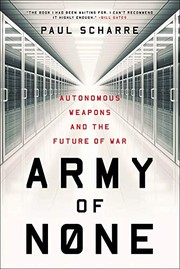 Army of NoneBy guest
by Paul Scharre
“Paul Scharre, executive vice president at the Center for a New American Security and author of *Army of None*, explains how the US military currently uses AI in the Iran conflict”
Tools
- ClaudeBy guest
by Anthropic
“Today's military AI, including Anthropic's Claude deployed via Palantir's Maven Smart System, helps analysts query fused satellite, signals, and geolocation data”
- Maven Smart SystemBy guest
by Palantir
“Today's military AI, including Anthropic's Claude deployed via Palantir's Maven Smart System, helps analysts query fused satellite, signals, and geolocation data”
More from Odd Lots
We summarize every new episode. Want them in your inbox?
Hollywood Was Cooked Before AI, and Now It's Only Getting Worse
AI Is Upending the Lives of People Who Do Social Media Professionally
How LA Is Quietly Becoming America's New Industrial Tech Hub
A Goldman M&A Banker Helped Bring the Olympics to Los Angeles
There's a Mind-Boggling Number of Rich People in America
Similar Episodes
Related episodes from other podcasts


Explore Related Topics
This podcast is featured in Best Finance Podcasts (2026) — ranked and reviewed with AI summaries.
Read this week's Investing & Markets Podcast Insights — cross-podcast analysis updated weekly.
You're clearly into Odd Lots.
Every Monday, we deliver AI summaries of the latest episodes from Odd Lots and 192+ other podcasts. Free for one show.
Start My Monday DigestNo credit card · Unsubscribe anytime