Episode #219 ... Dostoevsky - Crime and Punishment
Episode
32 min
Read time
2 min
Topics
Relationships, Psychology & Behavior, Philosophy & Wisdom
AI-Generated Summary
Key Takeaways
- ✓Rational Egoism Trap: Raskolnikov calculates that killing an exploitative pawnbroker creates net positive utility, but his subsequent guilt reveals how utilitarian abstractions collapse when tested against lived reality within actual moral communities and relationships.
- ✓False Individualism: Believing himself special enough to create his own morality, Raskolnikov discovers he remains shaped by cultural values he claimed to reject. True individuality means affirming your role in relational networks, not denying them through theoretical abstractions.
- ✓Confession as Growth: Genuine confession accomplishes two things: it limits ego by admitting wrongdoing, enabling personal growth, and it submits to legitimate authority that can absolve guilt. Without external authority to grant forgiveness, guilt becomes inescapable psychological prison.
- ✓Sonia's Affirmation: Sonia becomes a prostitute to support her family while maintaining Christian faith, demonstrating how consenting to difficult circumstances within meaningful relationships creates personal salvation, contrasting with Raskolnikov's life-denying rationalization and denial of connection.
What It Covers
Dostoevsky's Crime and Punishment explores Russian nihilism through Raskolnikov, who murders a pawnbroker using utilitarian logic, then confronts the contradiction between his rational justifications and his actual embeddedness in moral community.
Key Questions Answered
- •Rational Egoism Trap: Raskolnikov calculates that killing an exploitative pawnbroker creates net positive utility, but his subsequent guilt reveals how utilitarian abstractions collapse when tested against lived reality within actual moral communities and relationships.
- •False Individualism: Believing himself special enough to create his own morality, Raskolnikov discovers he remains shaped by cultural values he claimed to reject. True individuality means affirming your role in relational networks, not denying them through theoretical abstractions.
- •Confession as Growth: Genuine confession accomplishes two things: it limits ego by admitting wrongdoing, enabling personal growth, and it submits to legitimate authority that can absolve guilt. Without external authority to grant forgiveness, guilt becomes inescapable psychological prison.
- •Sonia's Affirmation: Sonia becomes a prostitute to support her family while maintaining Christian faith, demonstrating how consenting to difficult circumstances within meaningful relationships creates personal salvation, contrasting with Raskolnikov's life-denying rationalization and denial of connection.
Notable Moment
The detective asks Raskolnikov how anyone distinguishes between genuinely special people who transcend morality versus deluded individuals who merely think themselves special, exposing the circular logic of rational egoism where you judge your own exceptionalism.
Episode Transcript
Hello, everyone. I'm Stephen West. This is Philosophize This. So today, we're talking about Dostoevsky's Crime and Punishment. And while there's no substitute for reading the actual book, you know, sitting down, giving yourself the gift of feeling the characters, putting yourself in the experience directly, Being that this is a philosophy podcast, we can talk about some of the philosophical themes Dostoevsky definitely had in mind as he was writing this book. See, to know about the deepening of Russian nihilism at the time, the rise of what you could call eventually the narcissism of modernity, To know about the crisis of faith that many people are encountering across the world. Well, this is some philosophical context that can be easily missed if you're taking a purely literary approach to the book. And, you know, take it from me. The last thing you wanna be in this world is simply a librarian. You wanna be a philosopher librarian. That's the life goal you should be aiming for. Anyway, that said, the main character we're gonna be talking about today is one of the most memorable, relatable characters and maybe all of classic literature. It's a young man by the name of Rodion Raskolnikov or just Raskolnikov for short. Now on the surface, the book kinda masquerades as being about this guy Raskolnikov, where he takes an ax, murders two innocent people, and then deals with the personal and legal fallout of doing something like that. That's what the book masquerades as. But part of what makes this book such a work of brilliance from Dostoevsky is that the murder is actually a secondary thing to the main point of the book form. There's a sense in which the book could have been about a lot of different things, but a double murder for Dostoevsky is gonna be an absolutely perfect site to explore the contradictions of Russian nihilism when taken to their natural ends as consequences in the real world. You know, it's been said that the true drama of Crime and Punishment is actually the complexity of the internal experience of Raskolnikov and him coming to terms slowly and painfully with the true reasons why he committed these murders in the first place, that he's been lying to himself for a very long time, and that the consequences of a brutal murder like this shakes him awake. It shows him his true relationship to his own existence or to god if you're Dostoevsky. Or if you wanted to describe it in terms of what we've been talking about lately on this podcast, it makes him aware of this more immediate relational network that we are always already a part of. We'll get into all of it, but I wanna make sure right here at the start that we avoid one pretty popular mistake to make about this book and about Raskolnikov as a character. You know, a lot of people will say what it is I'm about to …
Get the full transcript (6,985 words) + summary by email — free
One-time email with the complete transcript and AI summary of this episode. No account needed.
One email, no spam. We’ll also show you what SignalCast does.

You just read a 3-minute summary of a 29-minute episode.
Get Philosophize This! summarized like this every Monday — plus up to 2 more podcasts, free.
Pick Your Podcasts — FreeKeep Reading
More from Philosophize This!
Episode #252 ... Slaughterhouse-Five - Kurt Vonnegut
Aug 29 · 34 min

Stuff You Should Know
Short Stuff: Shark Arm Murders
Jul 29
More from Philosophize This!
Episode #251 ... You Must Change Your Life, Pt. 2 - The Worlds That Make Us
Aug 8 · 35 min

In Good Company with Nicolai Tangen
Eliot Higgins: How Bellingcat Hunts Down the Truth
Jul 15
Books, tools, and gear mentioned in this episode
SignalCast may earn commission on purchases via these links. As an Amazon Associate, SignalCast earns from qualifying purchases.
Books
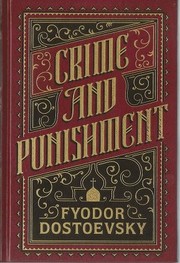 Crime and PunishmentBy guest
by Dostoevsky
“Dostoevsky's Crime and Punishment explores Russian nihilism through Raskolnikov, who murders a pawnbroker using utilitarian logic, then confronts the contradiction between his rational justifications and his actual embeddedness in moral community.”
More from Philosophize This!
We summarize every new episode. Want them in your inbox?
Episode #252 ... Slaughterhouse-Five - Kurt Vonnegut
Episode #251 ... You Must Change Your Life, Pt. 2 - The Worlds That Make Us
Episode #250 ... You Must Change Your Life. - Peter Sloterdijk
Episode #249 ... The Trap of Modern Cynicism - Peter Sloterdijk
Episode #248 ... What philosophers say about lying.
Similar Episodes
Related episodes from other podcasts


Explore Related Topics
This podcast is featured in Best Philosophy Podcasts (2026) — ranked and reviewed with AI summaries.
You're clearly into Philosophize This!.
Every Monday, we deliver AI summaries of the latest episodes from Philosophize This! and 192+ other podcasts. Free for one show.
Start My Monday DigestNo credit card · Unsubscribe anytime