Episode #203 ... Why the future is being slowly cancelled. - Postmodernism (Mark Fisher, Capitalist Realism)
Episode
39 min
Read time
2 min
Topics
Leadership, Philosophy & Wisdom, History
AI-Generated Summary
Key Takeaways
- ✓Cultural Amnesia: Postmodern society recycles twentieth century cultural forms rather than creating new ones—2019's top ten highest-grossing films were remixes of older properties, reflecting inability to imagine genuinely novel futures.
- ✓Depressive Hedonia: Modern depression manifests not as inability to find enjoyment, but as constant consumption of dopamine-inducing media to escape a world empty of meaningful possibility or optimistic connection to reality.
- ✓Tolerant Relativism Contradiction: Young people claim moral relativism while demanding tolerance, creating philosophical inconsistency—true relativism requires accepting intolerant cultures as equally valid, making universal tolerance logically incompatible with complete relativism.
- ✓Hauntology of Present: Society exists haunted by both past injustices and lost futures that never materialized, stuck comparing current reality to imagined better worlds from previous generations while unable to construct new visions.
What It Covers
Mark Fisher's concept of capitalist realism explains how postmodernism and neoliberalism combine to trap society in a confused present, unable to imagine alternative futures beyond capitalism's expansion.
Key Questions Answered
- •Cultural Amnesia: Postmodern society recycles twentieth century cultural forms rather than creating new ones—2019's top ten highest-grossing films were remixes of older properties, reflecting inability to imagine genuinely novel futures.
- •Depressive Hedonia: Modern depression manifests not as inability to find enjoyment, but as constant consumption of dopamine-inducing media to escape a world empty of meaningful possibility or optimistic connection to reality.
- •Tolerant Relativism Contradiction: Young people claim moral relativism while demanding tolerance, creating philosophical inconsistency—true relativism requires accepting intolerant cultures as equally valid, making universal tolerance logically incompatible with complete relativism.
- •Hauntology of Present: Society exists haunted by both past injustices and lost futures that never materialized, stuck comparing current reality to imagined better worlds from previous generations while unable to construct new visions.
Notable Moment
Fisher compares modern society to Leonard from Memento—suffering anterograde amnesia, unable to form new memories, constantly confused and skeptical, trying to solve mysteries while trapped in perpetual haze without clear direction.
Episode Transcript
Hello, everyone. I'm Stephen West. This is Philosophize This. Thanks to everyone who supports the podcast on Patreon. Thanks for giving me and my family a life every episode. Always gonna keep doing my best here for you. I hope you love the show today. So I highly recommend listening to last episode on neoliberalism because everything on this episode is gonna build off of that one. We're gonna talk about how the hyper focus on the individual, the use of competition as the main organizing principle of society, the primary goal of getting the government out of the way of people innovating, how all this gets combined with postmodernism in a way that leaves us in a spot that Mark Fisher thinks is incredibly difficult to move away from if you wanted to. And to just begin with an example of the type of instincts postmodernism brings about in people, let's talk about ethics for a second. Maybe one of the most fundamental questions you can ask in philosophy, what is it that makes something right or wrong? By the way, gonna be sprinkling in some episodes here soon on ethical reasoning, hoping it'll be helpful to demonstrate for people what philosophy can bring into these conversations, which is a lot. But the question for now is, what do you think the average person living in postmodern society would say if you ask them, how do you determine what right or wrong is in a given situation? And I think most people, a good percentage of specifically young people alive today, if you press them hard enough on it, would say that they think that morality is something that's relative. They'll say, who am I to claim that one culture is better or worse than any other culture? Their values make sense to them. My values make sense to me. I I can't appeal to anything objectively better about mine than theirs. And and I certainly, as someone born into a postmodern type of subjectivity, have to be very skeptical of any sort of grand narrative that's been constructed out there that tries to make claims about moral objectivity. Those don't exist to me, so therefore morality is relative. And then if you ask those same people, okay. Well, if that's the case, then how should we be treating other people or cultures that see things differently than you do? And And again, for a lot of young people living in postmodern society, their answer is often that we should treat people with tolerance. And it makes sense. See, because in a world where every moral conclusion is equally valid to you, then, of course, you should be tolerant to people to be able to hold whatever positions they want to. And with this tolerant relativism that's super common these days, well, it all sounds really great. And, yes, there's people who would say that this is the pinnacle of moral wisdom. Everybody else out there is just a …
Get the full transcript (8,362 words) + summary by email — free
One-time email with the complete transcript and AI summary of this episode. No account needed.
One email, no spam. We’ll also show you what SignalCast does.

You just read a 3-minute summary of a 36-minute episode.
Get Philosophize This! summarized like this every Monday — plus up to 2 more podcasts, free.
Pick Your Podcasts — FreeKeep Reading
More from Philosophize This!
Episode #252 ... Slaughterhouse-Five - Kurt Vonnegut
Aug 29 · 34 min

Masters of Scale
Relevance is a sport: Gap’s Richard Dickson on swinging, missing, and winning
Jul 7
More from Philosophize This!
Episode #251 ... You Must Change Your Life, Pt. 2 - The Worlds That Make Us
Aug 8 · 35 min

The Knowledge Project
Mental Models That Change How You Think | Bill Gurley
Jun 9
Books, tools, and gear mentioned in this episode
SignalCast may earn commission on purchases via these links. As an Amazon Associate, SignalCast earns from qualifying purchases.
Books
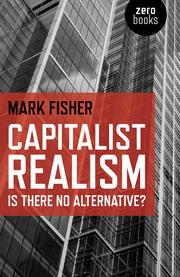 Capitalist RealismBy guest
by Mark Fisher
“Mark Fisher's concept of capitalist realism explains how postmodernism and neoliberalism combine to trap society in a confused present, unable to imagine alternative futures beyond capitalism's expansion.”
More from Philosophize This!
We summarize every new episode. Want them in your inbox?
Episode #252 ... Slaughterhouse-Five - Kurt Vonnegut
Episode #251 ... You Must Change Your Life, Pt. 2 - The Worlds That Make Us
Episode #250 ... You Must Change Your Life. - Peter Sloterdijk
Episode #249 ... The Trap of Modern Cynicism - Peter Sloterdijk
Episode #248 ... What philosophers say about lying.
Similar Episodes
Related episodes from other podcasts

Masters of Scale
Jul 7
Relevance is a sport: Gap’s Richard Dickson on swinging, missing, and winning

The Knowledge Project
Jun 9
Mental Models That Change How You Think | Bill Gurley

Odd Lots
Mar 26
This Is How Big Money Is Trading the War in Iran

The Full Ratchet
Feb 5
Investor Stories 457: Lessons for Early Career VCs: Fiduciary Mindset, Power Law Discipline, and Personal Edge (Dash, Okike, Hudson)

Modern Wisdom
Jan 31
#1053 - Richard Shotton - 11 Psychology Tricks From the World’s Best Brands
Explore Related Topics
This podcast is featured in Best Philosophy Podcasts (2026) — ranked and reviewed with AI summaries.
You're clearly into Philosophize This!.
Every Monday, we deliver AI summaries of the latest episodes from Philosophize This! and 192+ other podcasts. Free for one show.
Start My Monday DigestNo credit card · Unsubscribe anytime