Episode #202 ... Why we can't think beyond capitalism. - Neoliberalism (Mark Fisher, Capitalist Realism)
Episode
35 min
Read time
2 min
Topics
Health & Wellness, Leadership, Product & Tech Trends
AI-Generated Summary
Key Takeaways
- ✓Neoliberal ideology shift: Neoliberalism differs from classical liberalism by prioritizing competition and GDP growth over social welfare, using minimal government intervention to maximize corporate interests rather than ensuring mutual benefit through free markets.
- ✓Privatization of mental illness: Depression gets treated as individual chemical imbalance requiring personal responsibility and medication, ignoring how societal structures cause mental health crises. Different environments produce different depression rates, suggesting systemic causes beyond individual brain chemistry.
- ✓Audit culture emergence: Companies prioritize quantifiable performance metrics over actual service quality, rewarding employees who demonstrate work through spreadsheets and meetings rather than producing genuine value. Capital expansion becomes the goal, not providing good products or services.
- ✓Government as corporate tool: Deregulation under neoliberalism does not create free markets but allows powerful corporations to leverage government for profit maximization. The 2008 financial bailouts exemplified socialized losses and privatized gains, contradicting free market principles.
What It Covers
Mark Fisher's concept of capitalist realism explains why Western societies cannot imagine alternatives to capitalism, examining how neoliberalism emerged from classical liberalism and creates individualistic thinking that privatizes systemic problems like depression.
Key Questions Answered
- •Neoliberal ideology shift: Neoliberalism differs from classical liberalism by prioritizing competition and GDP growth over social welfare, using minimal government intervention to maximize corporate interests rather than ensuring mutual benefit through free markets.
- •Privatization of mental illness: Depression gets treated as individual chemical imbalance requiring personal responsibility and medication, ignoring how societal structures cause mental health crises. Different environments produce different depression rates, suggesting systemic causes beyond individual brain chemistry.
- •Audit culture emergence: Companies prioritize quantifiable performance metrics over actual service quality, rewarding employees who demonstrate work through spreadsheets and meetings rather than producing genuine value. Capital expansion becomes the goal, not providing good products or services.
- •Government as corporate tool: Deregulation under neoliberalism does not create free markets but allows powerful corporations to leverage government for profit maximization. The 2008 financial bailouts exemplified socialized losses and privatized gains, contradicting free market principles.
Notable Moment
Fisher challenges the common refrain that capitalism's flaws are acceptable because alternatives seem worse, arguing this defensive posture reveals how neoliberal thinking has eliminated our capacity to envision different economic futures entirely.
Episode Transcript
Hello, everyone. I'm Stephen West. This is Philosophize This. So I wanna begin today with a question the late Mark Fisher had been asking people for decades by the end of his life. Do you ever look at the world around you? See the problems that are going on. Here are people like Zizek we've been talking about lately who bring an anti capitalist sort of energy to this whole conversation. And do you ever feel like, okay, yeah, there's certainly problems with capitalism. I can agree with that. But I'm gonna be honest with you. I don't see the obvious amazing revolutionary way out of this situation that seems to be required for any of this stuff to work. In fact, sometimes the way I think about it, and this is a quote attributed to Zizek and Frederick Jameson, but something that describes the way I feel sometimes is that it's easier for me to imagine the end of the world than it is to imagine the end of capitalism. I mean, that's just a true statement for a lot of people. I can't think of 10 different ways the world may end tomorrow. It's not even hard to. But you asked me for one single way that we can go from capitalism to anything, whatever it is on the other side of it. It just seems much more likely to me that what's gonna end up ending global capitalism are the flaws in setting things up this way that are already producing bad results that are just gonna get so out of hand one day that we run civilization off a cliff. I mean, is that the fate that all this is headed for because things will just never change? Because from where I sit, this person may say, where my life has always seemed to be as an adult is in this constant place where I'm choosing between the lesser of two evils. So many things already feel that way to me. Why wouldn't it be the case that most of the issues we talk about politically are fundamentally grounded in this value judgment that capitalism may not be great, but at least it isn't the Marxism of the twentieth century? At least it isn't total anarchy with people killing each other all the time. At least I'm not living under the rule of a ruthless dictator. In other words, it's not that this system is so amazing. It's that at least it's not any of this other stuff. That's the mantra we live by that we're all supposed to be very proud of in our world. And I know, this person could say, you know, that may sound like I lack some kind of revolutionary spirit that other people have had at other points in human history, but quite frankly, you guys on the left haven't really laid out a good, easily accessible plan for people here. And when I stop to think about my position …
Get the full transcript (7,414 words) + summary by email — free
One-time email with the complete transcript and AI summary of this episode. No account needed.
One email, no spam. We’ll also show you what SignalCast does.

You just read a 3-minute summary of a 32-minute episode.
Get Philosophize This! summarized like this every Monday — plus up to 2 more podcasts, free.
Pick Your Podcasts — FreeKeep Reading
More from Philosophize This!
Episode #252 ... Slaughterhouse-Five - Kurt Vonnegut
Aug 29 · 34 min

Masters of Scale
Relevance is a sport: Gap’s Richard Dickson on swinging, missing, and winning
Jul 7
More from Philosophize This!
Episode #251 ... You Must Change Your Life, Pt. 2 - The Worlds That Make Us
Aug 8 · 35 min

The Knowledge Project
Mental Models That Change How You Think | Bill Gurley
Jun 9
Books, tools, and gear mentioned in this episode
SignalCast may earn commission on purchases via these links. As an Amazon Associate, SignalCast earns from qualifying purchases.
Books
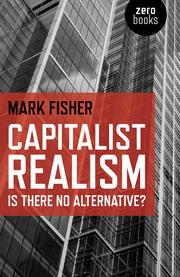 Capitalist RealismBy guest
by Mark Fisher
“Mark Fisher's concept of capitalist realism explains why Western societies cannot imagine alternatives to capitalism, examining how neoliberalism emerged from classical liberalism and creates individualistic thinking that privatizes systemic problems like depression.”
More from Philosophize This!
We summarize every new episode. Want them in your inbox?
Episode #252 ... Slaughterhouse-Five - Kurt Vonnegut
Episode #251 ... You Must Change Your Life, Pt. 2 - The Worlds That Make Us
Episode #250 ... You Must Change Your Life. - Peter Sloterdijk
Episode #249 ... The Trap of Modern Cynicism - Peter Sloterdijk
Episode #248 ... What philosophers say about lying.
Similar Episodes
Related episodes from other podcasts

Masters of Scale
Jul 7
Relevance is a sport: Gap’s Richard Dickson on swinging, missing, and winning

The Knowledge Project
Jun 9
Mental Models That Change How You Think | Bill Gurley

Odd Lots
Mar 26
This Is How Big Money Is Trading the War in Iran

The Full Ratchet
Feb 5
Investor Stories 457: Lessons for Early Career VCs: Fiduciary Mindset, Power Law Discipline, and Personal Edge (Dash, Okike, Hudson)

Modern Wisdom
Jan 31
#1053 - Richard Shotton - 11 Psychology Tricks From the World’s Best Brands
Explore Related Topics
This podcast is featured in Best Philosophy Podcasts (2026) — ranked and reviewed with AI summaries.
Read this week's Health & Longevity Podcast Insights — cross-podcast analysis updated weekly.
You're clearly into Philosophize This!.
Every Monday, we deliver AI summaries of the latest episodes from Philosophize This! and 192+ other podcasts. Free for one show.
Start My Monday DigestNo credit card · Unsubscribe anytime