Joanna Macy — Hope Portal, Episode 5
Episode
12 min
Read time
2 min
Topics
Health & Wellness, Relationships, Philosophy & Wisdom
AI-Generated Summary
Key Takeaways
- ✓Pain as gateway: Environmental apathy stems from fear of pain, not indifference. When you stay present with grief about ecological destruction and keep breathing, it transforms to reveal love for the world underneath.
- ✓Grief to mourning: Moving from pure grief to mourning creates space to make pain sacred. This shift acknowledges loss without resolving it, transforming your life and propelling you into future action through love rather than immobilizing you.
- ✓Unconditional engagement: Make passionate love for the world independent of its health status or future prospects. You are alive in this moment, which means you can access the magic of existence regardless of planetary prognosis.
What It Covers
Philosopher Joanna Macy teaches how facing ecological grief transforms pain into love, unlocking capacity for sustained environmental activism through presence rather than forced optimism.
Key Questions Answered
- •Pain as gateway: Environmental apathy stems from fear of pain, not indifference. When you stay present with grief about ecological destruction and keep breathing, it transforms to reveal love for the world underneath.
- •Grief to mourning: Moving from pure grief to mourning creates space to make pain sacred. This shift acknowledges loss without resolving it, transforming your life and propelling you into future action through love rather than immobilizing you.
- •Unconditional engagement: Make passionate love for the world independent of its health status or future prospects. You are alive in this moment, which means you can access the magic of existence regardless of planetary prognosis.
Notable Moment
Macy recites her translation of Rilke's final sonnet to Orpheus, framing darkness and pain as sources of strength that ring through us like bells in towers.
Episode Transcript
Our teacher and inspiration for this session is Joanna Macy. What she embodies is a wild love for the world and a fierce hope that rises irrepressible from that. And she carries and lives an important reminder to us that when we love, we will also know pain, and we will know grief that can feel too awful to bear. What is true in our individual lives is true also in our life together, civilizationally. The landscape you and I want to deepen of goodness and muscular hope and generative living is not born of abstract commitments. It's about what we love, our communities, our children, humanity, the natural world. That is a primary passion of Joanna Macy. She's a philosopher of ecology, and she was an environmental activist before that term environmentalism had been coined. We are all also simultaneously, with whatever other challenges we're facing, living with the reality of ecological fragility and disarray and and danger. And I believe that we are, each and every one of us, feeling that at a cellular level. Whatever our belief systems are, whether it's conscious, wherever we live, if in no other way we are having to acknowledge it in the chaos of what we used to call the weather. The weather used to be the stuff of small talk, a comforting mix of predictable and surprising. And when we talk about the muscle of hope being reality based, that means that it does not call us to be brimming with optimism where that is not warranted. Joanna Macy is also a Buddhist teacher and scholar at this point in her life, and she actually says that within Buddhist teaching as she understands it, there is absolutely permission to not be brimming with optimism. What we're called to do is be present. And when you're present, there will be grieving to do, but that this strangely, interestingly, kind of miraculously increases our capacity to love this world, and it unleashes intelligence and ingenuity to sustain that love across a lifetime, as Joanna Macy has. So before the part of my conversation with Joanna that you're going to hear, she named the fact that one of the things we do that gets in the way of grieving as an expression of love is that we beat ourselves up for turning away from our pain at what's happening in the world because it hurts too much. And part of our reorienting to being present to pain is that we get to show compassion towards ourselves. Joanna Macy turns for companionship to the poet, Reiner Maria Rilke. In this, she is a comrade to me. Rilke has been a friend to me across time and space from my years of young adulthood in Berlin to now. Rilke, who also was a citizen of a young century as we are that was full of turmoil and violence and unimaginable possibility. And you're going to hear Joanna turn to Rilke, and read from Rilke a …
Get the full transcript (1,389 words) + summary by email — free
One-time email with the complete transcript and AI summary of this episode. No account needed.
One email, no spam. We’ll also show you what SignalCast does.

You just read a 3-minute summary of a 9-minute episode.
Get On Being summarized like this every Monday — plus up to 2 more podcasts, free.
Pick Your Podcasts — FreeKeep Reading
More from On Being
Michael Pollan — The Mystery of Consciousness
May 14 · 74 min

Modern Wisdom
The New Way Of The Superior Man - David Deida - #1101
May 23
More from On Being
“The Fierce Urgency of Now” — Michelle Alexander and Lucas Johnson
May 7 · 76 min

Hard Fork
Can the U.S. Rein in Prediction Markets? + Joanna Stern on Her Year of A.I. Experiments + Our Producer Goes to Attention School
May 8
Books, tools, and gear mentioned in this episode
SignalCast may earn commission on purchases via these links. As an Amazon Associate, SignalCast earns from qualifying purchases.
Books
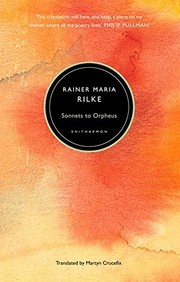
by Rainer Maria Rilke
“Macy recites her translation of Rilke's final sonnet to Orpheus, framing darkness and pain as sources of strength that ring through us like bells in towers.”
More from On Being
We summarize every new episode. Want them in your inbox?
Michael Pollan — The Mystery of Consciousness
“The Fierce Urgency of Now” — Michelle Alexander and Lucas Johnson
Shai Held — On Love and Judaism
Jason Reynolds — On Hopelessness, the Virtue of Stamina, and Showing Grace to Ourselves
Arab Aramin, Robi Damelin, Liora Eilon, Mohamed Abu Jafar — Turning Unbearable Loss Into Ground of Shared Life
Similar Episodes
Related episodes from other podcasts

Modern Wisdom
May 23
The New Way Of The Superior Man - David Deida - #1101

Hard Fork
May 8
Can the U.S. Rein in Prediction Markets? + Joanna Stern on Her Year of A.I. Experiments + Our Producer Goes to Attention School

TED Radio Hour
May 8
How to mend a broken heart

Sean Carroll's Mindscape
Feb 23
345 | Adam Elga on Being Rational in a Very Large Universe

The James Altucher Show
Feb 12
What is Great Sex: Myths About Sex, and What Separates Good Sex and Bad Sex!
Explore Related Topics
This podcast is featured in Best Philosophy Podcasts (2026) — ranked and reviewed with AI summaries.
Read this week's Health & Longevity Podcast Insights — cross-podcast analysis updated weekly.
You're clearly into On Being.
Every Monday, we deliver AI summaries of the latest episodes from On Being and 192+ other podcasts. Free for one show.
Start My Monday DigestNo credit card · Unsubscribe anytime