Joy Harjo and Tracy K. Smith – "This world is full of everything good, everything beautiful."
Episode
69 min
Read time
3 min
Topics
Health & Wellness, Relationships, Fundraising & VC
AI-Generated Summary
Key Takeaways
- ✓Poetry as nervous system tool: Tracy K. Smith's laureateship project brought poems to rural, non-literary communities across America, asking audiences one question: what do you notice, feel, wonder, or long for? This single prompt consistently unlocked raw, vulnerable conversation about grief, fear, and life experience — demonstrating that poetry bypasses defensive posturing and reaches emotional truth faster than debate or direct discussion.
- ✓Chaos as creative precondition: Joy Harjo frames periods of collective confusion and despair — including the current political moment — as structurally identical to the creative process in writing, music, and painting. When everything is stirred up, something is emerging. Recognizing chaos as generative rather than terminal shifts the psychological stance from paralysis toward active participation in what comes next.
- ✓Fear is largely learned, not innate: Drawing on Elizabeth Kübler-Ross, Tracy K. Smith identifies only two biologically hardwired human fears: loud sounds and falling. All other fear responses are habituated through deliberate social conditioning. Naming a fear explicitly causes it to shrink. Poetry accelerates this process by leading readers directly into vulnerability, giving fear a shape and language rather than letting it operate below conscious awareness.
- ✓Einstein's "optical delusion" as civic framework: Smith connects Joy Harjo's poem "She Had Some Horses" to Einstein's description of human separateness as an optical delusion — the false perception that we are distinct from others. Poems function as timed experiments in dissolving that delusion, offering brief but repeatable moments of genuine connection. Smith argues this cumulative practice builds the capacity for real-time empathy with strangers and political opponents.
- ✓Contradiction as the core unit of human experience: Harjo's 1983 poem "She Had Some Horses" ends with the line that horses she loved and horses she hated were the same horses. Smith teaches this poem regularly at Harvard, using it to help students hold complexity without forcing resolution. The practical application: resist narrowing ambiguous situations to single meanings; train attention toward cumulative, expansive understanding rather than definitive conclusions.
What It Covers
Poets Joy Harjo (23rd US Poet Laureate, 2019–2022) and Tracy K. Smith (22nd US Poet Laureate, 2017–2019) join host Krista Tippett at Symphony Space in Manhattan to explore poetry as a practical technology for navigating fear, contradiction, collective division, and personal grief while building radical compassion across difference.
Key Questions Answered
- •Poetry as nervous system tool: Tracy K. Smith's laureateship project brought poems to rural, non-literary communities across America, asking audiences one question: what do you notice, feel, wonder, or long for? This single prompt consistently unlocked raw, vulnerable conversation about grief, fear, and life experience — demonstrating that poetry bypasses defensive posturing and reaches emotional truth faster than debate or direct discussion.
- •Chaos as creative precondition: Joy Harjo frames periods of collective confusion and despair — including the current political moment — as structurally identical to the creative process in writing, music, and painting. When everything is stirred up, something is emerging. Recognizing chaos as generative rather than terminal shifts the psychological stance from paralysis toward active participation in what comes next.
- •Fear is largely learned, not innate: Drawing on Elizabeth Kübler-Ross, Tracy K. Smith identifies only two biologically hardwired human fears: loud sounds and falling. All other fear responses are habituated through deliberate social conditioning. Naming a fear explicitly causes it to shrink. Poetry accelerates this process by leading readers directly into vulnerability, giving fear a shape and language rather than letting it operate below conscious awareness.
- •Einstein's "optical delusion" as civic framework: Smith connects Joy Harjo's poem "She Had Some Horses" to Einstein's description of human separateness as an optical delusion — the false perception that we are distinct from others. Poems function as timed experiments in dissolving that delusion, offering brief but repeatable moments of genuine connection. Smith argues this cumulative practice builds the capacity for real-time empathy with strangers and political opponents.
- •Contradiction as the core unit of human experience: Harjo's 1983 poem "She Had Some Horses" ends with the line that horses she loved and horses she hated were the same horses. Smith teaches this poem regularly at Harvard, using it to help students hold complexity without forcing resolution. The practical application: resist narrowing ambiguous situations to single meanings; train attention toward cumulative, expansive understanding rather than definitive conclusions.
- •Radical compassion as a learnable civic skill: Smith proposes a specific mental exercise for bridging political division — stepping back far enough to recognize that "us" and "them" belong to the same "we." She tested this during her laureateship by entering communities skeptical of poetry and consistently found people willing to connect through shared emotional experience. Her conclusion: dehumanizing rhetoric is a tactic, not an accurate description of human nature or the actual divide.
Notable Moment
Joy Harjo reads a lullaby written after losing her daughter — an event that occurred less than two years before this recording. The poem moves from grief into an assertion that the world remains full of beauty, then acknowledges that humans will repeatedly lose everything and find it again. The room's response is audible silence.
Episode Transcript
In the introduction I wrote after my first interview with the wonderful Joy Harjo, I read this sentence from her memoir, Crazy Brave. Though we have instructions and a map buried in our hearts when we enter this world, nothing quite prepares us for the abrupt shift to the breathing realm. I know this is not exactly what she was talking about, but these days, I often have to remind myself to keep breathing. I think this is true of human beings across all of our differences and divides. Those maps and instructions in our hearts can feel hard to access or believe in. But in a room in New York City just before the turn of this year, Joy summoned them together with me and her fellow poet and friend, Tracy k Smith. I invite you now to settle into your soft, breathing body with these two wise women as companions and with a sense of poetry as a technology, as Tracy describes in her new book. Poetry as a technology for rising to our truest, highest selves, even amidst grief and mystery and danger, and bearing witness to each other as we do so. I think all of us in that room left a little more lighthearted and alive as this conversation unfolded, and I hope that will be your experience too. I'm Krista Tippett, and this is On Being. Tracy k Smith and Joy Harjo are both wildly and deservedly awarded and not just as poets. Tracy also as a teacher and professor at Harvard, Joy as a saxophonist and painter. We were brought together at Symphony Space in Manhattan to celebrate their newest books. I think you're as happy to be here as I am. I wanna thank Symphony Space before we begin so much. Yeah. I don't think I've ever said yes to an invitation more quickly than I did to this one. To sit with these two together, I interviewed each of you when you were poet laureate. Tracy k Smith, the twenty second US poet laureate from 2017 to 2019, and Joy Harjo, the twenty third US poet laureate from 2019 to 2022. Tracy and I did a live event here in New York City. By the time we interviewed Joy, we were in the middle of pandemic and lockdown. And And so we met on Zoom. We've never met in person. Now I usually start and I interview for on being with a question about origins, which was inspired by some Benedictines who are important in my life a long time ago who would take up a big theological question and say, answer the question through the story of your life. And I think that these two books that they've written here that we're also here to celebrate tonight, are really ins you know, you could say one way I might talk about them is that they are each kind of long unfoldings of this exercise. What is poetry? Answer the question …
Get the full transcript (9,918 words) + summary by email — free
One-time email with the complete transcript and AI summary of this episode. No account needed.
One email, no spam. We’ll also show you what SignalCast does.

You just read a 3-minute summary of a 66-minute episode.
Get On Being summarized like this every Monday — plus up to 2 more podcasts, free.
Pick Your Podcasts — FreeKeep Reading
More from On Being
Michael Pollan — The Mystery of Consciousness
May 14 · 74 min

Latent Space
The Next War Is Already Here. The West Isn't Ready. — Yaroslav Azhnyuk, The Fourth Law & Guest Host Noah Smith, Noahpinion
May 18
More from On Being
“The Fierce Urgency of Now” — Michelle Alexander and Lucas Johnson
May 7 · 76 min

All-In with Chamath, Jason, Sacks & Friedberg
Arvind Krishna & Nikesh Arora: Quantum Threat, Open vs Frontier AI, AI Cyber Warfare & SaaS Collapse
Oct 21
Books, tools, and gear mentioned in this episode
SignalCast may earn commission on purchases via these links. As an Amazon Associate, SignalCast earns from qualifying purchases.
Books
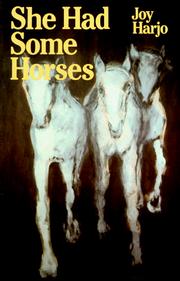 She Had Some HorsesRecommended
by Joy Harjo
“Smith connects Joy Harjo's poem 'She Had Some Horses' to Einstein's description of human separateness as an optical delusion. Smith teaches this poem regularly at Harvard, using it to help students hold complexity without forcing resolution.”
More from On Being
We summarize every new episode. Want them in your inbox?
Michael Pollan — The Mystery of Consciousness
“The Fierce Urgency of Now” — Michelle Alexander and Lucas Johnson
Shai Held — On Love and Judaism
Jason Reynolds — On Hopelessness, the Virtue of Stamina, and Showing Grace to Ourselves
Arab Aramin, Robi Damelin, Liora Eilon, Mohamed Abu Jafar — Turning Unbearable Loss Into Ground of Shared Life
Similar Episodes
Related episodes from other podcasts

Latent Space
May 18
The Next War Is Already Here. The West Isn't Ready. — Yaroslav Azhnyuk, The Fourth Law & Guest Host Noah Smith, Noahpinion

All-In with Chamath, Jason, Sacks & Friedberg
Oct 21
Arvind Krishna & Nikesh Arora: Quantum Threat, Open vs Frontier AI, AI Cyber Warfare & SaaS Collapse

The Vergecast
Oct 14
The $8 million AI music scam
All-In with Chamath, Jason, Sacks & Friedberg
Sep 30
Jake Paul & The Chainsmokers: Turning Fame into Funds, Jake Enters Politics? & Venture Bubble Signs

Odd Lots
Sep 24
AI Is Upending the Lives of People Who Do Social Media Professionally
Explore Related Topics
This podcast is featured in Best Philosophy Podcasts (2026) — ranked and reviewed with AI summaries.
Read this week's Health & Longevity Podcast Insights — cross-podcast analysis updated weekly.
You're clearly into On Being.
Every Monday, we deliver AI summaries of the latest episodes from On Being and 192+ other podcasts. Free for one show.
Start My Monday DigestNo credit card · Unsubscribe anytime