Robert Caro – The master biographer reflects at 91
Episode
61 min
Read time
3 min
Topics
Remote Work, Fundraising & VC, Software Development
AI-Generated Summary
Key Takeaways
- ✓Power vs. Persuasion: Johnson's legendary one-on-one persuasion derived its force from structural leverage, not charm alone. Every senator he approached knew he controlled committee assignments, legislative scheduling, and political favors. Caro's framework: persuasion without institutional power is theater. To influence at scale, first build the position that makes your ask impossible to ignore — the personality amplifies the leverage, it does not replace it.
- ✓Anchoring Long Projects: Before writing a single word of any book, Caro forces himself to compress the entire work into one sentence or, at most, one paragraph. He learned this the hard way on The Power Broker, where lack of a guiding thesis caused him to write 1,050,000 words and cut 350,000. The discipline of a single-sentence thesis prevents years of drift and gives every chapter a test for relevance.
- ✓Moses's Arc as a Power Warning: Moses began as a genuine civil-service reformer and idealist who wanted to give New York's working class access to beaches and parks. Power progressively hardened him until displacing tens of thousands of residents became acceptable collateral. Caro's observation: the mechanism is not corruption but insulation — as deference increases and opposition disappears, the leader's internal cost-benefit calculus quietly recalibrates around their own vision alone.
- ✓Building Genius Is Rare and Cyclical: When Moses began in the 1920s, observers said large-scale public construction was impossible due to property rights and political gridlock — identical complaints heard today about California's $15 billion rail program. Caro's pattern: decades pass with nothing built, then one person with political genius finds paths around every obstacle. The system's constraints are constant; the variable is whether such a person exists at that moment.
- ✓Depression-Era Labor as a Structural Advantage: Moses's early construction speed depended heavily on the Great Depression collapsing wages for skilled workers. Thousands of architects lined up on Fifth Avenue willing to work for minimal pay. Similarly, ornate stonework visible only from neighboring buildings was economically viable because artisans were available cheaply. Understanding Moses requires separating his political genius from the specific labor-market conditions that made rapid, high-quality construction financially feasible.
What It Covers
Robert Caro, at 91, reflects on five decades writing about Robert Moses and Lyndon Johnson with Dwarkesh Patel. The conversation covers how political power operates, why large-scale public works stall in democracies, what separates transformational leaders from merely ambitious ones, and how Caro structures multi-decade research projects spanning millions of documents.
Key Questions Answered
- •Power vs. Persuasion: Johnson's legendary one-on-one persuasion derived its force from structural leverage, not charm alone. Every senator he approached knew he controlled committee assignments, legislative scheduling, and political favors. Caro's framework: persuasion without institutional power is theater. To influence at scale, first build the position that makes your ask impossible to ignore — the personality amplifies the leverage, it does not replace it.
- •Anchoring Long Projects: Before writing a single word of any book, Caro forces himself to compress the entire work into one sentence or, at most, one paragraph. He learned this the hard way on The Power Broker, where lack of a guiding thesis caused him to write 1,050,000 words and cut 350,000. The discipline of a single-sentence thesis prevents years of drift and gives every chapter a test for relevance.
- •Moses's Arc as a Power Warning: Moses began as a genuine civil-service reformer and idealist who wanted to give New York's working class access to beaches and parks. Power progressively hardened him until displacing tens of thousands of residents became acceptable collateral. Caro's observation: the mechanism is not corruption but insulation — as deference increases and opposition disappears, the leader's internal cost-benefit calculus quietly recalibrates around their own vision alone.
- •Building Genius Is Rare and Cyclical: When Moses began in the 1920s, observers said large-scale public construction was impossible due to property rights and political gridlock — identical complaints heard today about California's $15 billion rail program. Caro's pattern: decades pass with nothing built, then one person with political genius finds paths around every obstacle. The system's constraints are constant; the variable is whether such a person exists at that moment.
- •Depression-Era Labor as a Structural Advantage: Moses's early construction speed depended heavily on the Great Depression collapsing wages for skilled workers. Thousands of architects lined up on Fifth Avenue willing to work for minimal pay. Similarly, ornate stonework visible only from neighboring buildings was economically viable because artisans were available cheaply. Understanding Moses requires separating his political genius from the specific labor-market conditions that made rapid, high-quality construction financially feasible.
- •Interview Extraction Technique: When subjects resist revealing sensitive information, Caro's method involves demonstrating prior documentary knowledge before asking the question. With John Connally on Johnson's money distribution, Caro already knew from records that Connally had physically distributed funds. Presenting that knowledge first shifted the dynamic — Connally then explained the decision logic behind Johnson's handwritten annotations on funding requests, unlocking the mechanism rather than just the facts.
Notable Moment
Caro describes visiting Moses's office late in his career and noticing that, for the first time during a long interview, no phone calls came in and no secretary appeared with messages. The contrast with earlier visits — when calls stacked up constantly — made the loss of power viscerally apparent, prompting unexpected sympathy despite full knowledge of Moses's ruthlessness.
Episode Transcript
If you do everything, you'll win. That is the maxim by which Lyndon Johnson lived his life. My guest today is Robert Caro. And over the fifty years that he has spent writing about Lyndon Johnson, He has lived in the edges of the Texas Hill Country to understand the poverty and loneliness of Johnson's youth. He has sifted through millions of documents in the Senate and presidential libraries of the entire nation. And he has chased down for interviews the former goon who helped Johnson steal an election to the chauffeur who drove him on his first desperate campaign. In other words, my guest today is a man who understands Johnson's aphorism, if you do everything, you'll win. Mister Carrot, it is such a huge honor to have you on the show. It's great to be here. So my first question is just this that I hinted in the introduction. How much do you see yourself represented in Johnson or in Moses? It's part of the reason you're able to write so compellingly about them that you share some of their qualities. Well, let me say first, I think I hope they are qualities that I don't share of all these cards. Among other things, they are so, I'll use the word ruthless, you know? You say they do they do anything to to win. That's part of their, greatness. You know, I remember when I started learning about Robert Moses, I went to the LaGuardia papers, which were in a... They were kept in the boat basin. They were stored by the municipal archives. Literally in the 79th Street Boat basin on the Hudson River, three levels down, there were this row of file cabinets, you know, against the wall. So I'm sitting there day after day going through these documents, and occasionally I'd come across a note that Robert Moses wrote, and I realized I'm following the same path he was. So it's actually. Well, obviously not all the qualities, but the quality I'm referring to here is that just like Johnson or just like Moses, you refuse to take no for an answer. If somebody says, won't give you an interview, you don't stop there. You refuse to leave a stone unturned. And so there is a relentlessness that you share with these subjects. I'm gonna take that as a compliment. Yes. Well, feel there are certain people that you have to interview. And if they don't wanna give you an interview, you can't. I feel you can't say no. Like you say, Lyndon Johnson's first secretary, the one who rode in the car with him on the campaigns. I said, there's no other human being on earth who knows what Lyndon Johnson is doing all these hours driving back and forth across Texas. I don't know what I have to do, but I have to get them to tell me honestly about this thing or something. So this raises another question that I wanted to …
Get the full transcript (8,282 words) + summary by email — free
One-time email with the complete transcript and AI summary of this episode. No account needed.
One email, no spam. We’ll also show you what SignalCast does.

You just read a 3-minute summary of a 58-minute episode.
Get Dwarkesh Podcast summarized like this every Monday — plus up to 2 more podcasts, free.
Pick Your Podcasts — FreeKeep Reading
More from Dwarkesh Podcast
What I learned about power from LBJ and Robert Moses
Oct 29 · 24 min

Deep Questions with Cal Newport
Ep. Ep 381: Life Advice from Legendary Writers
Dec 1
More from Dwarkesh Podcast
What will computer chips look like in 2045?
Oct 22 · 69 min

Radiolab
Dolly Parton's America: Sad Ass Songs
Aug 28
Books, tools, and gear mentioned in this episode
SignalCast may earn commission on purchases via these links. As an Amazon Associate, SignalCast earns from qualifying purchases.
Books
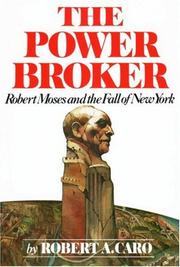 The Power BrokerBy guest
by Robert Caro
“He learned this the hard way on The Power Broker, where lack of a guiding thesis caused him to write 1,050,000 words and cut 350,000.”
More from Dwarkesh Podcast
We summarize every new episode. Want them in your inbox?
What I learned about power from LBJ and Robert Moses
What will computer chips look like in 2045?
Si Sheppard – How did a few hundred Spanish soldiers topple two empires?
Noam Brown – Agent swarms, alignment, & recursive self-improvement
AI researchers debate how close we are to recursive self-improvement
Similar Episodes
Related episodes from other podcasts

Deep Questions with Cal Newport
Dec 1
Ep. Ep 381: Life Advice from Legendary Writers

Radiolab
Aug 28
Dolly Parton's America: Sad Ass Songs

TED Radio Hour
Jul 31
Addiction, motherhood and Jesus with writer Anne Lamott

How I Built This
Nov 2
Airbnb CEO Brian Chesky: “I Was a Great Founder and a Terrible CEO”

The Joe Rogan Experience
Oct 14
#2565 - Michael Douglas
Explore Related Topics
Read this week's Software Engineering Podcast Insights — cross-podcast analysis updated weekly.
You're clearly into Dwarkesh Podcast.
Every Monday, we deliver AI summaries of the latest episodes from Dwarkesh Podcast and 192+ other podcasts. Free for one show.
Start My Monday DigestNo credit card · Unsubscribe anytime