What I learned about power from LBJ and Robert Moses
Episode
24 min
Read time
2 min
Topics
Career Growth, Investing, Fundraising & VC
AI-Generated Summary
Key Takeaways
- ✓Legislative drafting as power creation: Moses embedded a single sentence in the 1933 Triborough Bridge Authority Act allowing the authority to refinance bonds indefinitely "for any other corporate purpose." This converted a temporary two-bridge construction mandate into a permanent, constitutionally protected institution controlling hundreds of billions in today's dollars — all without legislators realizing what they had approved.
- ✓Constitutional entrenchment via bond covenants: Moses wrote his own administrative powers directly into bond contracts sold to investors. Because the U.S. Constitution prohibits states from impairing government contract obligations, no governor, mayor, or legislature could revoke those powers for the bond's entire lifetime — which Moses could always extend simply by refinancing before expiration.
- ✓Concentrated YIMBY coalitions override opposition: Moses neutralized political resistance by building a financial coalition where banks received bond discounts without competitive bidding, unions received construction jobs, lawyers received legal fees, and party bosses received insurance brokerage fees. These beneficiaries then applied direct pressure on any official blocking a Moses project, creating a private lobbying force funded by public infrastructure.
- ✓Agenda control through unanimous consent agreements: Johnson made unanimous consent agreements — which fix debate time and restrict amendments — the standard precondition before any Senate bill reached the floor. This kept deal-making in private cloakroom negotiations where his leverage was strongest, preventing last-minute floor debate from unraveling weeks of painstakingly brokered vote trades.
- ✓Committee assignment control as career leverage: Johnson dismantled the century-old Senate seniority system for committee assignments, transferring authority to a steering committee he controlled. When Senator Kefauver voted against Johnson in 1957, Johnson immediately redirected a coveted Foreign Relations Committee seat to freshman Senator John F. Kennedy — demonstrating that career consequences for defiance were swift and public.
What It Covers
Dwarkesh Patel analyzes Robert Caro's biographies of Robert Moses and Lyndon Johnson to extract concrete mechanisms of political power accumulation, covering how both figures built institutional leverage, controlled information flow, and converted popularity into structural authority that outlasted any single election cycle.
Key Questions Answered
- •Legislative drafting as power creation: Moses embedded a single sentence in the 1933 Triborough Bridge Authority Act allowing the authority to refinance bonds indefinitely "for any other corporate purpose." This converted a temporary two-bridge construction mandate into a permanent, constitutionally protected institution controlling hundreds of billions in today's dollars — all without legislators realizing what they had approved.
- •Constitutional entrenchment via bond covenants: Moses wrote his own administrative powers directly into bond contracts sold to investors. Because the U.S. Constitution prohibits states from impairing government contract obligations, no governor, mayor, or legislature could revoke those powers for the bond's entire lifetime — which Moses could always extend simply by refinancing before expiration.
- •Concentrated YIMBY coalitions override opposition: Moses neutralized political resistance by building a financial coalition where banks received bond discounts without competitive bidding, unions received construction jobs, lawyers received legal fees, and party bosses received insurance brokerage fees. These beneficiaries then applied direct pressure on any official blocking a Moses project, creating a private lobbying force funded by public infrastructure.
- •Agenda control through unanimous consent agreements: Johnson made unanimous consent agreements — which fix debate time and restrict amendments — the standard precondition before any Senate bill reached the floor. This kept deal-making in private cloakroom negotiations where his leverage was strongest, preventing last-minute floor debate from unraveling weeks of painstakingly brokered vote trades.
- •Committee assignment control as career leverage: Johnson dismantled the century-old Senate seniority system for committee assignments, transferring authority to a steering committee he controlled. When Senator Kefauver voted against Johnson in 1957, Johnson immediately redirected a coveted Foreign Relations Committee seat to freshman Senator John F. Kennedy — demonstrating that career consequences for defiance were swift and public.
Notable Moment
Moses secured more borrowing capacity than New York City itself — in 1946, Triborough Authority could borrow $360 million while the entire city government was capped at $150 million. A bridge authority created to build two spans had more financial firepower than America's largest city.
Episode Transcript
So I recently interviewed Robert Caro. He spent the last fifty years writing a four volume biography of Lyndon Johnson. And he spent another seven years before that writing the biography of Robert Moses, who was a master builder of New York. His books are widely regarded as the best explorations of political power that have ever been written. And they also happen to be literally my favorite books ever. Whenever I meet somebody new, one of the first questions that they often ask me is, who is the person you most wanna interview that you haven't yet? And for six years, I've answered that question in the same way. Robert Kira. And I've actually spent a lot of time trying to make this interview happen. I've chased down his agent. I've called this publisher. I've contacted the museums which are hosting his archives. I've even sent him handwritten letters. I finally got to sit down with them and I'm very happy with how it turned out. It'll be out tomorrow. In the meantime, as I was preparing for this interview and I was rereading all of these biographies, I was writing down all the lessons that they'd laid out about how to accumulate and use power, and this video essay is the result. Robert Moses was the master builder of New York. Our distinguished guest was Mr. Robert Moses, the nation's foremost city planner. He built more of the physical city than anybody before or since. He built the Triborough And Verzano Bridges, the Cross Bronx Expressway, Jones Beach, Lincoln Center, Shea Stadium, two giant power dams upstate, in addition to hundreds of parks and pools. Of the eight ninety nine miles of highways completed in New York State by 1964, Moses had built six seventy two of them. His projects collectively cost hundreds of billions of dollars in today's money. For more than thirty years, Robert Moses was the most powerful person in New York, more powerful than any elected mayor or governor despite the fact that he was not elected to anything. As I've heard it, ad nauseam, for the last thirty odd years. They say you don't have to be elected. My stock reply to them is you don't have to be either. How did he get that much power and how did he keep it? Part of the answer is that Moses wrote the laws that governed him. He was called the best bill drafter in Albany and he used that skill to write himself powers that the legislators voting on his bills didn't know that they were granting. The political genius of Robert Moses is perhaps best illustrated by his use of public authorities. These are government created corporations that build city infrastructure. Public authorities sell bonds to pay for a specific project, say a new bridge. Once the bridge is built, the authority would charge drivers a toll until it had collected enough money to pay off its bonds. Then the authority would …
Get the full transcript (4,427 words) + summary by email — free
One-time email with the complete transcript and AI summary of this episode. No account needed.
One email, no spam. We’ll also show you what SignalCast does.

You just read a 3-minute summary of a 21-minute episode.
Get Dwarkesh Podcast summarized like this every Monday — plus up to 2 more podcasts, free.
Pick Your Podcasts — FreeKeep Reading
More from Dwarkesh Podcast
What will computer chips look like in 2045?
Oct 22 · 69 min

The Vergecast
What's behind the Google AI shakeup
Aug 7
More from Dwarkesh Podcast
Si Sheppard – How did a few hundred Spanish soldiers topple two empires?
Oct 1 · 97 min

The Diary of a CEO
URGENT UPDATE - Iran War Expert: 70% Chance US Sends Troops To Iran THIS WEEK! | Robert Pape
Jul 23
Books, tools, and gear mentioned in this episode
SignalCast may earn commission on purchases via these links. As an Amazon Associate, SignalCast earns from qualifying purchases.
Books
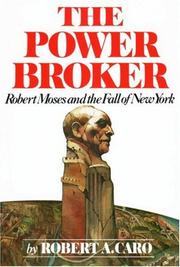
by Robert Caro
“Dwarkesh Patel analyzes Robert Caro's biographies of Robert Moses and Lyndon Johnson to extract concrete mechanisms of political power accumulation”

by Robert Caro
“Dwarkesh Patel analyzes Robert Caro's biographies of Robert Moses and Lyndon Johnson to extract concrete mechanisms of political power accumulation”
More from Dwarkesh Podcast
We summarize every new episode. Want them in your inbox?
What will computer chips look like in 2045?
Si Sheppard – How did a few hundred Spanish soldiers topple two empires?
Noam Brown – Agent swarms, alignment, & recursive self-improvement
AI researchers debate how close we are to recursive self-improvement
Ajeya Cotra – Inside the OpenAI agent swarm that hacked Hugging Face
Similar Episodes
Related episodes from other podcasts

The Vergecast
Aug 7
What's behind the Google AI shakeup

The Diary of a CEO
Jul 23
URGENT UPDATE - Iran War Expert: 70% Chance US Sends Troops To Iran THIS WEEK! | Robert Pape

Hard Fork
Jun 19
‘Hard Fork’ Live, Part 3: Differing Visions of an A.I. Future
The Diary of a CEO
Apr 13
The Iran War Expert: The Most Dangerous Stage Begins Now

Stay Tuned with Preet
Mar 5
The Iran War and US Politics (with David Ignatius and Mark Leibovich)
Explore Related Topics
Read this week's Investing & Markets Podcast Insights — cross-podcast analysis updated weekly.
You're clearly into Dwarkesh Podcast.
Every Monday, we deliver AI summaries of the latest episodes from Dwarkesh Podcast and 192+ other podcasts. Free for one show.
Start My Monday DigestNo credit card · Unsubscribe anytime