Ep. 399: Is Deep Work Still Possible in 2026?
Episode
63 min
Read time
3 min
Topics
Productivity, Remote Work, Fundraising & VC
AI-Generated Summary
Key Takeaways
- ✓Hybrid Attention Model: Structure hybrid work schedules so remote days are designated exclusively for uninterrupted deep work — zero meetings, email, or chat — while in-office days handle all collaboration and communication. This single rule eliminates the need to negotiate individual distraction norms, keeps colleagues never more than one day away from contact, and significantly increases the volume of high-quality output without requiring complex personal habit systems.
- ✓AI Writing Rule: Prohibit AI from drafting emails, memos, reports, or presentations. Writing from a blank screen creates cognitive strain that deepens comprehension of the material and produces sharper thinking. Delegating writing to AI tools removes this strain, accelerates "work slop" — output that feels efficient for the writer but delivers less value to recipients — and progressively degrades the knowledge worker's core analytical capability over time.
- ✓Brain Training — Four Practices: Newport identifies four home-based focus training habits: keep the phone plugged in the kitchen at all times; read physical books or Kindle (not phone/tablet) and take post-chapter notes in a notebook; pursue hobbies that punish distraction, such as tennis or golf; and take regular walks without a phone to practice sustained contemplation. Each practice builds the neurological capacity for extended concentration.
- ✓Social Media as Addiction, Not Tool: The 2016 framework of weighing social media's pros and cons is obsolete. Platforms like TikTok have abandoned follower-based value propositions entirely, shifting to pure algorithmic consumption designed to maximize time-on-platform. Newport argues the correct framework now mirrors sobriety guidance — removing the phone from reach, retraining long-term motivation circuits, and stripping high-reward apps from devices rather than calculating utility ratios.
- ✓Replacing the Hyperactive Hive Mind: The root cause of inbox overload is not poor personal email habits but a collaboration strategy built on ad hoc back-and-forth messaging. Fixing this requires replacing that model with structured workflows that minimize the need to monitor channels continuously — even if those alternatives require more upfront effort — rather than applying individual discipline tactics like batching email checks.
What It Covers
Cal Newport revisits the four rules from his 2016 book *Deep Work* — now 2 million copies sold across 45 languages — assessing what holds up in 2026 and what requires updating, with new frameworks addressing hybrid work schedules, AI's threat to cognitive depth, social media's shift from utility to addiction, and workload management as a prerequisite for focused work.
Key Questions Answered
- •Hybrid Attention Model: Structure hybrid work schedules so remote days are designated exclusively for uninterrupted deep work — zero meetings, email, or chat — while in-office days handle all collaboration and communication. This single rule eliminates the need to negotiate individual distraction norms, keeps colleagues never more than one day away from contact, and significantly increases the volume of high-quality output without requiring complex personal habit systems.
- •AI Writing Rule: Prohibit AI from drafting emails, memos, reports, or presentations. Writing from a blank screen creates cognitive strain that deepens comprehension of the material and produces sharper thinking. Delegating writing to AI tools removes this strain, accelerates "work slop" — output that feels efficient for the writer but delivers less value to recipients — and progressively degrades the knowledge worker's core analytical capability over time.
- •Brain Training — Four Practices: Newport identifies four home-based focus training habits: keep the phone plugged in the kitchen at all times; read physical books or Kindle (not phone/tablet) and take post-chapter notes in a notebook; pursue hobbies that punish distraction, such as tennis or golf; and take regular walks without a phone to practice sustained contemplation. Each practice builds the neurological capacity for extended concentration.
- •Social Media as Addiction, Not Tool: The 2016 framework of weighing social media's pros and cons is obsolete. Platforms like TikTok have abandoned follower-based value propositions entirely, shifting to pure algorithmic consumption designed to maximize time-on-platform. Newport argues the correct framework now mirrors sobriety guidance — removing the phone from reach, retraining long-term motivation circuits, and stripping high-reward apps from devices rather than calculating utility ratios.
- •Replacing the Hyperactive Hive Mind: The root cause of inbox overload is not poor personal email habits but a collaboration strategy built on ad hoc back-and-forth messaging. Fixing this requires replacing that model with structured workflows that minimize the need to monitor channels continuously — even if those alternatives require more upfront effort — rather than applying individual discipline tactics like batching email checks.
- •Workload as the Hidden Deep Work Killer: Carrying too many concurrent projects generates compounding administrative overhead — status updates, coordination messages, scheduling — that eventually consumes the entire workday. Newport's Slow Productivity framework prescribes explicit team-level rules limiting active projects at any one time. Fewer simultaneous commitments reduce overhead, accelerate individual project completion, increase total quarterly output, and eliminate the burnout cycle that chronic overload produces.
Notable Moment
Newport argues that the read-think-write cognitive loop is the foundational mechanism by which knowledge workers become more capable over time. When AI handles the writing step, that loop breaks entirely. He draws a parallel to using assisted equipment during military training — the reps happen, but the strength gains do not, making the exercise functionally worthless.
Episode Transcript
Ten years ago, I published a book titled Deep Work. It argued that the ability to focus without distraction, the activity that I call deep work, was becoming increasingly valuable at exactly the same time that it was becoming increasingly rare due to distracting digital technologies like email and social media. Now the conclusion of my book is that this presents a huge opportunity. If you are one of the few individuals or organizations to prioritize depth, you will enjoy a big competitive advantage. Now here's the thing. This book hit a nerve, became a bit of a a word-of-mouth sensation. It sold now more than 2,000,000 copies in over 45 languages, and that number's still going up. Jesse, earlier this month, we sold the new language rights for the Sinhala translation. Nice. That's, of course, the language spoken by the Sinhalese people of Sri Lanka. There's more language out there than you might guess. Anyways, this is all great, but this book is now a decade old, which motivates a natural follow-up question. Do its ideas still hold in 2026? This is what we're going to explore today. So I brought my first edition copy of the book with me. I'm gonna crack it open. We're gonna reread its core ideas. I'm gonna point out what remains true and what requires updates. Spoiler alert, I have a lot of new ideas to add. So if you felt like you've been drowning in distractions and are unsure if there's any hope for escaping, then this episode is for you. As always, I'm Cal Newport, and this is Deep Questions, the show for people seeking depth in a distracted world. And we'll get started right after the music. Alright. So here's the game plan. The book Deep Work is divided into two parts. The first part makes my case for why depth is valuable, and the second part offers four rules for getting better at depth in your professional life. So it's the second part that we are gonna revisit. I wanna go through each of those four rules from the original book one by one. I'll summarize the 2016 advice and then answer the question, what would I change if I was rewriting that chapter today in 2026? Alright. So let's get started with the first of the four rules from Deep Work, which is work deeply. Now I opened that chapter by discussing my friend David Duane's concept for the eudaimodia machine, which was a theoretical plan for an office that was centered on deep work as a primary activity. Now he described it as a a one story rectangular building where each of the rooms is connected to the other. There's no exterior hallway. You have to go from one room to the next, and he said the first room when you enter the building is the gallery where you're exposed to interesting examples of work that other people have done. You get your creative juices flowing. You …
Get the full transcript (12,684 words) + summary by email — free
One-time email with the complete transcript and AI summary of this episode. No account needed.
One email, no spam. We’ll also show you what SignalCast does.

You just read a 3-minute summary of a 60-minute episode.
Get Deep Questions with Cal Newport summarized like this every Monday — plus up to 2 more podcasts, free.
Pick Your Podcasts — FreeKeep Reading
More from Deep Questions with Cal Newport
Combating the Whirlwind with a Single Sheet of Paper
Oct 5 · 66 min

The Prof G Pod
China Decode: China Drops Its Jobs Target, Tencent Buys Back Manus, and the Rise of "Tier 3 City" Living
Jul 14
More from Deep Questions with Cal Newport
An Insider's Guide to AI Doom
Oct 1 · 28 min

My First Million
Brainstorming business ideas with a billion-dollar founder
Jul 10
Books, tools, and gear mentioned in this episode
SignalCast may earn commission on purchases via these links. As an Amazon Associate, SignalCast earns from qualifying purchases.
Books
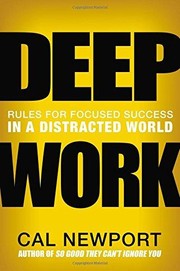 Deep WorkBy guest
by Cal Newport
“Cal Newport revisits the four rules from his 2016 book *Deep Work* — now 2 million copies sold across 45 languages — assessing what holds up in 2026 and what requires updating”
Tools
- KindleRecommended
by Amazon
“read physical books or Kindle (not phone/tablet) and take post-chapter notes in a notebook”
“Sponsors listed: Notion at https://notion.com/cal”
Products
More from Deep Questions with Cal Newport
We summarize every new episode. Want them in your inbox?
Combating the Whirlwind with a Single Sheet of Paper
An Insider's Guide to AI Doom
Kids Should *Not* Use Chatbots! (You Should Be Wary, Too…)
The Truth About Brain Rot
The AI Resistance is Forming. (Should You Join?)
Similar Episodes
Related episodes from other podcasts

The Prof G Pod
Jul 14
China Decode: China Drops Its Jobs Target, Tencent Buys Back Manus, and the Rise of "Tier 3 City" Living

My First Million
Jul 10
Brainstorming business ideas with a billion-dollar founder

Modern Wisdom
Jul 2
Black Holes, Denny’s Fist Fights & Japanese Handjob Culture - Rabbit Hole #4 - #1118

The School of Greatness
Jun 19
The Secret Skill of People Who Never Feel Lonely | Charles Duhigg

The Mel Robbins Podcast
Jun 18
The #1 Relationship Researchers in the World: 50 Years of Marriage & Love Advice in One Conversation
Explore Related Topics
This podcast is featured in Best Mindset Podcasts (2026) — ranked and reviewed with AI summaries.
You're clearly into Deep Questions with Cal Newport.
Every Monday, we deliver AI summaries of the latest episodes from Deep Questions with Cal Newport and 192+ other podcasts. Free for one show.
Start My Monday DigestNo credit card · Unsubscribe anytime