Am I Lazy or Overstimulated? | Monday Advice
Episode
57 min
Read time
2 min
Topics
Productivity, Marketing, Artificial Intelligence
AI-Generated Summary
Key Takeaways
- ✓Overstimulation Mechanism #1 — Context Switching Fatigue: The brain's depletion from constant phone use is not caused by processing too many stimuli, as the Reddit post claims. Georgetown psychologist Kostadin Kushlev clarifies the real culprit is repeated attention-switching between targets, which requires inhibiting and re-exciting different neural networks each time, accumulating cognitive exhaustion throughout the day.
- ✓Overstimulation Mechanism #2 — Dopamine Downregulation: Beyond short-term context-switching fatigue, chronic exposure to high-stimulation apps triggers dopamine downregulation, the same neurological process behind drug tolerance. Over time, the brain requires increasingly engaging inputs to sustain attention, making a boring-but-meaningful project neurologically insufficient to hold focus compared to a social media feed.
- ✓Batching Notifications Has Empirical Support — With a Caveat: Kushlev's published research confirms that batching smartphone notifications measurably improves well-being. However, Newport flags a caveat from Gloria Mark's research: people high in the Big Five personality trait of neuroticism experience increased stress when batching email, because unread messages trigger anxiety. The deeper fix is reducing incoming messages at the structural level.
- ✓Microlearning Is Marketing Hype: The Reddit post claims ten minutes of daily focused learning can rewire dopamine reward pathways. Kushlev calls this claim unsupported by research, noting that if someone spends hours scrolling, ten minutes of microlearning cannot meaningfully recalibrate the system. Genuine learning requires deliberate practice, which alone can take ten to fifteen minutes just to initiate properly.
- ✓Permanent Stimulation Reduction Is the Real Fix: Newport's core prescription is structural, not habitual. Remove attention-monetizing apps entirely, practice landlining by keeping the phone in one fixed room at home, physically separate deep work from shallow work environments, and build leisure activities requiring sustained focus — woodworking, music, crafts — to strengthen the brain's long-term reward system against short-term stimulation pulls.
What It Covers
Cal Newport examines why people feel lazy but are actually overstimulated, using a viral Reddit post as a starting point. With input from Georgetown psychology professor Kostadin Kushlev, Newport corrects the post's neuroscience, identifies two real brain mechanisms at play, and evaluates four proposed solutions on a yay/nay/meh scale.
Key Questions Answered
- •Overstimulation Mechanism #1 — Context Switching Fatigue: The brain's depletion from constant phone use is not caused by processing too many stimuli, as the Reddit post claims. Georgetown psychologist Kostadin Kushlev clarifies the real culprit is repeated attention-switching between targets, which requires inhibiting and re-exciting different neural networks each time, accumulating cognitive exhaustion throughout the day.
- •Overstimulation Mechanism #2 — Dopamine Downregulation: Beyond short-term context-switching fatigue, chronic exposure to high-stimulation apps triggers dopamine downregulation, the same neurological process behind drug tolerance. Over time, the brain requires increasingly engaging inputs to sustain attention, making a boring-but-meaningful project neurologically insufficient to hold focus compared to a social media feed.
- •Batching Notifications Has Empirical Support — With a Caveat: Kushlev's published research confirms that batching smartphone notifications measurably improves well-being. However, Newport flags a caveat from Gloria Mark's research: people high in the Big Five personality trait of neuroticism experience increased stress when batching email, because unread messages trigger anxiety. The deeper fix is reducing incoming messages at the structural level.
- •Microlearning Is Marketing Hype: The Reddit post claims ten minutes of daily focused learning can rewire dopamine reward pathways. Kushlev calls this claim unsupported by research, noting that if someone spends hours scrolling, ten minutes of microlearning cannot meaningfully recalibrate the system. Genuine learning requires deliberate practice, which alone can take ten to fifteen minutes just to initiate properly.
- •Permanent Stimulation Reduction Is the Real Fix: Newport's core prescription is structural, not habitual. Remove attention-monetizing apps entirely, practice landlining by keeping the phone in one fixed room at home, physically separate deep work from shallow work environments, and build leisure activities requiring sustained focus — woodworking, music, crafts — to strengthen the brain's long-term reward system against short-term stimulation pulls.
Notable Moment
Kushlev dismantles the Reddit post's central claim by pointing out that people living in Times Square or Bangkok are bombarded with stimuli all day without becoming cognitively paralyzed by noon — proving raw stimulation volume cannot be what depletes the brain's capacity to focus.
Episode Transcript
Does this sound familiar to you? You have some sort of significant project that you need to complete, like maybe your passport is expired and and you have to figure out how to renew it, or you volunteered to update the text on your organization's website and you're not quite sure how to get started, and you find yourself day after day unable to make progress, it goes on your list and it stays there untouched. Now to the outside world, it might look like you're lazy in the sense that you know that there's something you need to do and you're simply not doing it. But you know inside that things are not so simple. You're not just sitting around playing video games. You're you're constantly in motion on your devices. You're sending and receiving messages. You're checking in on the news. You're tumbling down potentially productive rabbit holes, and your days are filled with this little p productivity, but not the big p productive accomplishments that actually matter. Well, I struggle with this sometimes, and I'm convinced that technology has made the situation much more common and much more worse. But what exactly is happening in our adult brains when we find ourselves procrastinating on important projects like this? And once we understand what that is, how might we fix it? Well, it's Monday, which means it's time for an advice episode of this show, which is the perfect opportunity to tackle these questions. So here's my plan. I recently came across a Reddit post from the, our habits subreddit that originally got me thinking about this topic. The title of this post was, you're not lazy, you're overstimulated. And it proposes this post proposes some answers to the questions that we just asked. So we're gonna use that as our jumping off point today. But then I'm gonna bring in the help of a psychology professor that I know, and we're gonna pick apart what this post gets right about our brains and what it does not, and we will use this updated understanding to identify some advice that will help any of us avoid the overstimulation trap. So if you're always feeling busy but aren't feeling accomplished, then this episode is for you. So let's get into it. As always, I'm Cal Newport, and this is Deep Questions, the show for people seeking depth in a distracted world. Alright. To get started, I'm gonna look at this Reddit post. I'm gonna read some selections from it, and then we'll go from there. Alright. So I'm reading from the post here. There's a version of laziness that has nothing to do with discipline, motivation, or character. It looks like laziness. It feels like laziness. You'll call yourself lazy because there's no other word that seems to fit, but what's actually happening is closer to a system overload than a personality flaw. Your brain has a limited capacity for stimulation per day, not a metaphorical limit, a real …
Get the full transcript (11,205 words) + summary by email — free
One-time email with the complete transcript and AI summary of this episode. No account needed.
One email, no spam. We’ll also show you what SignalCast does.

You just read a 3-minute summary of a 54-minute episode.
Get Deep Questions with Cal Newport summarized like this every Monday — plus up to 2 more podcasts, free.
Pick Your Podcasts — FreeKeep Reading
More from Deep Questions with Cal Newport
The Truth About Brain Rot
Sep 21 · 52 min

Modern Wisdom
How To Have The Hardest Conversations Of Your Life - Jefferson Fisher - #1093
May 4
More from Deep Questions with Cal Newport
The AI Resistance is Forming. (Should You Join?)
Sep 14 · 71 min

10% Happier with Dan Harris
How To Handle AI Anxiety: A Computer Scientist and a Buddhist Teacher On Managing Uncertainty | Cal Newport & Matthew Brensilver
Aug 26
Books, tools, and gear mentioned in this episode
SignalCast may earn commission on purchases via these links. As an Amazon Associate, SignalCast earns from qualifying purchases.
Books
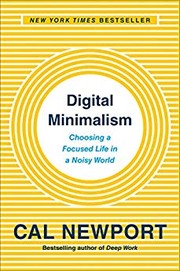
by Cal Newport
“Newport's core prescription is structural, not habitual. Remove attention-monetizing apps entirely, practice landlining by keeping the phone in one fixed room at home, physically separate deep work from shallow work environments, and build leisure activities requiring sustained focus — woodworking, music, crafts — to strengthen the brain's long-term reward system against short-term stimulation pulls.”
More from Deep Questions with Cal Newport
We summarize every new episode. Want them in your inbox?
The Truth About Brain Rot
The AI Resistance is Forming. (Should You Join?)
How Worrisome is GPT-6’s “Stealth Thinking”? | Tech Decoded
How I’m Organizing My Life this Fall | Advice
Did OpenAI Create “Secret AI Civilizations”? | Tech Decoded
Similar Episodes
Related episodes from other podcasts

Modern Wisdom
May 4
How To Have The Hardest Conversations Of Your Life - Jefferson Fisher - #1093

10% Happier with Dan Harris
Aug 26
How To Handle AI Anxiety: A Computer Scientist and a Buddhist Teacher On Managing Uncertainty | Cal Newport & Matthew Brensilver
10% Happier with Dan Harris
Jul 13
Perfectionism, Burnout, and Self-Doubt: Break the Loop with the Science of Mattering | Gordon Flett

The Mel Robbins Podcast
Jul 6
How to Master Any Conversation, Communicate With Confidence, and Deal With Difficult People
Modern Wisdom
Jun 25
Why You Don’t Feel Loved (even when you are) - Sonja Lyubomirsky - #1115
Explore Related Topics
This podcast is featured in Best Mindset Podcasts (2026) — ranked and reviewed with AI summaries.
Read this week's AI & Machine Learning Podcast Insights — cross-podcast analysis updated weekly.
You're clearly into Deep Questions with Cal Newport.
Every Monday, we deliver AI summaries of the latest episodes from Deep Questions with Cal Newport and 192+ other podcasts. Free for one show.
Start My Monday DigestNo credit card · Unsubscribe anytime