Am I Optimizing Too Much? | Monday Advice
Episode
78 min
Read time
3 min
Topics
Career Growth, Productivity, Health & Wellness
AI-Generated Summary
Key Takeaways
- ✓Right Metrics, Right Frequency: The antidote to over-optimization is not abandoning measurement but selecting expert-validated metrics and checking them at the slowest possible interval that still allows meaningful course correction. Daily readiness scores and hourly social media analytics rarely change what you should do next. Weekly or monthly review cycles capture genuine trends without triggering the reactive, whack-a-mole adjustments that degrade both performance and wellbeing.
- ✓Orthosomnia Effect: Sleep medicine clinicians now treat a documented condition where obsessive sleep-score monitoring produces the very insomnia it aims to prevent. Wearable readiness algorithms are proprietary black boxes, and elite athletes routinely post career-best performances on days their devices would have flagged as unfit to train. Trusting algorithmic scores over bodily awareness actively builds fragility rather than resilience.
- ✓Macro Optimization — Explore Then Exploit: High performers across fields follow a two-phase cycle: a bounded exploration period of weeks to months where they test approaches and identify what actually drives results, followed by a multi-year exploitation phase where they execute without constant self-monitoring. Newport applied this at Dartmouth — one quarter of study-method experimentation, three years of executing the simple findings — producing a 3.95 GPA with no all-nighters.
- ✓Self-Focus Kills Performance: Flow research from Csikszentmihalyi and peak-experience research from Maslow both define optimal performance states by egolessness and loss of self-consciousness. Constant metric-checking forces sustained self-focus, which is neurologically incompatible with entering flow. Stulberg correlates his worst writing periods directly with weeks spent monitoring Amazon sales rankings, and his best athletic training with leaving wearables at home entirely.
- ✓Seven-Out-of-Ten System: Sprint coach Stuart McMillan, who has coached over 35 Olympic medalists, deliberately avoids optimizing any single performance variable. Instead he targets a floor of seven out of ten across all inputs — training, sleep, nutrition, mindset, social connection — because over-indexing one variable produces unpredictable negative cascades elsewhere. The emergent result of broad adequacy across a complex system consistently outperforms maximizing any single component.
What It Covers
Cal Newport and Brad Stulberg examine how digital technology has transformed measurement from an occasional tool into a 24/7 obsession. They diagnose why optimization culture causes harm, identify who actually falls into tracking traps, and build a practical framework called macro optimization that separates productive measurement from counterproductive self-monitoring.
Key Questions Answered
- •Right Metrics, Right Frequency: The antidote to over-optimization is not abandoning measurement but selecting expert-validated metrics and checking them at the slowest possible interval that still allows meaningful course correction. Daily readiness scores and hourly social media analytics rarely change what you should do next. Weekly or monthly review cycles capture genuine trends without triggering the reactive, whack-a-mole adjustments that degrade both performance and wellbeing.
- •Orthosomnia Effect: Sleep medicine clinicians now treat a documented condition where obsessive sleep-score monitoring produces the very insomnia it aims to prevent. Wearable readiness algorithms are proprietary black boxes, and elite athletes routinely post career-best performances on days their devices would have flagged as unfit to train. Trusting algorithmic scores over bodily awareness actively builds fragility rather than resilience.
- •Macro Optimization — Explore Then Exploit: High performers across fields follow a two-phase cycle: a bounded exploration period of weeks to months where they test approaches and identify what actually drives results, followed by a multi-year exploitation phase where they execute without constant self-monitoring. Newport applied this at Dartmouth — one quarter of study-method experimentation, three years of executing the simple findings — producing a 3.95 GPA with no all-nighters.
- •Self-Focus Kills Performance: Flow research from Csikszentmihalyi and peak-experience research from Maslow both define optimal performance states by egolessness and loss of self-consciousness. Constant metric-checking forces sustained self-focus, which is neurologically incompatible with entering flow. Stulberg correlates his worst writing periods directly with weeks spent monitoring Amazon sales rankings, and his best athletic training with leaving wearables at home entirely.
- •Seven-Out-of-Ten System: Sprint coach Stuart McMillan, who has coached over 35 Olympic medalists, deliberately avoids optimizing any single performance variable. Instead he targets a floor of seven out of ten across all inputs — training, sleep, nutrition, mindset, social connection — because over-indexing one variable produces unpredictable negative cascades elsewhere. The emergent result of broad adequacy across a complex system consistently outperforms maximizing any single component.
- •Tracking Sprints Over Permanent Monitoring: A newly diagnosed pre-diabetic wearing a continuous glucose monitor for two to four weeks to map food responses is using tracking correctly — as a time-bounded educational tool. Once behavioral lessons are internalized, the device should be removed and life resumed. The same logic applies to YouTube analytics: one intensive diagnostic week to identify overlooked patterns, then longer monthly experiments rather than hourly dashboard refreshes.
Notable Moment
Toronto Maple Leafs players — among the world's highest-performing athletes — eat bread, fruit, and candy without weighing portions or tracking glucose. Stulberg observed this firsthand during a player development camp visit and contrasts it with extreme optimizers who would consider that cafeteria a health emergency, illustrating how elite performance diverges sharply from optimization culture's prescriptions.
Episode Transcript
A couple weeks ago, the author Brad Stolberg published an essay on his Substack that made the following bold claim. Optimization culture is destroying a generation. Now he argues in this essay that digital technology has now made it possible to measure at a very fine granularity all sorts of metrics in all different parts of our life, from our job to our health, to our relationships, to our social life, and that it has created a culture where we're constantly trying to improve and instead making us miserable. Well, this raised a lot of questions in my mind such as why are we doing this, why is it causing so much harm, and most importantly, what's the way out? What is the right relationship with metrics and performance that you can can actually make your life better without getting stuck in this optimization trap? Well, it's Monday, which means it's time for an advice episode of this podcast, which is the perfect opportunity to go seek some answers. So here's what I did is I called up Brad, and we got into it. We get into his article, and we get into all those questions that I just discussed. We have a fantastic conversation. We cover a lot of ground, and then we end up actually you'll notice if you listen to this conversation, we end up at a new model for optimization, practical realistic optimization. I call it macro optimization in the interview that I think is really interesting and describes a lot of what I've done in my own life, and I've never put words to it before. So stick through to the end of the interview because I think we end up in a really practical, positive space. Alright. So I think you're gonna like this one. If you're ambitious but you've worried that you've become too optimized and is counterproductive, then this episode is one you have to listen to. Alright. So let's get into it. As always, I'm Cal Newport, and this is Deep Questions, the show for people seeking depth in a distracted world. Alright, Brad. Well, you have a recent Substack essay post that is titled the enhanced self is the enemy of a good life. The subhead is optimization culture is destroying a generation. Alright. We gotta start where we always start because I'm so not properly online. I never get your the references about what's happening in the world. So I wanna start by you explaining, what is this optimization culture? How big is this? Who are these people? What are they doing? Alright. So optimization culture, broadly speaking, at least, is I see it and define it, is a group of individuals who are obsessed with this notion of measuring everything and generally doing it in the guise of self improvement. So we are measuring our heart rate variability for recovery. We are measuring our readiness score. We are measuring how many steps we take. We're measuring the power …
Get the full transcript (16,077 words) + summary by email — free
One-time email with the complete transcript and AI summary of this episode. No account needed.
One email, no spam. We’ll also show you what SignalCast does.

You just read a 3-minute summary of a 75-minute episode.
Get Deep Questions with Cal Newport summarized like this every Monday — plus up to 2 more podcasts, free.
Pick Your Podcasts — FreeKeep Reading
More from Deep Questions with Cal Newport
Why Did Big Tech Stop Building Useful Products?
Oct 22 · 14 min

Everything Everywhere Daily
The World's Worst Predictions
Oct 2
More from Deep Questions with Cal Newport
“Rogue” AI Not Inevitable. It’s a Choice.
Oct 19 · 78 min

Odd Lots
Anthropic's Co-Founder and Top Economist on Doing Research at the AI Frontier
Jun 19
Books, tools, and gear mentioned in this episode
SignalCast may earn commission on purchases via these links. As an Amazon Associate, SignalCast earns from qualifying purchases.
Books
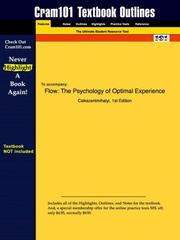
by Mihaly Csikszentmihalyi
“Flow research from Csikszentmihalyi and peak-experience research from Maslow both define optimal performance states by egolessness and loss of self-consciousness.”
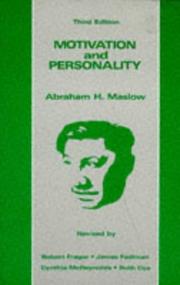
by Abraham Maslow
“Flow research from Csikszentmihalyi and peak-experience research from Maslow both define optimal performance states by egolessness and loss of self-consciousness.”
More from Deep Questions with Cal Newport
We summarize every new episode. Want them in your inbox?
Why Did Big Tech Stop Building Useful Products?
“Rogue” AI Not Inevitable. It’s a Choice.
An Unlikely Team Tackles AI Brain Rot
A Stark Warning From a Former AI Doomer
Combating the Whirlwind with a Single Sheet of Paper
Similar Episodes
Related episodes from other podcasts

Everything Everywhere Daily
Oct 2
The World's Worst Predictions

Odd Lots
Jun 19
Anthropic's Co-Founder and Top Economist on Doing Research at the AI Frontier

The Learning Leader Show
Jan 26
672: Brad Stulberg - The Neuroscience of Curiosity, Process vs. Outcome Goals, The Power of Consistency, Playing Like The Beatles, Focusing on Your WHO, and The Way of Excellence

The Ezra Klein Show
Jan 23
Minneapolis Reveals Where Trump's Deportation Agenda Is Going

TED Radio Hour
Oct 31
Move fast...and fix democracy?
Explore Related Topics
This podcast is featured in Best Mindset Podcasts (2026) — ranked and reviewed with AI summaries.
Read this week's Health & Longevity Podcast Insights — cross-podcast analysis updated weekly.
You're clearly into Deep Questions with Cal Newport.
Every Monday, we deliver AI summaries of the latest episodes from Deep Questions with Cal Newport and 192+ other podcasts. Free for one show.
Start My Monday DigestNo credit card · Unsubscribe anytime