Can I Be a Digital Minimalist in 2026? | Monday Advice
Episode
59 min
Read time
2 min
Topics
Productivity, Health & Wellness, Relationships
AI-Generated Summary
Key Takeaways
- ✓Default Activity Replacement: Cutting social media alone is insufficient without substituting a new default boredom-filling activity. One Reddit user dropped daily screen time from 6.2 hours to 1.4 hours by replacing scrolling with reading 15–100 pages daily. The brain needs an alternative reward circuit, and reading provides deep cognitive engagement that gradually down-regulates the dopamine response trained by algorithmic feeds.
- ✓Landlining as Baseline Practice: Plugging smartphones into a kitchen charger whenever at home — called landlining — removes willpower from the equation entirely. The phone remains accessible for genuine needs but is no longer physically present during meals, TV, or conversation. Newport frames this as the single non-negotiable first step before any other digital minimalism strategy, applicable to every household member including teenagers.
- ✓Solitude Blocks Over Screen-Time Targets: Scheduling 20–25 minute blocks of deliberate solitude — no phone, no background noise, no productive task — reduces screen time as a side effect rather than a goal. One practitioner cut screen time from 6.2 to 1.4 hours daily and eliminated chronic low-grade anxiety by week three, by allowing boredom to convert into self-directed thought rather than reflexive device use.
- ✓Human Curation Over Algorithmic Feeds: Replacing algorithmic content discovery with human-curated sources — local newspapers, independent bookstores, library staff picks, university radio, trusted podcasters — produces more diverse content exposure and builds interpersonal webs of trust. These chains of trust, rooted in known individuals, reduce radicalization risk and restore contextual signals that social media platforms flatten into identical-looking posts regardless of source credibility.
- ✓AI Boundaries for Cognitive Fitness: Newport identifies three AI-specific rules for 2026 digital minimalism: avoid extended conversational AI relationships because they simulate social interaction without a real mind present; never use AI to write on your behalf, as writing strain builds cognitive fitness the way physical exertion builds muscle; and only adopt AI tools where benefits are concrete and specific, not as a general-purpose information substrate.
What It Covers
Cal Newport revisits his 2019 book Digital Minimalism to assess whether the philosophy remains viable in 2026, grading six Reddit-sourced strategies from the digital minimalism subreddit and proposing three additions he would include in a new chapter, covering AI use, behavioral addiction, and the "landlining" practice.
Key Questions Answered
- •Default Activity Replacement: Cutting social media alone is insufficient without substituting a new default boredom-filling activity. One Reddit user dropped daily screen time from 6.2 hours to 1.4 hours by replacing scrolling with reading 15–100 pages daily. The brain needs an alternative reward circuit, and reading provides deep cognitive engagement that gradually down-regulates the dopamine response trained by algorithmic feeds.
- •Landlining as Baseline Practice: Plugging smartphones into a kitchen charger whenever at home — called landlining — removes willpower from the equation entirely. The phone remains accessible for genuine needs but is no longer physically present during meals, TV, or conversation. Newport frames this as the single non-negotiable first step before any other digital minimalism strategy, applicable to every household member including teenagers.
- •Solitude Blocks Over Screen-Time Targets: Scheduling 20–25 minute blocks of deliberate solitude — no phone, no background noise, no productive task — reduces screen time as a side effect rather than a goal. One practitioner cut screen time from 6.2 to 1.4 hours daily and eliminated chronic low-grade anxiety by week three, by allowing boredom to convert into self-directed thought rather than reflexive device use.
- •Human Curation Over Algorithmic Feeds: Replacing algorithmic content discovery with human-curated sources — local newspapers, independent bookstores, library staff picks, university radio, trusted podcasters — produces more diverse content exposure and builds interpersonal webs of trust. These chains of trust, rooted in known individuals, reduce radicalization risk and restore contextual signals that social media platforms flatten into identical-looking posts regardless of source credibility.
- •AI Boundaries for Cognitive Fitness: Newport identifies three AI-specific rules for 2026 digital minimalism: avoid extended conversational AI relationships because they simulate social interaction without a real mind present; never use AI to write on your behalf, as writing strain builds cognitive fitness the way physical exertion builds muscle; and only adopt AI tools where benefits are concrete and specific, not as a general-purpose information substrate.
Notable Moment
A Reddit user who scheduled daily solitude blocks — rather than targeting screen time directly — found that the hardest part was not resisting the phone but tolerating boredom long enough for it to convert into genuine thought, suggesting modern life has so thoroughly engineered out boredom that most people have lost access to what follows it.
Episode Transcript
Back in 2019, I published a book called Digital Minimalism. It argued that we should be much more intentional about what digital technologies we use and how we use them. Now, when I started working on the idea for this book, we were still in the the tail end of that golden age of social media where we still saw these devices as offering a societal good, a sort of inevitable evolution of the town square that would ultimately empower us all. But by the time the book actually came out, people were beginning to get fed up, which turned out to be great timing for me. That book became my first New York Times bestseller, and it led to opportunities that I never would have previously imagined for myself. But here's the thing, a lot has changed since 2019. Back then, social media meant Twitter, Facebook, and that old version of Instagram where you mainly just followed creators that you cared about. Today's social media, by contrast, has become a race to the bottom of the brain stem as every service is trying to copy the highly addictive algorithmically optimized short form strategy of TikTok. Existing global conversation platforms like Twitter, now called x, have given up on any illusions of serving up, I I don't know, straight up gonzo garbage for the most part. And then there's AI, which wasn't on my radar at all in 2019, but today, it's increasingly threatening to corrupt or co opt every last occasion we might actually try to use our brains for original thinking. This all points towards a key question. Is it still possible to be a digital minimalist in 2026? And if so, what has to change about this philosophy to keep it relevant? Well, it's Monday, which means it's time for an advice episode of this show, which is the perfect opportunity to go searching for some answers. Alright. Here's the plan. It turns out that there's a a popular subreddit dedicated to all things digital minimalism. So we recently read through a bunch of recent posts seeking those that describe specific suggestions or experiments that people have tried within the last few months to better embrace digital minimalism in our current moment. We ended up surfacing six interesting practical suggestions. And I'm gonna go through these one by one. And because I'm a professor and I can't help it, I will give each a letter grade to I can't help it, I will give each a letter grade to indicate how much I agree with it. And then, once we're done reviewing the best suggestions from other people, I'll present my own proposal. I've been thinking a lot recently about what would I add if I republish this book today, what would I put in a new chapter? And I will explain to you today my current thinking on what I would add to digital minimalism. Alright? So if you feel like the time is right for …
Get the full transcript (12,151 words) + summary by email — free
One-time email with the complete transcript and AI summary of this episode. No account needed.
One email, no spam. We’ll also show you what SignalCast does.

You just read a 3-minute summary of a 56-minute episode.
Get Deep Questions with Cal Newport summarized like this every Monday — plus up to 2 more podcasts, free.
Pick Your Podcasts — FreeKeep Reading
More from Deep Questions with Cal Newport
Kids Should *Not* Use Chatbots! (You Should Be Wary, Too…)
Sep 28 · 78 min

The Vergecast
Phones don't have lights
Sep 25
More from Deep Questions with Cal Newport
The Truth About Brain Rot
Sep 21 · 52 min

Odd Lots
What Francis Fukuyama Is Seeing at 'The End of History'
Sep 17
Books, tools, and gear mentioned in this episode
SignalCast may earn commission on purchases via these links. As an Amazon Associate, SignalCast earns from qualifying purchases.
Books
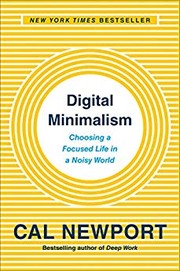
by Cal Newport
“Cal Newport revisits his 2019 book Digital Minimalism to assess whether the philosophy remains viable in 2026”
Tools
More from Deep Questions with Cal Newport
We summarize every new episode. Want them in your inbox?
Kids Should *Not* Use Chatbots! (You Should Be Wary, Too…)
The Truth About Brain Rot
The AI Resistance is Forming. (Should You Join?)
How Worrisome is GPT-6’s “Stealth Thinking”? | Tech Decoded
How I’m Organizing My Life this Fall | Advice
Similar Episodes
Related episodes from other podcasts

The Vergecast
Sep 25
Phones don't have lights

Odd Lots
Sep 17
What Francis Fukuyama Is Seeing at 'The End of History'

All-In with Chamath, Jason, Sacks & Friedberg
Sep 11
AI Kills Everybody or Doomer Psyop? OpenAI's Math Breakthrough, Nike's $200B Collapse
The Vergecast
Sep 10
Schools are catching onto tech’s playbook

Modern Wisdom
Aug 31
WW3 DEBATE: “We’re On the Brink of Global Collapse” - #1144
Explore Related Topics
This podcast is featured in Best Mindset Podcasts (2026) — ranked and reviewed with AI summaries.
Read this week's Health & Longevity Podcast Insights — cross-podcast analysis updated weekly.
You're clearly into Deep Questions with Cal Newport.
Every Monday, we deliver AI summaries of the latest episodes from Deep Questions with Cal Newport and 192+ other podcasts. Free for one show.
Start My Monday DigestNo credit card · Unsubscribe anytime