Michael Ovitz, Co-founder of CAA
Episode
66 min
Read time
3 min
Topics
Career Growth, Productivity, Startups
AI-Generated Summary
Key Takeaways
- ✓Business fundamentals are domain-agnostic: The core mechanics of building any business — packaging talent, securing financing, establishing distribution, executing marketing, and building lasting culture — remain identical whether you are running a talent agency in 1974 or backing an AI startup in 2026. Ovitz uses this framework to add value across consumer products, defense, biopharma, and technology without being a technical specialist in any of them.
- ✓Generalist positioning as competitive advantage: Ovitz deliberately resists being categorized or typecast into a single role. He argues that AI now gives generalists near-specialist-level knowledge retrieval in minutes, collapsing research timelines that once took weeks. What required four weeks of analog library research before a 1980s Matsushita meeting now takes six to seven hours across three AI platforms.
- ✓Structured idea extraction from every level of an organization: At CAA, Ovitz ran quarterly sessions with 200 staff seated in a closed circle or oval, chairs touching, with no exits visible. Every person had 30 seconds to pitch an idea with no option to pass. A mailroom employee pitched a cable idea strong enough to earn an on-the-spot promotion. The mechanism forced participation and surfaced ideas leadership would never have encountered otherwise.
- ✓Competitive intensity as a deliberate operating philosophy: Ovitz framed business as a cutthroat competitive sport requiring the same single-minded focus as elite athletics. He sent rivals a torn Variety ad every time CAA signed a movie star — weekly for ten years. He cites Peter Thiel's Stanford lecture that competition is for losers, arguing the real goal is monopoly through relentless outworking of competitors rather than matching them.
- ✓Talent leadership as a non-negotiable condition for media company survival: Ovitz's thesis for pursuing Universal Music Group is that any entertainment or media company without a talent-first executive at the top will eventually fail. He structured the Ackman bid around Lucian Grainge remaining as operator, with Ovitz serving as chair focused on technology and AI integration — treating operational and talent expertise as separate, complementary, and both essential.
What It Covers
Michael Ovitz, CAA co-founder, speaks with David Senra about the universal principles underlying success across entertainment and technology. Ovitz draws parallels between packaging Hollywood talent in the 1970s–90s and backing AI-era founders today, while detailing his current bid to take Universal Music Group private alongside Bill Ackman.
Key Questions Answered
- •Business fundamentals are domain-agnostic: The core mechanics of building any business — packaging talent, securing financing, establishing distribution, executing marketing, and building lasting culture — remain identical whether you are running a talent agency in 1974 or backing an AI startup in 2026. Ovitz uses this framework to add value across consumer products, defense, biopharma, and technology without being a technical specialist in any of them.
- •Generalist positioning as competitive advantage: Ovitz deliberately resists being categorized or typecast into a single role. He argues that AI now gives generalists near-specialist-level knowledge retrieval in minutes, collapsing research timelines that once took weeks. What required four weeks of analog library research before a 1980s Matsushita meeting now takes six to seven hours across three AI platforms.
- •Structured idea extraction from every level of an organization: At CAA, Ovitz ran quarterly sessions with 200 staff seated in a closed circle or oval, chairs touching, with no exits visible. Every person had 30 seconds to pitch an idea with no option to pass. A mailroom employee pitched a cable idea strong enough to earn an on-the-spot promotion. The mechanism forced participation and surfaced ideas leadership would never have encountered otherwise.
- •Competitive intensity as a deliberate operating philosophy: Ovitz framed business as a cutthroat competitive sport requiring the same single-minded focus as elite athletics. He sent rivals a torn Variety ad every time CAA signed a movie star — weekly for ten years. He cites Peter Thiel's Stanford lecture that competition is for losers, arguing the real goal is monopoly through relentless outworking of competitors rather than matching them.
- •Talent leadership as a non-negotiable condition for media company survival: Ovitz's thesis for pursuing Universal Music Group is that any entertainment or media company without a talent-first executive at the top will eventually fail. He structured the Ackman bid around Lucian Grainge remaining as operator, with Ovitz serving as chair focused on technology and AI integration — treating operational and talent expertise as separate, complementary, and both essential.
- •AI compresses discovery timelines across every field: Ovitz cites a research scientist who launched one AI-assisted cancer trial post-2022 and reached results in nine months, while four pre-AI trials are still running after five to ten years. Max Levchin told Ovitz that missing one day of work now feels equivalent to missing three months of progress. Ovitz treats this acceleration as the primary reason today's environment surpasses even the entertainment golden era of the 1970s–90s.
Notable Moment
Ovitz and Phil Knight co-presented a college football playoff proposal to 150 NCAA presidents roughly 40 years ago, complete with a video featuring CAA stars and Nike athletes. The room ignored them entirely. The NCAA later commissioned a 500-page report reaching the same conclusion — and finally implemented the playoff three decades later.
Episode Transcript
It's good to see you again. Thanks for doing this again. I haven't seen you since yesterday. Oh, we'll start there. Why did you tell me yesterday that you're busier today at this point in your life than you've ever been? Great question, as I said to you yesterday. And you know I'm busy because you saw you gotta look at it. And, first of all, let me apologize for being a horrible company to you. You weren't. It was amazing. I guess we should tell the people watching and listening to this that I flew back from New York to LA with you on your plane. And you had texted me the night before. You're like, Just a warning, I'm going to be a horrible company because I'm going to work all the way through. And so what you did is you sat next to each other and you essentially, before we took off, started working, we flew, landed, and then you were still working. You're like, Hey, I'm not getting off the plane in case you wanna leave. I was on a Zoom. Yeah, exactly. Yeah. No, it was awesome. You weren't a horrible company at all. No, I said to you, I enjoy it, which is the problem. It's like the ultimate stimulus response. Why is the fact that you love working a problem? Well, it's not a problem for me. I think it's a problem for people that I'm close to that would like me to work less. I don't agree with that. And I am busier than I've ever been in my life. I actually, said that Tamara the other night would probably like me to work a little bit less. It's the most exciting time I've ever seen in my entire life, and that includes the, entertainment, sweet spot of the late seventies through the end of the nineties, which was the last great period in the film business and television business, pre streaming obviously, I thought I was in heaven in those years with respect to the amount of things that could be created out of thin air. Today and for the last I started in 'ninety two working in technology while I was still at CIA. It's now '26. I'm still doing it. I can't wait to get up in the morning. I literally can't wait. I am privileged to be able to work with some of the smartest men and women I've ever met in my life. They're all young. They're all out to do something special. They're motivated by all the right things. And every day when I'm in a meeting with these people, I learn something. So I get discovery, I get education, I get my brain stretched, I get to watch things like I've always watched creatively, created out of thin air. I get to listen to the presentation, get challenged about whether I should get involved or not. And I do everything I can to spread myself …
Get the full transcript (10,946 words) + summary by email — free
One-time email with the complete transcript and AI summary of this episode. No account needed.
One email, no spam. We’ll also show you what SignalCast does.

You just read a 3-minute summary of a 63-minute episode.
Get David Senra summarized like this every Monday — plus up to 2 more podcasts, free.
Pick Your Podcasts — FreeKeep Reading
More from David Senra
Building One of the Fastest Growing CPG Companies in History | Peter Rahal of David Protein, Medici Brands & RXBAR
Sep 20 · 80 min

The Founders Podcast
#381 I Had Dinner With Michael Ovitz
Mar 7
More from David Senra
Luca Ferrari on Building Bending Spoons: Extreme Ownership, Talent Science & Relentless Simplification
Sep 13 · 121 min
The Founders Podcast
#432 The Mind of Napoleon
Sep 5
Books, tools, and gear mentioned in this episode
SignalCast may earn commission on purchases via these links. As an Amazon Associate, SignalCast earns from qualifying purchases.
Books
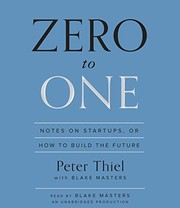
by Peter Thiel
“He cites Peter Thiel's Stanford lecture that competition is for losers, arguing the real goal is monopoly through relentless outworking of competitors rather than matching them.”
More from David Senra
We summarize every new episode. Want them in your inbox?
Building One of the Fastest Growing CPG Companies in History | Peter Rahal of David Protein, Medici Brands & RXBAR
Luca Ferrari on Building Bending Spoons: Extreme Ownership, Talent Science & Relentless Simplification
Mati Staniszewski on ElevenLabs, Voice AI & Building the Communication Layer for AI
Zach Dell on Base Power, Energy Abundance & Building a Company for Life
Doug Leone on Sequoia, Fear, Great Founders & Starting Over at 69
Similar Episodes
Related episodes from other podcasts

The Founders Podcast
Mar 7
#381 I Had Dinner With Michael Ovitz
The Founders Podcast
Sep 5
#432 The Mind of Napoleon
The Founders Podcast
Jul 10
#424 Peter Thiel on How to Build a Creative Monopoly

My First Million
Jan 12
Why Balance Is the Enemy of Greatness | David Senra
The Founders Podcast
Aug 23
#430 How to Write Ads That Sell
Explore Related Topics
This podcast is featured in Best Business Podcasts (2026) — ranked and reviewed with AI summaries.
Read this week's Startups & Product Podcast Insights — cross-podcast analysis updated weekly.
You're clearly into David Senra.
Every Monday, we deliver AI summaries of the latest episodes from David Senra and 192+ other podcasts. Free for one show.
Start My Monday DigestNo credit card · Unsubscribe anytime