Adam McKay is Still Angry About 2008
Episode
36 min
Read time
2 min
Topics
Investing, Leadership, Crypto & Web3
AI-Generated Summary
Key Takeaways
- ✓Documentary-style filmmaking creates urgency: McKay hired cinematographer Barry Ackroyd, who uses long lenses from room corners with constant zooming and discovery-based shooting rather than fixed shots. This documentary approach transforms mundane office phone calls into high-stakes drama by treating scripted scenes as if unpredictable events are unfolding, maintaining visual energy throughout financial conversations that could otherwise feel static.
- ✓Breaking the fourth wall at precise confusion points: McKay timed celebrity cameo explanations (like Margot Robbie in a bathtub explaining credit default swaps) to interrupt exactly when audiences felt lost by financial jargon. His sound engineer confirmed confusion at specific moments, validating the placement. This technique acknowledges viewer bewilderment rather than pretending complex financial concepts are self-explanatory, making the material accessible without dumbing it down.
- ✓Christian Bale's breathing technique for authenticity: Bale spent twelve hours observing Michael Burry without bathroom breaks, identifying that Burry breathes at unexpected points in sentences, creating social discomfort. Bale requested only one direction: remind him to breathe in wrong places, letting everything else follow naturally. This single physical choice replicated Burry's presence more effectively than conventional character research or backstory development could achieve.
- ✓Low budgets provide creative freedom from executives: The thirty-five million dollar budget for The Big Short gave McKay protection from studio interference. Executives had boardroom cover from the star-studded cast (Brad Pitt, Christian Bale, Ryan Gosling, Steve Carell), allowing McKay to experiment with unconventional storytelling techniques. Smaller financial risk meant less corporate oversight, enabling the improvisational, discovery-based approach that defined the film's style.
- ✓The 2008 crisis created lasting political anger: McKay identifies Obama's failure to prosecute Wall Street executives and prioritize homeowners over banks as a betrayal that radicalized him politically. The crisis introduced the last man out theory—executives maximizing bonuses before collapse without consequences—which McKay sees as defining the neoliberal era. This institutional unfairness, where capitalism's harsh rules apply to everyone except capitalists, generates the rigged-system anger dominating current politics.
What It Covers
Michael Lewis interviews director Adam McKay about adapting The Big Short from book to Oscar-winning film. They discuss McKay's transition from comedy director to tackling the 2008 financial crisis, his improvisational filming techniques, Christian Bale's method for portraying Michael Burry, and McKay's radicalization by Obama's failure to prosecute Wall Street executives after the collapse.
Key Questions Answered
- •Documentary-style filmmaking creates urgency: McKay hired cinematographer Barry Ackroyd, who uses long lenses from room corners with constant zooming and discovery-based shooting rather than fixed shots. This documentary approach transforms mundane office phone calls into high-stakes drama by treating scripted scenes as if unpredictable events are unfolding, maintaining visual energy throughout financial conversations that could otherwise feel static.
- •Breaking the fourth wall at precise confusion points: McKay timed celebrity cameo explanations (like Margot Robbie in a bathtub explaining credit default swaps) to interrupt exactly when audiences felt lost by financial jargon. His sound engineer confirmed confusion at specific moments, validating the placement. This technique acknowledges viewer bewilderment rather than pretending complex financial concepts are self-explanatory, making the material accessible without dumbing it down.
- •Christian Bale's breathing technique for authenticity: Bale spent twelve hours observing Michael Burry without bathroom breaks, identifying that Burry breathes at unexpected points in sentences, creating social discomfort. Bale requested only one direction: remind him to breathe in wrong places, letting everything else follow naturally. This single physical choice replicated Burry's presence more effectively than conventional character research or backstory development could achieve.
- •Low budgets provide creative freedom from executives: The thirty-five million dollar budget for The Big Short gave McKay protection from studio interference. Executives had boardroom cover from the star-studded cast (Brad Pitt, Christian Bale, Ryan Gosling, Steve Carell), allowing McKay to experiment with unconventional storytelling techniques. Smaller financial risk meant less corporate oversight, enabling the improvisational, discovery-based approach that defined the film's style.
- •The 2008 crisis created lasting political anger: McKay identifies Obama's failure to prosecute Wall Street executives and prioritize homeowners over banks as a betrayal that radicalized him politically. The crisis introduced the last man out theory—executives maximizing bonuses before collapse without consequences—which McKay sees as defining the neoliberal era. This institutional unfairness, where capitalism's harsh rules apply to everyone except capitalists, generates the rigged-system anger dominating current politics.
Notable Moment
McKay reveals his secret approach to comedy filmmaking: every seemingly silly movie (Anchorman, Talladega Nights, Step Brothers) contained hidden social commentary he never disclosed. Anchorman critiqued mainstream media collapse, Talladega Nights examined Bush-era backwards pride, and Step Brothers explored how consumerism infantilizes adults. He and Will Ferrell kept these themes private while audiences enjoyed surface-level humor.
Episode Transcript
Pushkin. Most of 2006 and early two thousand seven, doctor Michael Barry had experienced as a private nightmare. In an email he wrote, the partners closest to me tend to ultimately hate me. This business kills a part of life that is pretty essential. The thing is, I haven't identified what it kills, but it is something vital that is dead inside of me. I can feel it. I'm Lydia Jean Cott, a producer here on Against the Rules. And what we just heard is an excerpt from The Big Short, a book that Michael Lewis wrote in 2010. He's now releasing it for the first time as an audiobook narrated by him. Yep. And I'm here too. So, LJ, I'm a tell you what I want you to do. You're a innocent outsider with no particular interest in the global financial crisis. It is like one of these huge events in American history, and, it's really useful to me to hear what you're curious about and also to for me to explain to you why the people who we're interviewing are the people we're interviewing, why they matter now. So I haven't thought about the two thousand eight financial crisis since it happened, which is when I was in high school. And I'm gonna be honest, I actually didn't even really think about it that much when it happened. Why would you? I was thinking about high school. Yeah. Why did you wanna revisit it? Why why look back at it now? It it has never lost its relevance. It's been the slow motion train wreck that comes right from that. The essence of its importance was the feeling of unfairness it generated by how it was dealt with. You had these elites on Wall Street doing things they shouldn't have been doing, getting paid a fortune to do them. And when it all goes wrong and everybody suffers, there's no no apparent cost. They get to go about doing their business. They get bailed out by the government. Everybody has to live by the harsh rules of capitalism except the capitalists themselves. The feeling that the world is rigged, the anger generated by the event has been the dominant mood in our political life. So I've thought for some time that there'll come a moment where it's worth looking back on and saying, like, why was this important? What were the consequences of this event? Right. And here we are, and that was the moment. And you did it by talking to a bunch of people, right, who you thought could answer questions that you had that kinda came to you as you were rereading the book. And Correct. The first person was Adam McKay, who was the director of the Big Short movie. How would you characterize your relationship to that movie? The same as my relationship to the movies of all my books is that, I had no effect whatsoever on how they made the movie, …
Get the full transcript (6,324 words) + summary by email — free
One-time email with the complete transcript and AI summary of this episode. No account needed.
One email, no spam. We’ll also show you what SignalCast does.

You just read a 3-minute summary of a 33-minute episode.
Get Against the Rules summarized like this every Monday — plus up to 2 more podcasts, free.
Pick Your Podcasts — FreeKeep Reading
More from Against the Rules
From The Kink Machine: The Hidden Business of Pleasure
Feb 10 · 31 min

Startups For the Rest of Us
Episode 825 | Talking Tailwind CSS and Founder Fitness (with Adam Wathan)
Mar 24
More from Against the Rules
Live: Michael Lewis and Maya Shankar on "The Other Side of Change"
Jan 27 · 60 min

WorkLife with Adam Grant
ReThinking: The myth of genius with Helen Lewis
Aug 19
Books, tools, and gear mentioned in this episode
SignalCast may earn commission on purchases via these links. As an Amazon Associate, SignalCast earns from qualifying purchases.
Books
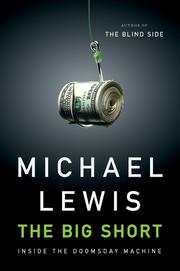
“Michael Lewis interviews director Adam McKay about adapting The Big Short from book to Oscar-winning film.”
Products
- Talladega NightsBy guest
“McKay reveals his secret approach to comedy filmmaking: every seemingly silly movie (Anchorman, Talladega Nights, Step Brothers) contained hidden social commentary he never disclosed. Talladega Nights examined Bush-era backwards pride.”
- Step BrothersBy guest
“McKay reveals his secret approach to comedy filmmaking: every seemingly silly movie (Anchorman, Talladega Nights, Step Brothers) contained hidden social commentary he never disclosed. Step Brothers explored how consumerism infantilizes adults.”
More from Against the Rules
We summarize every new episode. Want them in your inbox?
From The Kink Machine: The Hidden Business of Pleasure
Live: Michael Lewis and Maya Shankar on "The Other Side of Change"
Here’s the Scoop from NBC News: Looking Ahead to Politics in 2026 with Steve Kornacki and Ryan Nobles
Introducing Business History: The Man Who Sued Major League Baseball
Live with Nicolle Wallace
Similar Episodes
Related episodes from other podcasts

Startups For the Rest of Us
Mar 24
Episode 825 | Talking Tailwind CSS and Founder Fitness (with Adam Wathan)

WorkLife with Adam Grant
Aug 19
ReThinking: The myth of genius with Helen Lewis

Pivot
Sep 8
Ina Garten’s Next Course? A Podcast | On With Kara Swisher

The Peter Attia Drive
Aug 31
#406 ‒ Migraine, cluster headache, and tension headache: symptoms, causes, prevention, and treatment | Brian Grosberg, M.D.

All-In with Chamath, Jason, Sacks & Friedberg
Aug 24
Michael Kratsios: Trump's Science Agenda, Anti-Science Claims, Fauci's Damage, DEI & China
Explore Related Topics
Read this week's Investing & Markets Podcast Insights — cross-podcast analysis updated weekly.
You're clearly into Against the Rules.
Every Monday, we deliver AI summaries of the latest episodes from Against the Rules and 192+ other podcasts. Free for one show.
Start My Monday DigestNo credit card · Unsubscribe anytime