TIP771: Money Masters Of Our Time w/ Kyle Grieve
Episode
70 min
Read time
2 min
Topics
Productivity, Personal Finance, Relationships
AI-Generated Summary
Key Takeaways
- ✓Controlled Greed Framework: Warren Buffett emphasizes controlled greed as essential for investing success. Rick Garren, equally smart as Buffett and Munger, lost his Berkshire shares at $40 (now worth $756,000) due to margin calls from uncontrolled leverage during the 1973-74 downturn, demonstrating how greed without discipline destroys wealth.
- ✓Position Sizing Strategy: Peter Lynch made over 15,000 trades in fourteen years by buying entire industry baskets, then concentrating capital into winners after three months of research. This market-maker approach allowed him to identify superior businesses through comparative analysis while maintaining skin-in-the-game focus across all holdings.
- ✓Unloved Stock Characteristics: John Templeton searched for maximum price inefficiencies by targeting stocks brokers struggled to sell, those with small floats, zero institutional ownership, and companies receiving no analyst contact for years. He waited up to four years for multiple expansion, buying what nobody else wanted at deep discounts.
- ✓Growth Stage Buying Opportunities: Philip Fisher identified three optimal entry points for quality businesses: during startup periods of new manufacturing or technology upgrades that suppress cash flow, on temporary bad corporate news like strikes or marketing errors, and when plants have poor efficiency that management can systematically improve.
- ✓Small Cap Outperformance Drivers: Ralph Wanger's research showed small companies returned 12.5% annually versus 10.5% for large caps from 1925-1995. Small company managers respond faster to change, have more growth runway through quick initiative implementation, and receive less market attention, creating persistent mispricings institutional investors cannot exploit.
What It Covers
Kyle Grieve examines investing strategies from John Train's Money Masters of Our Time, analyzing Warren Buffett, Peter Lynch, T. Rowe Price, John Templeton, and other legendary investors to extract timeless principles applicable across value, growth, and speculative approaches.
Key Questions Answered
- •Controlled Greed Framework: Warren Buffett emphasizes controlled greed as essential for investing success. Rick Garren, equally smart as Buffett and Munger, lost his Berkshire shares at $40 (now worth $756,000) due to margin calls from uncontrolled leverage during the 1973-74 downturn, demonstrating how greed without discipline destroys wealth.
- •Position Sizing Strategy: Peter Lynch made over 15,000 trades in fourteen years by buying entire industry baskets, then concentrating capital into winners after three months of research. This market-maker approach allowed him to identify superior businesses through comparative analysis while maintaining skin-in-the-game focus across all holdings.
- •Unloved Stock Characteristics: John Templeton searched for maximum price inefficiencies by targeting stocks brokers struggled to sell, those with small floats, zero institutional ownership, and companies receiving no analyst contact for years. He waited up to four years for multiple expansion, buying what nobody else wanted at deep discounts.
- •Growth Stage Buying Opportunities: Philip Fisher identified three optimal entry points for quality businesses: during startup periods of new manufacturing or technology upgrades that suppress cash flow, on temporary bad corporate news like strikes or marketing errors, and when plants have poor efficiency that management can systematically improve.
- •Small Cap Outperformance Drivers: Ralph Wanger's research showed small companies returned 12.5% annually versus 10.5% for large caps from 1925-1995. Small company managers respond faster to change, have more growth runway through quick initiative implementation, and receive less market attention, creating persistent mispricings institutional investors cannot exploit.
Notable Moment
T. Rowe Price abandoned his successful growth strategy in the late 1960s when imitators bid stocks to 50-70 times earnings, shifting to inflation-resistant assets like real estate and gold. He returned to growth investing in 1974 when valuations normalized, demonstrating strategic flexibility within core principles.
Episode Transcript
You're listening to TIP. Investors think in dogmatic terms when it comes to optimizing an investing strategy. However, as John Train illustrates in Money Masters of our Time, a variety of strategies have led to some of the greatest outperformers in history. As I explored the book, I noticed that while each investor had a unique approach, they all left very very valuable clues to their success. Many of these insights apply broadly to the art of investing, whether you're a long term value investor, a quality focused investor, a seeker of deep value plays, an activist, a speculator, or even a trader. In today's episode, we'll dive into the key lessons that I took from each investor that was profiled in this great book. You'll learn about Warren Buffett's concept of controlled greed and why it's so beneficial as long as you emphasize the controlled part of that equation. We'll explore why T. Rowe Price shifted away from his signature growth strategy only to return to it after facing widespread imitation. I'll share Jim Rogers affinity for making these large basket bets on emerging markets and his thought process for determining which ones were worth investing in. We'll also discuss why the size of a fund can hinder performance and why this is a crucial factor to consider when investing with top tier managers. Now one of my favorite takeaways is from the chapter that was on Peter Lynch. In this section, I'll explain why Lynch made well over 15,000 trades throughout his career and the critical insights behind his approach. While I wouldn't replicate his methods here, understanding his reasoning sheds light on how investors can think about position sizing when analyzing new investments. Now there's much to cover in this episode, but no matter your investing style, I'm confident you'll walk away with a fresh perspective on the fascinating world of investing. Now, let's jump right into this week's episode. Since 2014 and through more than 180,000,000 downloads, we've studied the financial markets and read the books that influence self made billionaires the most. We keep you informed and prepared for the unexpected. Now for your host, Kyle Grieve. Welcome to The Investor's Podcast. I'm your host Kyle Grieve, and today we're going to dig into some of the insights from some of the greatest money masters in history. We're going to look at a number of outperforming investors outlined in the book Money Masters of Our Time by John Train. Now instead of profiling each individual investor, I'm going to focus more on just timeless principles that I think can be adapted and applied to any intelligent investing framework. Now what I really enjoyed about this book was the vast array of strategies that were used in the investors who were outlined. Treyn says that investors that he picked come from just several different schools of investing, whether that be growth, value, technology, emerging markets, micro caps, turnarounds, top down, bottoms up, and so on. He …
Get the full transcript (14,017 words) + summary by email — free
One-time email with the complete transcript and AI summary of this episode. No account needed.
One email, no spam. We’ll also show you what SignalCast does.

You just read a 3-minute summary of a 67-minute episode.
Get We Study Billionaires summarized like this every Monday — plus up to 2 more podcasts, free.
Pick Your Podcasts — FreeKeep Reading
More from We Study Billionaires
TIP846: Stock Picker: How to Live Off Your Portfolio w/ Ian Cassel
Sep 13 · 75 min

The Diary of a CEO
Most Replayed Moment: Ex-CIA Reveals What Spies Know About Human Nature
Jul 31
More from We Study Billionaires
TIP845: Copart Stock (CPRT): Is Copart Now a Buy? w/ Daniel Mahncke & Shawn O'Malley
Sep 10 · 69 min

The Vergecast
The case for banning cookie banners
Apr 7
Books, tools, and gear mentioned in this episode
SignalCast may earn commission on purchases via these links. As an Amazon Associate, SignalCast earns from qualifying purchases.
Books
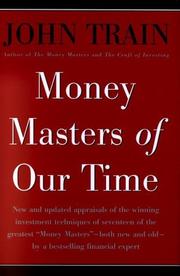 Money Masters of Our TimeRecommended
by John Train
“Kyle Grieve examines investing strategies from John Train's Money Masters of Our Time, analyzing Warren Buffett, Peter Lynch, T. Rowe Price, John Templeton, and other legendary investors to extract timeless principles applicable across value, growth, and speculative approaches.”
More from We Study Billionaires
We summarize every new episode. Want them in your inbox?
TIP846: Stock Picker: How to Live Off Your Portfolio w/ Ian Cassel
TIP845: Copart Stock (CPRT): Is Copart Now a Buy? w/ Daniel Mahncke & Shawn O'Malley
TIP844: Uber (UBER): The Autonomy Referendum — Is Mr. Market Completely Wrong? w/ Daniel Mahncke & Shawn O’Malley
TIP843: AppLovin (APP): The 30-Bagger Down More Than Half w/ Kyle Grieve & Shawn O'Malley
TIP842: Comfort Systems USA (FIX): The Five-Bagger We Passed On w/ Kyle Grieve & Shawn O'Malley
Similar Episodes
Related episodes from other podcasts

The Diary of a CEO
Jul 31
Most Replayed Moment: Ex-CIA Reveals What Spies Know About Human Nature

The Vergecast
Apr 7
The case for banning cookie banners

The Money Mondays
Feb 23
Jordan Belfort Trained an AI to Sell Like Him 🤖 E161

The Money Guy Show
Jan 2
The 5 Biggest Investing Mistakes

a16z Podcast
Sep 11
What It Takes to Build a Startup | Andrew Chen & Matt Perault
Explore Related Topics
This podcast is featured in Best Investing Podcasts (2026) — ranked and reviewed with AI summaries.
You're clearly into We Study Billionaires.
Every Monday, we deliver AI summaries of the latest episodes from We Study Billionaires and 192+ other podcasts. Free for one show.
Start My Monday DigestNo credit card · Unsubscribe anytime