Episode 324: Irruption of the Sacred
Episode
67 min
Read time
2 min
Topics
Software Development, Crypto & Web3, Psychology & Behavior
AI-Generated Summary
Key Takeaways
- ✓Sacred Space Creation: Religious societies establish meaning through hierophanies—eruptions of the sacred that transform chaotic, homogeneous profane space into ordered, directional reality with cardinal points, centers, and portals connecting earthly and divine realms through temples, poles, or ritual markers.
- ✓Modern Crypto-Religious Behavior: Contemporary humans retain vestiges of sacred space orientation through birthplaces, childhood homes, sports stadiums, and pilgrimage sites like Twin Peaks filming locations, demonstrating that complete desacralization proves psychologically impossible even in secular industrial societies governed by functional architecture.
- ✓Jewish Diaspora Adaptation: The sixth century BCE Babylonian captivity forced Judaism to shift from temple-centered, geography-dependent worship to portable identity markers like circumcision, dietary laws, and legal observance, transforming Yahweh from territorial deity to universal monotheistic god.
- ✓Home as Cosmogony: Building and inhabiting dwellings represents creating personal universes that mirror divine creation, requiring serious commitment because abandoning one's constructed world carries existential weight—houses function as microcosms reflecting cosmic structure rather than machines for living.
- ✓Sociological Counter-Theory: Peter Berger's Sacred Canopy challenges Eliade's ontological claims, arguing sacred spaces emerge from social construction and collective agreement rather than metaphysical reality, explaining how religions adapt consecration practices when separated from original holy sites without existential collapse.
What It Covers
Philosopher Tamler Sommers and psychologist Dave Pizarro examine Mircea Eliade's theory of sacred versus profane space, exploring how religious humans create meaning through consecrated locations, rituals, and cosmological centers versus modern desacralized existence.
Key Questions Answered
- •Sacred Space Creation: Religious societies establish meaning through hierophanies—eruptions of the sacred that transform chaotic, homogeneous profane space into ordered, directional reality with cardinal points, centers, and portals connecting earthly and divine realms through temples, poles, or ritual markers.
- •Modern Crypto-Religious Behavior: Contemporary humans retain vestiges of sacred space orientation through birthplaces, childhood homes, sports stadiums, and pilgrimage sites like Twin Peaks filming locations, demonstrating that complete desacralization proves psychologically impossible even in secular industrial societies governed by functional architecture.
- •Jewish Diaspora Adaptation: The sixth century BCE Babylonian captivity forced Judaism to shift from temple-centered, geography-dependent worship to portable identity markers like circumcision, dietary laws, and legal observance, transforming Yahweh from territorial deity to universal monotheistic god.
- •Home as Cosmogony: Building and inhabiting dwellings represents creating personal universes that mirror divine creation, requiring serious commitment because abandoning one's constructed world carries existential weight—houses function as microcosms reflecting cosmic structure rather than machines for living.
- •Sociological Counter-Theory: Peter Berger's Sacred Canopy challenges Eliade's ontological claims, arguing sacred spaces emerge from social construction and collective agreement rather than metaphysical reality, explaining how religions adapt consecration practices when separated from original holy sites without existential collapse.
Notable Moment
A Native Australian tribe lost their sacred pole that performed hierophanies to create centers in space. Without this ritual object to establish orientation and meaning, the entire tribe reportedly laid down and died, illustrating the existential necessity of sacred space.
Episode Transcript
Very Bad Wizards is a podcast with a philosopher, my dad, and psychologist, Dave Fesaro, having an informal discussion about issues in science and ethics. Please note that the discussion contains bad words that I'm not allowed to say, and knowing my dad, some very inappropriate jokes. Nothing will make sense to your American ears. I'm meeting, I'm sorry. I'm sorry. I'm sorry. I'm sorry. I'm sorry. I'm sorry. I'm sorry. I'm sorry. I'm sorry. I'm sorry. I'm sorry. Who are you? Who are you? A very bad man. I'm a very good man. Good man. You're a very bad man. I'm a very good man. Just a very bad wizard. Welcome to Very Bad Wizards. I'm Tamler Summers. Dave, happy New Year. Happy New Year, Tamler. Trump invaded Venezuela. ICE just assassinated a a lady in an SUV in Minneapolis, and a Texas A and M philosophy professor was told to remove Plato readings from his syllabus because of state laws on covering gender and race in the classroom. Is this a happy new year really? I thought you were gonna ask me to rank these in order of greatness. Yeah. Which one made America the greatest? Yeah. Yeah. Yeah. Oh, god. You know, I didn't have high hopes. I had some hopes that it was gonna, like, usher in the new year with a little bit of peace. But Based on what? Nothing. Based on absolutely. Just a general optimism. Yeah. I need to get off of Twitter. Like, it's just actually like, it's actually been sucking my brains out through a straw. It does feel like I've never been in the camp of this is Nazi Germany all over again. It's a fascist regime. But I'm getting closer to to to that camp. It feels like every week I just hope that when it's all over, it will be like a quick, like, atomic detonation. Yeah. And we won't even really we'll all die together, and we won't feel it. Yeah. That would be yeah. I would take that. That could work. The Texas A and M thing is fucked up. Yeah. This is, like, both on your home turf and on your home turf. Like, this is Texas and Play Doh. Like, two two things that are just, like, it's pretty much all about you. Yeah. I mean so the reason it's Plato, it's not like you're not allowed to teach Plato at all anymore at Texas A and M. This was a professor teaching contemporary moral issues, and I don't know if it's through a textbook or something, but there's modules. And one of the modules is gender and race ideologies. And, you know, according to the professor, he just presents these readings, and you can talk about how good the arguments are or whatever. But Texas A and M has their regions have been very strongly out in front of not wanting to run a foul of these laws. Like, we're told that, at …
Get the full transcript (11,888 words) + summary by email — free
One-time email with the complete transcript and AI summary of this episode. No account needed.
One email, no spam. We’ll also show you what SignalCast does.

You just read a 3-minute summary of a 64-minute episode.
Get Very Bad Wizards summarized like this every Monday — plus up to 2 more podcasts, free.
Pick Your Podcasts — FreeKeep Reading


Books, tools, and gear mentioned in this episode
SignalCast may earn commission on purchases via these links. As an Amazon Associate, SignalCast earns from qualifying purchases.
Books
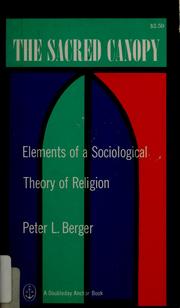 Sacred CanopyBy guest
by Peter Berger
“Peter Berger's Sacred Canopy challenges Eliade's ontological claims, arguing sacred spaces emerge from social construction and collective agreement rather than metaphysical reality.”
More from Very Bad Wizards
We summarize every new episode. Want them in your inbox?
Episode 329: Why We Suffer
Episode 328: Weapons Free
Episode 327: You Ain't So Smart (Flannery O'Connor's "Good Country People")
Episode 326: The Most Important Episode of Your (Academic) Life
Episode 325: It Is Happening Again
Similar Episodes
Related episodes from other podcasts

Odd Lots
Aug 20
Nick Bostrom on What Happens if AI Solves All of Our Problems

The Daily (NYT)
Aug 9
Is 'Gentle Parenting' Ruining French Children?

The Jordan Harbinger Show
Aug 4
1364: Dr. Max Butterfield | Challenging Viral Dating Myths with Science

The School of Greatness
Jul 24
The Real Reason Stress Is Hurting You | Kelly McGonigal

10% Happier with Dan Harris
Jul 13
Perfectionism, Burnout, and Self-Doubt: Break the Loop with the Science of Mattering | Gordon Flett
Explore Related Topics
This podcast is featured in Best Philosophy Podcasts (2026) — ranked and reviewed with AI summaries.
Read this week's Software Engineering Podcast Insights — cross-podcast analysis updated weekly.
You're clearly into Very Bad Wizards.
Every Monday, we deliver AI summaries of the latest episodes from Very Bad Wizards and 192+ other podcasts. Free for one show.
Start My Monday DigestNo credit card · Unsubscribe anytime