Episode 323: Debate Me 'Phro
Episode
68 min
Read time
2 min
Topics
Productivity, Relationships, Artificial Intelligence
AI-Generated Summary
Key Takeaways
- ✓Fabrication in Science Writing: Oliver Sacks confessed in personal journals to inventing details in famous case studies, including autistic twins who supposedly spoke in prime numbers. Other researchers studying these twins found no mathematical abilities, revealing how compelling narratives can override scientific accuracy even in respected medical literature.
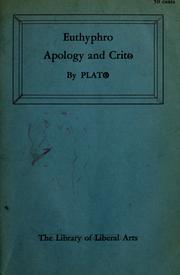
- ✓The Euthyphro Dilemma: Plato presents the foundational question: do gods love something because it is pious, or is something pious because gods love it? This distinction demonstrates that referencing divine approval cannot define morality's essence, only identify examples, making theological arguments circular when determining ethical truth.
- ✓ChatGPT's Educational Impact: The 2025 academic year marks when AI tools definitively undermined traditional college writing assignments. The critical difference: Googling requires research skills and following links to synthesize information, while ChatGPT provides instant answers, eliminating the investigative process essential to learning and critical thinking development.
- ✓Divine Command Theory's Weakness: When religious scholars reinterpret biblical slavery passages to align with modern morality, they reveal an independent moral framework driving their interpretations. This demonstrates that even believers rely on internal moral intuitions rather than purely accepting divine commands, undermining claims of objective religious morality.
- ✓Socratic Method as Corruption: Plato sets Euthyphro immediately before Socrates' trial, potentially examining whether Socratic questioning actually corrupts youth by creating debate-focused skeptics without building constructive knowledge. The dialogue shows Socrates dismantling Euthyphro's religious certainty without offering replacement frameworks, validating concerns about his teaching methods.
What It Covers
Tamler and Dave examine Plato's Euthyphro dialogue alongside revelations about Oliver Sacks fabricating patient case studies, exploring how both situations challenge our understanding of truth, piety, and the relationship between facts and compelling narratives.
Key Questions Answered
- •Fabrication in Science Writing: Oliver Sacks confessed in personal journals to inventing details in famous case studies, including autistic twins who supposedly spoke in prime numbers. Other researchers studying these twins found no mathematical abilities, revealing how compelling narratives can override scientific accuracy even in respected medical literature.
- •The Euthyphro Dilemma: Plato presents the foundational question: do gods love something because it is pious, or is something pious because gods love it? This distinction demonstrates that referencing divine approval cannot define morality's essence, only identify examples, making theological arguments circular when determining ethical truth.
- •ChatGPT's Educational Impact: The 2025 academic year marks when AI tools definitively undermined traditional college writing assignments. The critical difference: Googling requires research skills and following links to synthesize information, while ChatGPT provides instant answers, eliminating the investigative process essential to learning and critical thinking development.
- •Divine Command Theory's Weakness: When religious scholars reinterpret biblical slavery passages to align with modern morality, they reveal an independent moral framework driving their interpretations. This demonstrates that even believers rely on internal moral intuitions rather than purely accepting divine commands, undermining claims of objective religious morality.
- •Socratic Method as Corruption: Plato sets Euthyphro immediately before Socrates' trial, potentially examining whether Socratic questioning actually corrupts youth by creating debate-focused skeptics without building constructive knowledge. The dialogue shows Socrates dismantling Euthyphro's religious certainty without offering replacement frameworks, validating concerns about his teaching methods.
Notable Moment
The hosts realize Sacks maintained strong relationships with patients who recognized his misrepresentations but stayed silent, suggesting his clinical empathy was genuine even while he exploited their conditions for literary purposes. This complexity prevents simple categorization as either fraud or humanitarian physician.

You just read a 3-minute summary of a 65-minute episode.
Get Very Bad Wizards summarized like this every Monday — plus up to 2 more podcasts, free.
Pick Your Podcasts — FreeKeep Reading

Books, tools, and gear mentioned in this episode
SignalCast may earn commission on purchases via these links. As an Amazon Associate, SignalCast earns from qualifying purchases.
Books
by Plato
“Tamler and Dave examine Plato's Euthyphro dialogue alongside revelations about Oliver Sacks fabricating patient case studies, exploring how both situations challenge our understanding of truth, piety, and the relationship between facts and compelling narratives.”
More from Very Bad Wizards
We summarize every new episode. Want them in your inbox?
Episode 329: Why We Suffer
Episode 328: Weapons Free
Episode 327: You Ain't So Smart (Flannery O'Connor's "Good Country People")
Episode 326: The Most Important Episode of Your (Academic) Life
Episode 325: It Is Happening Again
Similar Episodes
Related episodes from other podcasts


Explore Related Topics
This podcast is featured in Best Philosophy Podcasts (2026) — ranked and reviewed with AI summaries.
Read this week's AI & Machine Learning Podcast Insights — cross-podcast analysis updated weekly.
You're clearly into Very Bad Wizards.
Every Monday, we deliver AI summaries of the latest episodes from Very Bad Wizards and 192+ other podcasts. Free for one show.
Start My Monday DigestNo credit card · Unsubscribe anytime