Winter Book Club: Why You'll Love 'Dune'
Episode
31 min
Read time
2 min
Topics
Relationships, Leadership, Software Development
AI-Generated Summary
Key Takeaways
- ✓Anti-hero narrative structure: Herbert intended Dune as a warning against charismatic leaders, showing Paul Atreides gaining power while haunted by visions of future jihad in his name, requiring readers to extrapolate the dangerous consequences of messianic movements beyond the first book's triumphant ending.
- ✓Ecology drives culture framework: The novel presents natural resources and human consciousness as technologies, where Spice Melange enables space travel and mental enhancement, demonstrating how environmental scarcity shapes religious practices, social structures, and survival strategies in desert civilizations like the Fremen.
- ✓Pre-modern warfare ethics: Herbert deliberately returns to close-combat killing with knives and swords rather than bombs or guns, forcing characters to develop ceremonial respect for death and the bodies of enemies, contrasting with post-World War II mechanized warfare's emotional distance.
- ✓Islamic integration in sci-fi: Written by a white American author in the 1950s-60s, Dune incorporates Arabic terminology, Hajj pilgrimages, and Bedouin cultural practices as foundational elements of future civilization, projecting Islamic thought as integral to humanity's evolution rather than exoticizing or othering it.
What It Covers
Ramtin Arablouei from NPR's Throughline discusses Frank Herbert's Dune, exploring how the 1965 sci-fi novel critiques messianic leadership, examines ecology as technology, and respectfully integrates Islamic culture into futuristic worldbuilding across 617 pages.
Key Questions Answered
- •Anti-hero narrative structure: Herbert intended Dune as a warning against charismatic leaders, showing Paul Atreides gaining power while haunted by visions of future jihad in his name, requiring readers to extrapolate the dangerous consequences of messianic movements beyond the first book's triumphant ending.
- •Ecology drives culture framework: The novel presents natural resources and human consciousness as technologies, where Spice Melange enables space travel and mental enhancement, demonstrating how environmental scarcity shapes religious practices, social structures, and survival strategies in desert civilizations like the Fremen.
- •Pre-modern warfare ethics: Herbert deliberately returns to close-combat killing with knives and swords rather than bombs or guns, forcing characters to develop ceremonial respect for death and the bodies of enemies, contrasting with post-World War II mechanized warfare's emotional distance.
- •Islamic integration in sci-fi: Written by a white American author in the 1950s-60s, Dune incorporates Arabic terminology, Hajj pilgrimages, and Bedouin cultural practices as foundational elements of future civilization, projecting Islamic thought as integral to humanity's evolution rather than exoticizing or othering it.
Notable Moment
Arablouei describes reading Dune at age thirteen as transformative because it was the first science fiction novel where he saw himself projected into the future through Islamic concepts and Arabic words, making the complex worldbuilding personally meaningful despite narrative weaknesses.
Episode Transcript
This message comes from NPR sponsor, Capella University. Interested in a quality online education? Capella is accredited by the Higher Learning Commission. A different future is closer than you think with Capella University. Learn more at capella.edu. Hey, everyone. It's Ramtin here. So if you've been listening to the show recently, which I hope you all have, you know we've been running episodes as part of our winter book club series. And it just so happens that I was recently a guest on another NPR show where I got to talk about an actual book I really, really love. So we're gonna share that conversation with you all today. Here we go. I saw myself projected into the future, or it felt like a world that somebody like me could live in. You're listening to Books We've Loved from NPR. The book show where we reread old favorites and tell you why they still matter today. I'm Andrew Limbong. I'm PA Partner. This is a big one. This is a this is a hefty. This is a hefty. Flip him through this right here. Andrew, so much. This hefty boy. It's so it's so much, and it's our guest's fault. And, I mean, I did it. I 617 pages. Uh-huh. Is that not counting the appendices and all that? I Yeah. That. Yeah. Okay. So, like, almost 700 pages. Yeah. Who do we have with us that we can Thank for this. We have here Ramtin Arablouei from NPR's ThruLine. Ramtin, what's up, man? Hey. How y'all doing? Thank you for this assignment. Thank you. Oh, for I want you to get to this heavy book. The book we're reading today ways it's heavy. The book we're speaking about today is Frank Herbert's Dune. Woo. Yes. Alright. Alright. Alright. All day. All day. I told I've been waiting I've been waiting decades for this. This is this is your book. It's all gonna pour out here. Okay? I've been waiting for years to talk about this book, which I would tell you that and y'all might be completely disturbed by this, had a major part in building my worldview. No. I believe it. What? I I get it. Yeah. How old did you how old were you? 13. Okay. I was in middle school when I first read this. Reading came late for me. I struggled with it a little bit. Uh-huh. I mean, partly, it's because it's my second language. You know, I moved here I just got out of being a toddler when I moved to The US, and so it was hard to learn English. And And so I kind of was delayed a little bit in reading, but once I started reading, I really got to sci fi books. Yeah. And I had a teacher who was, like, hey. If you really wanna get into some deep stuff, Dune. So I read it, and I became obsessed. I read it, like, twice in a summer. For …
Get the full transcript (6,904 words) + summary by email — free
One-time email with the complete transcript and AI summary of this episode. No account needed.
One email, no spam. We’ll also show you what SignalCast does.

You just read a 3-minute summary of a 28-minute episode.
Get Throughline summarized like this every Monday — plus up to 2 more podcasts, free.
Pick Your Podcasts — FreeKeep Reading


Books, tools, and gear mentioned in this episode
SignalCast may earn commission on purchases via these links. As an Amazon Associate, SignalCast earns from qualifying purchases.
Books
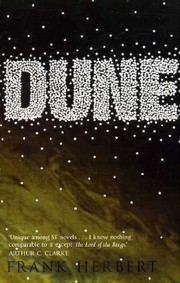 DuneRecommended
by Frank Herbert
“Ramtin Arablouei from NPR's Throughline discusses Frank Herbert's Dune, exploring how the 1965 sci-fi novel critiques messianic leadership, examines ecology as technology, and respectfully integrates Islamic culture into futuristic worldbuilding across 617 pages.”
More from Throughline
We summarize every new episode. Want them in your inbox?
Similar Episodes
Related episodes from other podcasts

The Rest is History
Feb 20
The Book Club: Wuthering Heights

The Ezra Klein Show
Feb 10
George Saunders on Anger, Ambition and Sin

10% Happier with Dan Harris
Jan 30
George Saunders On: Getting Un-Stuck, Calming the Inner Critic, and Building Empathy Without Becoming a Chump

Philosophize This!
Aug 4
Episode #233 ... A philosophy of self-destruction. (Dostoevsky, Bataille)
The Ezra Klein Show
Jul 29
Best Of: Barbara Kingsolver on ‘Urban-Rural Antipathy’
Explore Related Topics
This podcast is featured in Best History Podcasts (2026) — ranked and reviewed with AI summaries.
Read this week's Software Engineering Podcast Insights — cross-podcast analysis updated weekly.
You're clearly into Throughline.
Every Monday, we deliver AI summaries of the latest episodes from Throughline and 192+ other podcasts. Free for one show.
Start My Monday DigestNo credit card · Unsubscribe anytime