We Asked 3 Experts How to Get More Value out of OpenClaw | E2253
Episode
68 min
Read time
3 min
Topics
Remote Work, Artificial Intelligence, Software Development
AI-Generated Summary
Key Takeaways
- ✓Hardware vs. Cloud Setup: Non-technical users should run OpenClaw on a local Mac Mini rather than AWS EC2 servers. The Mac terminal provides visual feedback, easier troubleshooting, and the ability to physically connect a monitor when agents break. A common beginner error — an invisible space character appended when copy-pasting API token keys — is immediately visible on Mac but nearly impossible to diagnose inside a Linux cloud terminal with no coding background.
- ✓Heartbeat Protocol for Agent Teams: Replace daily standups and Kanban boards with hourly automated telemetry checks when running multi-agent systems. Tremaine Grant's framework assigns each agent a fixed role — researcher, moderator, brand voice, skeptic — all aligned to a single "North Star" objective. Agents prompt each other continuously rather than waiting for human input, compressing work that previously took days into minutes and eliminating idle agent time across a 24/7 operation.
- ✓Soul.md File Optimization: The agent personality file drives performance more than most users realize. Rather than manually writing personality traits, prompt the agent to generate a structured questionnaire about your work, goals, and communication style, then answer it via voice. This method surfaces context the agent needs that users would not think to volunteer, and recent posts on X confirm that optimizing this file measurably elevates multi-agent output quality.
- ✓Skeptic Agent Role: Embed a dedicated skeptic agent — modeled on Amazon's pre-meeting memo reviewer practice — whose sole function is to challenge conclusions, demand sourcing, and ask how numbers were derived. In Tremaine Grant's setup, this role is called Scout. When one agent consistently forces others to justify reasoning before proceeding, the overall output quality of the entire agent team rises, mirroring the documented effect at Amazon described in the book Working Backwards.
- ✓SaaS Cost Elimination via Agents: Jason Calacanis calculated a potential $24,000 annual Slack bill (roughly $600 per user per year on Business Plus tier) and had his agent identify MatterMost — an open-source Slack alternative — as a replacement costing approximately $500 per year total. Agents can also pull full Gmail history and Notion edits into a unified real-time feed, replacing multiple SaaS subscriptions. The key constraint is that most SaaS platforms gate full API access behind their highest pricing tiers.
What It Covers
Three builders — Jordy Koltman, Tremaine Grant, and Jesse Leimgruber — share practical frameworks for maximizing OpenClaw AI agent output. Topics span hardware setup choices, multi-agent coordination via the Heartbeat Protocol, voice-enabled smart speakers, token cost reduction, SaaS replacement strategies, and the emerging governance questions around autonomous agents operating with real-world access.
Key Questions Answered
- •Hardware vs. Cloud Setup: Non-technical users should run OpenClaw on a local Mac Mini rather than AWS EC2 servers. The Mac terminal provides visual feedback, easier troubleshooting, and the ability to physically connect a monitor when agents break. A common beginner error — an invisible space character appended when copy-pasting API token keys — is immediately visible on Mac but nearly impossible to diagnose inside a Linux cloud terminal with no coding background.
- •Heartbeat Protocol for Agent Teams: Replace daily standups and Kanban boards with hourly automated telemetry checks when running multi-agent systems. Tremaine Grant's framework assigns each agent a fixed role — researcher, moderator, brand voice, skeptic — all aligned to a single "North Star" objective. Agents prompt each other continuously rather than waiting for human input, compressing work that previously took days into minutes and eliminating idle agent time across a 24/7 operation.
- •Soul.md File Optimization: The agent personality file drives performance more than most users realize. Rather than manually writing personality traits, prompt the agent to generate a structured questionnaire about your work, goals, and communication style, then answer it via voice. This method surfaces context the agent needs that users would not think to volunteer, and recent posts on X confirm that optimizing this file measurably elevates multi-agent output quality.
- •Skeptic Agent Role: Embed a dedicated skeptic agent — modeled on Amazon's pre-meeting memo reviewer practice — whose sole function is to challenge conclusions, demand sourcing, and ask how numbers were derived. In Tremaine Grant's setup, this role is called Scout. When one agent consistently forces others to justify reasoning before proceeding, the overall output quality of the entire agent team rises, mirroring the documented effect at Amazon described in the book Working Backwards.
- •SaaS Cost Elimination via Agents: Jason Calacanis calculated a potential $24,000 annual Slack bill (roughly $600 per user per year on Business Plus tier) and had his agent identify MatterMost — an open-source Slack alternative — as a replacement costing approximately $500 per year total. Agents can also pull full Gmail history and Notion edits into a unified real-time feed, replacing multiple SaaS subscriptions. The key constraint is that most SaaS platforms gate full API access behind their highest pricing tiers.
- •Voice-Enabled Agents via Open Hardware: Jesse Leimgruber's OpenHome project runs OpenClaw agents on a Raspberry Pi with a six-microphone array, enabling always-on ambient context collection without screen interaction. Unlike Alexa or Siri — which are command-based and context-free — this system observes natural speech passively, building a richer user model over time. Developer kits are currently free. The core argument: agents become genuinely useful only when they accumulate real-world context rather than relying solely on what users explicitly type.
Notable Moment
Calacanis described wanting his AI agent to monitor every Slack message, email, and Notion edit company-wide, then deliver a real-time audio briefing through earpieces — letting him instantly join any active Zoom or email thread by voice command. His agent responded by comparing the experience to knowing the exact moment of one's death from SaaS bills.
Episode Transcript
Alright, everybody. Welcome back to Twist. It is Friday, February 20. Today, we are gonna continue talking about OpenClaw. My cohost, Lon Harris, is with us again, and we've been talking a lot about setting up OpenLaw safely. We are now in week three of this incredible transition, this incredible paradigm shift to having agents going out and doing real world things for you. We call them replicants here on the show. And, today, we have three builders who are gonna show us how to maximize your OpenClaw output because OpenClaw burns a lot of tokens very quickly, and it gets very expensive as we talked about on the all in podcast. There's a viral clip of me and Chamath talking about, hey. These tokens, Lon, could outpace the actual salary of a developer Yes. Very quickly the way this is going. So this is an acute issue. This Week in Startups is brought to you by Northwest Registered Agent. Get more when you start your business with Northwest. In ten clicks and ten minutes, you can form your company and walk away with a real business identity. Learn more at northwestregisteredagent.com/twist. Circle. Circle gives you everything you need to build and scale your community led business. Twist listeners get $1,000 off the Circle Plus plan at circle.so/twist.dusto. Check out the online payroll and benefits experts with software built specifically for small business and startups. Try Gusto today and get three months free at gusto.com/twist. Okay. So queue up our first guest. Yeah. So, well, I I think we have a perfect guest to talk about this, especially in terms of how to maximize your open claw and and how to avoid the big time wasting mistakes that so many people make when they're first setting them up. Jordy Koltman is here. You may have seen him on x. He wrote a viral article. I wasted eighty hours and $800 setting up open claw full of practical advice, a lot of which we have internalized here on the team. So, Jordy, I wanna go to you first. What do you think are the biggest time wasting mistakes being made by OpenClaw beginners that are holding them back? Well, I think the barrier to entry is getting easier and speaking from experience. I'm someone who is, like, mega curious, and I'm a marketing background. So I'm not necessarily developer side of this. And I, as you were saying at the start of the show, was really interested in trying to find an agent to help me do things on a daily basis. So when I was setting it up, I was going through the process of trying to figure out how to host it online or host it in my house for a Mac mini, you know, all these viral elements of, like, fluff being thrown at you. Right? So for me, I found that the best practice was actually using hardware. I personally found that a lot better than using, …
Get the full transcript (12,910 words) + summary by email — free
One-time email with the complete transcript and AI summary of this episode. No account needed.
One email, no spam. We’ll also show you what SignalCast does.

You just read a 3-minute summary of a 65-minute episode.
Get This Week in Startups summarized like this every Monday — plus up to 2 more podcasts, free.
Pick Your Podcasts — FreeKeep Reading
More from This Week in Startups
OpenAI’s $1.25T Raise, Starlink Mobile & Zuck’s Tax Deal | EP 2354
Oct 24 · 93 min

Cognitive Revolution
Zero to One in AI Safety: Halcyon's Mike McCormick on Launching 30 New Orgs & the Founder Bottleneck
Sep 25
More from This Week in Startups
We asked 3 VCs: would you invest in Elizabeth Holmes’ next startup? | E2353
Oct 22 · 101 min

WorkLife with Adam Grant
How to say no | from WorkLife with Adam Grant
Sep 8
Books, tools, and gear mentioned in this episode
SignalCast may earn commission on purchases via these links. As an Amazon Associate, SignalCast earns from qualifying purchases.
Books
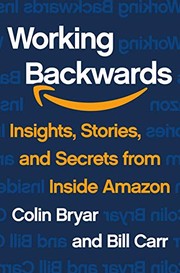
“This role is called Scout. When one agent consistently forces others to justify reasoning before proceeding, the overall output quality of the entire agent team rises, mirroring the documented effect at Amazon described in the book Working Backwards.”
Tools
“Jason Calacanis calculated a potential $24,000 annual Slack bill and had his agent identify MatterMost — an open-source Slack alternative — as a replacement costing approximately $500 per year total.”
“Three builders — Jordy Koltman, Tremaine Grant, and Jesse Leimgruber — share practical frameworks for maximizing OpenClaw AI agent output.”
Gear
“Jesse Leimgruber's OpenHome project runs OpenClaw agents on a Raspberry Pi with a six-microphone array, enabling always-on ambient context collection without screen interaction.”
other
“Replace daily standups and Kanban boards with hourly automated telemetry checks when running multi-agent systems. Tremaine Grant's framework assigns each agent a fixed role — researcher, moderator, brand voice, skeptic — all aligned to a single 'North Star' objective.”
“Jesse Leimgruber's OpenHome project runs OpenClaw agents on a Raspberry Pi with a six-microphone array, enabling always-on ambient context collection without screen interaction.”
More from This Week in Startups
We summarize every new episode. Want them in your inbox?
OpenAI’s $1.25T Raise, Starlink Mobile & Zuck’s Tax Deal | EP 2354
We asked 3 VCs: would you invest in Elizabeth Holmes’ next startup? | E2353
Anthropic Gives Away 5% of Its Shares, Clone’s Muscle Robot, ElevenLabs Steals Podcaster's Voice
Flying Cars, OpenAI Spies, Why AI Isn’t Sticking (Superhuman CEO)
The Ex-DeepMind Researcher Taking On China’s Open Source AI
Similar Episodes
Related episodes from other podcasts

Cognitive Revolution
Sep 25
Zero to One in AI Safety: Halcyon's Mike McCormick on Launching 30 New Orgs & the Founder Bottleneck

WorkLife with Adam Grant
Sep 8
How to say no | from WorkLife with Adam Grant

The AI Breakdown
Jun 29
Mythos Comes Back But Not for Everyone

The Prof G Pod
May 1
Can AI Help You Start a Company? + What Social Media Regulation Really Means

Lex Fridman Podcast
Apr 9
#495 – Vikings, Ragnar, Berserkers, Valhalla & the Warriors of the Viking Age
Explore Related Topics
This podcast is featured in Best Startup Podcasts (2026) — ranked and reviewed with AI summaries.
Read this week's AI & Machine Learning Podcast Insights — cross-podcast analysis updated weekly.
You're clearly into This Week in Startups.
Every Monday, we deliver AI summaries of the latest episodes from This Week in Startups and 192+ other podcasts. Free for one show.
Start My Monday DigestNo credit card · Unsubscribe anytime