Millions of books died so Claude could live
Episode
88 min
Read time
3 min
Topics
Relationships, Fundraising & VC, Sales & Revenue
AI-Generated Summary
Key Takeaways
- ✓AI Training Data Acquisition: Anthropic's Project Panama used hydraulic cutting machines to destructively scan physical books after initially downloading pirated shadow libraries like LibGen. The company hired Tom Turvey from Google Books, purchased hundreds of thousands of used books from warehouses like Better World Books at bulk prices, sliced off spines, and rapidly scanned pages to digitize content for Claude training.
- ✓Books as Quality Training Material: AI companies prioritize books over other content sources because published works provide higher quality, vetted material with coherent sentence structure and fact-checking. Anthropic viewed books as a competitive advantage to catch up with larger rivals like OpenAI and Google, with evidence suggesting Claude's reputation as the best writing chatbot may stem from this book-heavy training approach.
- ✓Legal Fair Use Paradox: Two judges ruled AI model training on books constitutes fair use, but companies face liability for how they acquired books initially. Anthropic settled for one point five billion dollars over books they scanned but never used in commercial models, while the actual training process was deemed legally acceptable. This creates a counterintuitive situation where illegal acquisition precedes legal usage.
- ✓Theatrical Revenue Decline Drivers: Civic Science surveyed two thousand moviegoers and found lack of interest in available movie types ranked as the top reason people avoid theaters, with cost ranking second. Average moviegoers now see fewer films monthly than in the early nineteen nineties, while supply of theatrical releases has steadily decreased, creating uncertainty about whether more films would increase attendance.
- ✓Nostalgia Screening Strategy: Studios could fill theatrical gaps by reprinting beloved films like Mean Girls or Nightmare Before Christmas, which perform well during limited runs with minimal reprint costs. This approach mirrors streaming's use of catalog content like Friends to maintain subscriber lifetime value, allowing exhibitors to pay operating costs while studios reserve expensive new productions for proven blockbuster opportunities.
What It Covers
The Vergecast examines how Anthropic and other AI companies train models using millions of books through Project Panama, involving destructive scanning and shadow libraries. The episode explores Netflix's theatrical strategy amid the Warner Brothers Discovery acquisition, questioning whether movie theaters can survive through nostalgia screenings and alternative programming rather than traditional releases.
Key Questions Answered
- •AI Training Data Acquisition: Anthropic's Project Panama used hydraulic cutting machines to destructively scan physical books after initially downloading pirated shadow libraries like LibGen. The company hired Tom Turvey from Google Books, purchased hundreds of thousands of used books from warehouses like Better World Books at bulk prices, sliced off spines, and rapidly scanned pages to digitize content for Claude training.
- •Books as Quality Training Material: AI companies prioritize books over other content sources because published works provide higher quality, vetted material with coherent sentence structure and fact-checking. Anthropic viewed books as a competitive advantage to catch up with larger rivals like OpenAI and Google, with evidence suggesting Claude's reputation as the best writing chatbot may stem from this book-heavy training approach.
- •Legal Fair Use Paradox: Two judges ruled AI model training on books constitutes fair use, but companies face liability for how they acquired books initially. Anthropic settled for one point five billion dollars over books they scanned but never used in commercial models, while the actual training process was deemed legally acceptable. This creates a counterintuitive situation where illegal acquisition precedes legal usage.
- •Theatrical Revenue Decline Drivers: Civic Science surveyed two thousand moviegoers and found lack of interest in available movie types ranked as the top reason people avoid theaters, with cost ranking second. Average moviegoers now see fewer films monthly than in the early nineteen nineties, while supply of theatrical releases has steadily decreased, creating uncertainty about whether more films would increase attendance.
- •Nostalgia Screening Strategy: Studios could fill theatrical gaps by reprinting beloved films like Mean Girls or Nightmare Before Christmas, which perform well during limited runs with minimal reprint costs. This approach mirrors streaming's use of catalog content like Friends to maintain subscriber lifetime value, allowing exhibitors to pay operating costs while studios reserve expensive new productions for proven blockbuster opportunities.
- •IKEA Smart Home Thread Problems: IKEA's six dollar Billreza buttons represent mass market thread adoption but expose system failures. Google Home still refuses to support matter buttons despite years of requests, while Amazon thread networks cannot merge with other thread border routers. Initial pairing issues and network disconnections plague IKEA's first wave of thread devices, requiring troubleshooting through multiple platforms.
Notable Moment
Will Oremus discovered internal documents showing an Anthropic executive previously downloaded the entire LibGen pirated book library while at OpenAI, then repeated the same process after cofounding Anthropic. The documents included browser screenshots with torrent sites open and LibGen partially downloaded, demonstrating how AI companies systematically used piracy as their starting point before developing physical book scanning operations.
Episode Transcript
Welcome to The Vergecast, the flagship podcast of hydraulic powered cutting machines, a very cool phrase that is gonna make sense in ten minutes or so. I'm your friend David Pearce, and I am currently phone shopping. So I have this iPhone 16, which which is fine. It's blue, which is why I bought it if we're being honest with each other. And the problem with it now is that I miss having some camera power, but what I really miss is having a battery that isn't awful. This battery is awful. Like, I'm I'm at, like, 3PM every day, and I'm having to charge my battery. So there's a world in which I could just, you know, replace the battery or upgrade to an iPhone 17, but I figure I'm a I'm a tech journalist, so what if I just go out and experience a bunch of phones? So I'm gonna try a bunch of stuff. I have a Pixel here. I think I need to get a foldable phone, but I actually want your help, which is a, what phone do you think I should get? I'm in a phase of being sort of unusually willing to switch from iOS to Android. Switching operating systems has traditionally been very hard. People largely don't do it. I'm very willing to do it. I don't know if the answer is, like, I should go get the the Samsung z trifold for $3,000, or buy one of the flip phones that everybody's excited about including me, or if the answer is just shut up and go buy the orange iPhone 17 Pro, which I will like very much. I don't know. If you have thoughts, especially, like, weird thoughts about what phone I should get, I wanna hear them. The hotline is 86611. The email is vergecast@theverge.com. Get at me. I'm gonna do a bunch of weird phone experiments on this show over the next couple of months, and then then I don't know what I'm gonna do. I'm gonna break iMessage forever. I know that for sure. But that's not what we're here to talk about today. Today, we're here to talk about two things. First, we're gonna talk to Will Oremus, a reporter at the Washington Post about a big story he and a couple of his colleagues wrote about the way Anthropic and other companies are training their AI models using books in particular. There's some really fascinating details and some really big questions about how we're supposed to feel about AI inherent and all of that. So we're gonna talk about it. Then Julia Alexander, our old colleague at The Verge, who is now at Puck, is gonna come on and we're gonna talk about Netflix and movie theaters. We've been talking a lot about Netflix recently, but I think this company is important and fascinating and also kind of a way to talk about the whole entertainment industry all at once. After that, we have a …
Get the full transcript (18,508 words) + summary by email — free
One-time email with the complete transcript and AI summary of this episode. No account needed.
One email, no spam. We’ll also show you what SignalCast does.

You just read a 3-minute summary of a 85-minute episode.
Get The Vergecast summarized like this every Monday — plus up to 2 more podcasts, free.
Pick Your Podcasts — FreeKeep Reading
More from The Vergecast
The iPhone Duo should have been an iPad
Oct 23 · 109 min

All-In with Chamath, Jason, Sacks & Friedberg
Trump-Xi Summit, Benioff: "Not My First SaaSpocalypse," OpenAI vs Apple, Multi-Sensory AI, El Niño
May 15
More from The Vergecast
Why Tesla needs its cars to fly
Oct 22 · 37 min

20VC (20 Minute VC)
20VC: Anthropic's Superbowl Ad: Who Won - Who Lost | Harvey Raises $200M at $11BN Valuation | Sierra Hits $150M in ARR: Is Customer Support Too Crowded
Feb 12
Books, tools, and gear mentioned in this episode
SignalCast may earn commission on purchases via these links. As an Amazon Associate, SignalCast earns from qualifying purchases.
Books
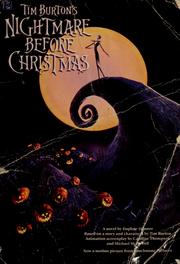
“Studios could fill theatrical gaps by reprinting beloved films like Mean Girls or Nightmare Before Christmas, which perform well during limited runs with minimal reprint costs.”

“Studios could fill theatrical gaps by reprinting beloved films like Mean Girls or Nightmare Before Christmas, which perform well during limited runs with minimal reprint costs.”
Tools
by Google
“Google Home still refuses to support matter buttons despite years of requests, while Amazon thread networks cannot merge with other thread border routers.”
Products
by IKEA
“IKEA's six dollar Billreza buttons represent mass market thread adoption but expose system failures.”
More from The Vergecast
We summarize every new episode. Want them in your inbox?
The iPhone Duo should have been an iPad
Why Tesla needs its cars to fly
How we really feel about the iPhone Duo | Livestream
AI is dividing the math world in two
Why your favorite creator is building an app
Similar Episodes
Related episodes from other podcasts

All-In with Chamath, Jason, Sacks & Friedberg
May 15
Trump-Xi Summit, Benioff: "Not My First SaaSpocalypse," OpenAI vs Apple, Multi-Sensory AI, El Niño

20VC (20 Minute VC)
Feb 12
20VC: Anthropic's Superbowl Ad: Who Won - Who Lost | Harvey Raises $200M at $11BN Valuation | Sierra Hits $150M in ARR: Is Customer Support Too Crowded

Snacks Daily
Feb 6
🐰 “El Supertazón” — Bad Bunny’s business. Anthropic’s book destruction. Chipotle’s $100K rule. +Football Birkin Bags

a16z Podcast
Oct 14
Can Open Models Keep Up With the AI Frontier? | Nathan Lambert

This Week in Startups
Aug 7
How AI splits startups into winners and losers | E2322
Explore Related Topics
This podcast is featured in Best Tech Podcasts (2026) — ranked and reviewed with AI summaries.
You're clearly into The Vergecast.
Every Monday, we deliver AI summaries of the latest episodes from The Vergecast and 192+ other podcasts. Free for one show.
Start My Monday DigestNo credit card · Unsubscribe anytime