#813: Q&A with Tim — Three Life Commandments, 4-Hour Workweek Exercises I Still Use, The Art and Joy of Inefficiency, Stoicism Revisited, and Much More
Episode
79 min
Read time
2 min
Topics
Productivity, Health & Wellness, Artificial Intelligence
AI-Generated Summary
Key Takeaways
- ✓Success and Mental Health: Achieving financial and professional success often increases predisposition to depression and anxiety because the hope that success will solve problems disappears, and the sense of purpose from striving vanishes. Install safety nets like meditation and therapy before reaching success, not after.
- ✓Four Hour Workweek Principles: The 80-20 principle, Parkinson's Law, fear-setting, elimination, and automation remain daily tools. Currently applying 80-20 to book editing, Parkinson's Law to deadlines, and automation to decision-making processes like newsletter policies. The fundamental framework of define, eliminate, then automate still drives productivity decisions.
- ✓AI Usage Boundaries: Uses AI exclusively for parsing feedback patterns and analyzing comments, never for blank-page writing. This prevents cognitive atrophy in synthesis and thinking skills. Writing remains the best method to freeze and scrutinize thinking. The race goes to the best prompter who knows what to ask, not just how.
- ✓Platform and Audience Capture: Actively resisting algorithm optimization and audience preferences that would turn him into a dancing monkey. When the majority does something, his default is to pause and not participate. Pumping brakes on engagement tactics despite financial cost because platform value increasingly flows to platforms, not creators.
- ✓Deliberate Inefficiency: Chooses inefficiency in meditation, reading poetry, spending time with his dog, and reading fiction. Efficiency only matters when paired with effectiveness—choosing the right things. Being highly efficient at wrong tasks is worse than being inefficient at high-leverage activities. What you do matters more than how you do it.
What It Covers
Tim Ferriss answers community questions about success and depression, his three life commandments, Four Hour Workweek principles he still uses daily, deliberate inefficiency choices, stoicism balanced with other philosophies, and avoiding audience capture.
Key Questions Answered
- •Success and Mental Health: Achieving financial and professional success often increases predisposition to depression and anxiety because the hope that success will solve problems disappears, and the sense of purpose from striving vanishes. Install safety nets like meditation and therapy before reaching success, not after.
- •Four Hour Workweek Principles: The 80-20 principle, Parkinson's Law, fear-setting, elimination, and automation remain daily tools. Currently applying 80-20 to book editing, Parkinson's Law to deadlines, and automation to decision-making processes like newsletter policies. The fundamental framework of define, eliminate, then automate still drives productivity decisions.
- •AI Usage Boundaries: Uses AI exclusively for parsing feedback patterns and analyzing comments, never for blank-page writing. This prevents cognitive atrophy in synthesis and thinking skills. Writing remains the best method to freeze and scrutinize thinking. The race goes to the best prompter who knows what to ask, not just how.
- •Platform and Audience Capture: Actively resisting algorithm optimization and audience preferences that would turn him into a dancing monkey. When the majority does something, his default is to pause and not participate. Pumping brakes on engagement tactics despite financial cost because platform value increasingly flows to platforms, not creators.
- •Deliberate Inefficiency: Chooses inefficiency in meditation, reading poetry, spending time with his dog, and reading fiction. Efficiency only matters when paired with effectiveness—choosing the right things. Being highly efficient at wrong tasks is worse than being inefficient at high-leverage activities. What you do matters more than how you do it.
Notable Moment
Tim reveals a bartender recommended a single mezcal without mentioning the price, resulting in a seventy-two dollar charge. This type of interpersonal frustration bothers him more than uncontrollable disruptions like traffic or airport delays, exposing gaps in his stoic practice around human unreliability.

You just read a 3-minute summary of a 76-minute episode.
Get The Tim Ferriss Show summarized like this every Monday — plus up to 2 more podcasts, free.
Pick Your Podcasts — FreeKeep Reading
More from The Tim Ferriss Show
#887: Q&A with Tim — The 4-Hour Workweek in a World of AI, Rebuilding Personal Agency, The 4-Hour Body After 40, and More
Oct 20 · 79 min

The Prof G Pod
The Case for Moving Money and Life to Europe, and the Future of Podcast Ads
Aug 12
More from The Tim Ferriss Show
#886: The Random Show — AI Super Assistants, Boner Pills, Dream Engineering, Wizards, Supplements, Books, and More
Oct 8 · 114 min
The Prof G Pod
When to Sell Your Stocks, and How to Survive a High-Pressure Job
Aug 3
Books, tools, and gear mentioned in this episode
SignalCast may earn commission on purchases via these links. As an Amazon Associate, SignalCast earns from qualifying purchases.
Books
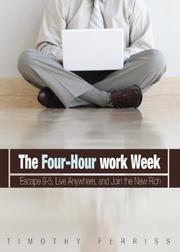
by Tim Ferriss
“Four Hour Workweek principles he still uses daily... Currently applying 80-20 to book editing, Parkinson's Law to deadlines, and automation to decision-making processes like newsletter policies.”
More from The Tim Ferriss Show
We summarize every new episode. Want them in your inbox?
#887: Q&A with Tim — The 4-Hour Workweek in a World of AI, Rebuilding Personal Agency, The 4-Hour Body After 40, and More
#886: The Random Show — AI Super Assistants, Boner Pills, Dream Engineering, Wizards, Supplements, Books, and More
#885: How to Simplify Your Life — Tips from Oliver Burkeman, Chip Conley, Elizabeth Gilbert, and More
#884: How to Spot 10-Year Trends and Build Billion-Dollar Companies — Kevin Ryan of DoubleClick, MongoDB, Business Insider, and Many More
#883: How to Legalize Medical Psychedelics in Your Country — Tania de Jong on The Playbook Behind Australia's World-First Breakthrough
Similar Episodes
Related episodes from other podcasts

The Prof G Pod
Aug 12
The Case for Moving Money and Life to Europe, and the Future of Podcast Ads
The Prof G Pod
Aug 3
When to Sell Your Stocks, and How to Survive a High-Pressure Job
The Prof G Pod
Mar 27
Scott’s Greatest Legacy and Why Your 20s Are Overrated

The Jefferson Fisher Podcast
Jan 6
3 Communication Habits to Change This Year
The Prof G Pod
Aug 31
Navigating a Mid-Career Crisis, And How to Spend Your 20s
Explore Related Topics
This podcast is featured in Best Business Podcasts (2026) — ranked and reviewed with AI summaries.
Read this week's Health & Longevity Podcast Insights — cross-podcast analysis updated weekly.
You're clearly into The Tim Ferriss Show.
Every Monday, we deliver AI summaries of the latest episodes from The Tim Ferriss Show and 192+ other podcasts. Free for one show.
Start My Monday DigestNo credit card · Unsubscribe anytime