#859: Q&A with Tim — The Upcoming AI Tsunami and Building Offline Advantage, Book Recommendations, Spotting Psychedelic Red Flags, Courage as a Learnable Skill, and More
Episode
83 min
Read time
3 min
Topics
Career Growth, Health & Wellness, Relationships
AI-Generated Summary
Key Takeaways
- ✓Offline Informational Advantage: As LLMs process the same public internet data, millions of users receive near-identical AI-generated analysis on topics like public company valuations. Build an edge by cultivating a personal network of narrow domain experts whose knowledge never appears online. Text-based access to 10–15 specialists in specific fields creates an informational moat no generalist AI tool can replicate.
- ✓AI Skill Preservation: Deliberately avoid using AI to complete tasks you want to retain as personal capabilities. Models like Claude will offer to incorporate all editorial feedback and rewrite drafts automatically — accepting this erodes synthesis and writing ability over time. Research already documents cognitive decline in navigation from GPS dependence; the same atrophy applies to writing, analysis, and creative thinking.
- ✓Conference Networking Framework: Ferriss's 2007 South by Southwest strategy — searchable as "How to Build a World Class Network in Record Time" — remains his recommended approach. A key tactic: approach panel moderators instead of panelists. Moderators are ignored by crowds yet know every panelist, connect across multiple sessions, and are equally credentialed. Relationships from that single event persisted nearly 20 years.
- ✓Community Culture Enforcement: Charge a nominal fee for community access — even one dollar — to filter for participants who intend to contribute. Enforce a strict zero-tolerance policy for behavioral violations from day one. Allowing minor infractions shifts acceptable behavior progressively toward more disruptive conduct. A two-strikes policy backfires because members learn they can absorb one violation without consequence.
- ✓Psychedelic Practitioner Vetting: Ask any practitioner to describe the most concerning adverse events they have witnessed and how they handle acute psychological distress during sessions. A practitioner who claims no adverse events have occurred is either inexperienced, dishonest, or both. Ferriss also applies a tenure filter: practitioners active before Michael Pollan's 2018 book *How to Change Your Mind* are more credible than those who entered post-trend.
What It Covers
Tim Ferriss answers pre-submitted and live questions from test readers of his upcoming book, covering AI's impact on careers and investing, offline networking strategies from his 2007 Four Hour Workweek launch, psychedelic practitioner vetting, community building with zero-tolerance policies, book recommendations, and courage as a developable skill through progressive action.
Key Questions Answered
- •Offline Informational Advantage: As LLMs process the same public internet data, millions of users receive near-identical AI-generated analysis on topics like public company valuations. Build an edge by cultivating a personal network of narrow domain experts whose knowledge never appears online. Text-based access to 10–15 specialists in specific fields creates an informational moat no generalist AI tool can replicate.
- •AI Skill Preservation: Deliberately avoid using AI to complete tasks you want to retain as personal capabilities. Models like Claude will offer to incorporate all editorial feedback and rewrite drafts automatically — accepting this erodes synthesis and writing ability over time. Research already documents cognitive decline in navigation from GPS dependence; the same atrophy applies to writing, analysis, and creative thinking.
- •Conference Networking Framework: Ferriss's 2007 South by Southwest strategy — searchable as "How to Build a World Class Network in Record Time" — remains his recommended approach. A key tactic: approach panel moderators instead of panelists. Moderators are ignored by crowds yet know every panelist, connect across multiple sessions, and are equally credentialed. Relationships from that single event persisted nearly 20 years.
- •Community Culture Enforcement: Charge a nominal fee for community access — even one dollar — to filter for participants who intend to contribute. Enforce a strict zero-tolerance policy for behavioral violations from day one. Allowing minor infractions shifts acceptable behavior progressively toward more disruptive conduct. A two-strikes policy backfires because members learn they can absorb one violation without consequence.
- •Psychedelic Practitioner Vetting: Ask any practitioner to describe the most concerning adverse events they have witnessed and how they handle acute psychological distress during sessions. A practitioner who claims no adverse events have occurred is either inexperienced, dishonest, or both. Ferriss also applies a tenure filter: practitioners active before Michael Pollan's 2018 book *How to Change Your Mind* are more credible than those who entered post-trend.
- •Courage as Progressive Resistance: Courage requires fear — a fearless person by definition cannot exercise it. Treat courage development like physical training: expose yourself or children to incrementally uncomfortable situations rather than abstract motivation or reading. Concrete physical challenges work particularly well with children because completing hard physical tasks builds subconscious proof of capability, which transfers to other domains requiring risk tolerance.
Notable Moment
Ferriss describes investing real money in a team of professional treasure hunters searching for sunken Spanish galleons loaded with gold. The venture ended when one of the principals disappeared entirely with all investor funds, turning into what he describes as a real-world Carmen Sandiego scenario — a vivid illustration of his rule never to risk money you cannot fully afford to lose.
Episode Transcript
Hello, boys and girls, ladies and germs. This is Tim Barris. Welcome to another episode of the Tim Barris Show. This is an in between episode, an experimental format that I have revisited a few times, and it's the good old fashioned q and a. That is, I answer questions submitted and live questions by a small but elite group of test readers of my upcoming No Book. That's the working title, kind of a code name. See tim.blog/thenobook for more information and, I think, 10 or 20 free pages of, the book, which should be forthcoming. This episode explores a wide range of topics, including the age of AI. Close to half of the submitted questions were related to artificial intelligence, and I include a bunch of caveats related to my limitations. But there are some thoughts that folks might find interesting, including the closest thing to an AI Nostradamus that I have found, Career pivots and figuring out what to do next. This is related to the AI question, certainly. Very, very interwoven. Networking at conferences, building offline advantage. This includes callback to my strategy for South by Southwest two thousand seven when I launched the four hour work week. Everything still applies, in my opinion, even more so now. How to vet psychedelic practitioners and spot red flags, building great communities with zero tolerance policies. Have some experience with that, book recommendations from my personal shelf, literally the shelves right behind me when I recorded this, thoughts on parenting. I'm sure many of you did not know that like Pavel Durov of Telegram, I have a 120 children scattered throughout this wonderful world, and much, much more. And without further ado, please enjoy a very wide ranging, I would say, conversation more of a monologue with yours truly. Thanks for listening. Optimal minimal. At this altitude, I can run flat out for a half mile before my hands start shaking. Can I ask you a personal question? Now what is seen in a perfect time? What it's like to be out of town? I'm a cybernetic organism living tissue or metal endoscopy. Me, Tim, Farris, Hello, everybody. Thanks for making it. We got lots of questions that were presubmitted. There's a lot to cover, and I will begin with saying there are many, many questions about AI. It is certainly the topic of the hour, and I would like to provide a few caveats. And I'll do that by leading in with a question. How many of you invested in or even know of Diamond Rio? Diamond Rio? Anyone? MPMan F 10? Come on now. You guys must remember MP Man f 10. These are m p three players that predated the iPod, and Jobs famously changed it from speeds and feeds into 1,000 songs in your pocket, also had the industrial design engineering supply chain wizardry, along with his marketing genius, of course, all to bring to bear on this thing called the iPod, which then …
Get the full transcript (14,271 words) + summary by email — free
One-time email with the complete transcript and AI summary of this episode. No account needed.
One email, no spam. We’ll also show you what SignalCast does.

You just read a 3-minute summary of a 80-minute episode.
Get The Tim Ferriss Show summarized like this every Monday — plus up to 2 more podcasts, free.
Pick Your Podcasts — FreeKeep Reading
More from The Tim Ferriss Show
#883: How to Legalize Medical Psychedelics in Your Country — Tania de Jong on The Playbook Behind Australia's World-First Breakthrough
Sep 18 · 132 min

Everything Everywhere Daily
Questions and Answers: Volume 45
Sep 1
More from The Tim Ferriss Show
#882: Why Kids Can Learn 10x Faster Than We Think — Niels Hoven of Mentava (Tim Coaching Session)
Sep 10 · 133 min

Huberman Lab
Your Top Health Questions Answered
Jul 27
Books, tools, and gear mentioned in this episode
SignalCast may earn commission on purchases via these links. As an Amazon Associate, SignalCast earns from qualifying purchases.
Books
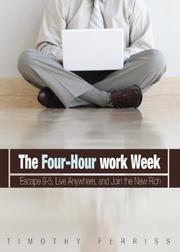 The 4-Hour WorkweekBy guest
by Tim Ferriss
“offline networking strategies from his 2007 Four Hour Workweek launch”
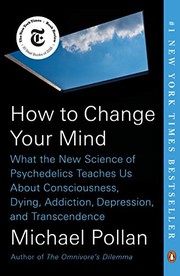
by Michael Pollan
“practitioners active before Michael Pollan's 2018 book *How to Change Your Mind* are more credible than those who entered post-trend”
Tools
by Anthropic
“Models like Claude will offer to incorporate all editorial feedback and rewrite drafts automatically — accepting this erodes synthesis and writing ability over time”
More from The Tim Ferriss Show
We summarize every new episode. Want them in your inbox?
#883: How to Legalize Medical Psychedelics in Your Country — Tania de Jong on The Playbook Behind Australia's World-First Breakthrough
#882: Why Kids Can Learn 10x Faster Than We Think — Niels Hoven of Mentava (Tim Coaching Session)
#881: Tales of Overcoming The Odds, and How to Turn Losses Into Wins — Tim McGraw, Terry Crews, Dax Shepard, and More
#880: Relationship Tools That Work — Esther Perel, Brené Brown, Dr. Sue Johnson, Terry Real, and More on Conflict, Repair, and Lasting Love
#879: How to Reinvent Yourself and Make Bold Moves — Decisive Stories from Matthew McConaughey, Steve Young, Samin Nosrat, and More
Similar Episodes
Related episodes from other podcasts

Everything Everywhere Daily
Sep 1
Questions and Answers: Volume 45

Huberman Lab
Jul 27
Your Top Health Questions Answered

10% Happier with Dan Harris
May 22
Brain Won't Stop? Here's How to Calm Down | Dan Harris
Everything Everywhere Daily
May 1
Questions and Answers: Volume 42
10% Happier with Dan Harris
Feb 20
The Best Way To Feel Calm (Is to Not Try To Feel Calm)
Explore Related Topics
This podcast is featured in Best Business Podcasts (2026) — ranked and reviewed with AI summaries.
Read this week's Health & Longevity Podcast Insights — cross-podcast analysis updated weekly.
You're clearly into The Tim Ferriss Show.
Every Monday, we deliver AI summaries of the latest episodes from The Tim Ferriss Show and 192+ other podcasts. Free for one show.
Start My Monday DigestNo credit card · Unsubscribe anytime