#809: The 4-Hour Workweek Tools That Still Work — The Art of Refusal and The Low-Information Diet
Episode
80 min
Read time
2 min
Topics
Productivity, Crypto & Web3, Philosophy & Wisdom
AI-Generated Summary
Key Takeaways
- ✓Low-Information Diet: Consume maximum one-third of one industry magazine monthly, totaling four hours of results-oriented reading. Let trusted contacts synthesize hundreds of hours of media instead of consuming news directly. Five years without newspapers caused zero problems.
- ✓Email Batching Protocol: Check email only twice daily at noon and 4PM, never first thing morning. Use auto-response explaining schedule and providing phone for urgent matters. This trains contacts to be more effective and prevents constant interruption of critical work.
- ✓Speed Reading Technique: Use pen to trace under lines while reading, focus on third word from margins using peripheral vision, take only two snapshots per line, and practice reading too fast before normal speed. Increases reading speed 200% in ten minutes.
- ✓Empowerment Rules: Give employees authority to solve problems under $100 without approval. One email granting this autonomy reduced incoming messages from 200 daily to 20 weekly while improving customer satisfaction and reducing returns from industry average of 10-15% to 3%.
- ✓Meeting Elimination Strategy: Request email agenda before any meeting to define purpose. Nine out of ten meetings become unnecessary once questions are defined. For unavoidable meetings, cover your portion first citing commitment in fifteen minutes, then leave immediately afterward.
What It Covers
Tim Ferriss revisits two chapters from The 4-Hour Workweek, focusing on defending attention through selective ignorance and the low-information diet, plus mastering refusal to protect time for critical tasks and eliminate interruptions.
Key Questions Answered
- •Low-Information Diet: Consume maximum one-third of one industry magazine monthly, totaling four hours of results-oriented reading. Let trusted contacts synthesize hundreds of hours of media instead of consuming news directly. Five years without newspapers caused zero problems.
- •Email Batching Protocol: Check email only twice daily at noon and 4PM, never first thing morning. Use auto-response explaining schedule and providing phone for urgent matters. This trains contacts to be more effective and prevents constant interruption of critical work.
- •Speed Reading Technique: Use pen to trace under lines while reading, focus on third word from margins using peripheral vision, take only two snapshots per line, and practice reading too fast before normal speed. Increases reading speed 200% in ten minutes.
- •Empowerment Rules: Give employees authority to solve problems under $100 without approval. One email granting this autonomy reduced incoming messages from 200 daily to 20 weekly while improving customer satisfaction and reducing returns from industry average of 10-15% to 3%.
- •Meeting Elimination Strategy: Request email agenda before any meeting to define purpose. Nine out of ten meetings become unnecessary once questions are defined. For unavoidable meetings, cover your portion first citing commitment in fifteen minutes, then leave immediately afterward.
Notable Moment
Ferriss eliminated all newspapers and news websites for five years, checking only front-page headlines through newspaper machines while walking to lunch. This selective ignorance caused zero problems while freeing hours weekly for productive work and maintaining better perspective than detail-obsessed news consumers.
Episode Transcript
Hey, folks. Tim here. My best selling card game, Coyote, which I made with the amazing team at Exploding Kittens, just won the pop insider best geeky game of 2025 and also best stocking filler in the made for moms toy awards '20 twenty '5. It is on sale everywhere. It's cheap. It's fast to learn. It has 4.8 stars out of five. People are loving it. Coyotegame.com will take you to all the retailers, but you can find it everywhere. It is a game of thinking fast and laughing faster. Think charades meets hot potato meets a bunch of brain fun. It's good for your head. It's perfect for families with kids age 10 or adults who are kids at heart or don't take themselves too seriously. A lot of adults love this game. And as I said, it's available everywhere. Amazon, Walmart, Target, 8,000 plus retail locations, you name it. So please check it out. I loved making it. People are really enjoying it. It has 300 or 400,000,000 plus social views of gameplay online. And try it. Enjoy it this holiday season. Check it out, coyotegame.com one more time. That's coyotegame.com or anywhere you buy your games. Now back to the episode. Hello, boys and girls, ladies and germs. This is Tim Ferris. Welcome to another episode of the Tim Ferris Show. I am recording this from my hotel room in Tokyo, Japan, where I am in Jinkumai and headed on the road yet again for some more adventures and then back to The US. And when I'm doing this, aside from keeping in mind things like the mini retirement and setting up systems that persist beyond your return to your home, there are many tools that I still use to this day from the book that started it all, The four Hour Workweek. Came out in 2007, was revised in 2009, and yet it was one of Amazon's top 10 most highlighted books of all time last time I checked in 2017. What that means is many of the principles, many of the philosophies, many of the templates still work. There are certain tech tools and so on, of course, that have changed over time. Those things change nonstop. The rate of improvement, Moore's law, blah, blah, blah, blah, blah. All those things have changed, but there are certain through lines and tactics and strategies that still work. So readers and listeners alike often ask me, what would you change? What would you update? But an equally interesting question is what wouldn't I change? What would I keep? What stands the test of time? What has already stood the test of time for nearly twenty years and hasn't lost any potency whatsoever? So I'm gonna share two chapters from the audio book this week that highlight a lot that you can still use. These chapters push you to defend your scarcest resource, attention, as opposed to just time. One by saying no to people, the other …
Get the full transcript (12,306 words) + summary by email — free
One-time email with the complete transcript and AI summary of this episode. No account needed.
One email, no spam. We’ll also show you what SignalCast does.

You just read a 3-minute summary of a 77-minute episode.
Get The Tim Ferriss Show summarized like this every Monday — plus up to 2 more podcasts, free.
Pick Your Podcasts — FreeKeep Reading
More from The Tim Ferriss Show
#882: Why Kids Can Learn 10x Faster Than We Think — Niels Hoven of Mentava (Tim Coaching Session)
Sep 10 · 133 min

The Vergecast
Were we too nice to the Steam Machine?
Jul 15
More from The Tim Ferriss Show
#881: Tales of Overcoming The Odds, and How to Turn Losses Into Wins — Tim McGraw, Terry Crews, Dax Shepard, and More
Sep 4 · 65 min

Freakonomics Radio
The World Is (Still) Drowning in Sludge
Jun 24
Books, tools, and gear mentioned in this episode
SignalCast may earn commission on purchases via these links. As an Amazon Associate, SignalCast earns from qualifying purchases.
Books
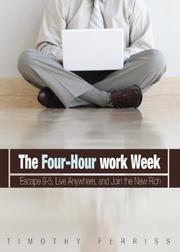
by Tim Ferriss
“Tim Ferriss revisits two chapters from The 4-Hour Workweek, focusing on defending attention through selective ignorance and the low-information diet, plus mastering refusal to protect time for critical tasks and eliminate interruptions.”
More from The Tim Ferriss Show
We summarize every new episode. Want them in your inbox?
#882: Why Kids Can Learn 10x Faster Than We Think — Niels Hoven of Mentava (Tim Coaching Session)
#881: Tales of Overcoming The Odds, and How to Turn Losses Into Wins — Tim McGraw, Terry Crews, Dax Shepard, and More
#880: Relationship Tools That Work — Esther Perel, Brené Brown, Dr. Sue Johnson, Terry Real, and More on Conflict, Repair, and Lasting Love
#879: How to Reinvent Yourself and Make Bold Moves — Decisive Stories from Matthew McConaughey, Steve Young, Samin Nosrat, and More
#878: How to Start When You're Stuck, Finish What You Begin, and Stop Waiting for Inspiration — Creative Advice from Elizabeth Gilbert, Seth Godin, Joyce Carol Oates, Anne Lamott and More
Similar Episodes
Related episodes from other podcasts

The Vergecast
Jul 15
Were we too nice to the Steam Machine?

Freakonomics Radio
Jun 24
The World Is (Still) Drowning in Sludge

The Prof G Pod
May 18
How to Resist the Attention Economy — with Bill Burnett and Dave Evans

10% Happier with Dan Harris
May 8
"What's the Point?" – A Simple Answer to Life's Biggest Question | Lili Taylor

Morning Brew Daily
Feb 25
Investors Flee Tech for IRL Stocks & Trump Touts Economy in SOTU Address
Explore Related Topics
This podcast is featured in Best Business Podcasts (2026) — ranked and reviewed with AI summaries.
You're clearly into The Tim Ferriss Show.
Every Monday, we deliver AI summaries of the latest episodes from The Tim Ferriss Show and 192+ other podcasts. Free for one show.
Start My Monday DigestNo credit card · Unsubscribe anytime