Losing Sleep and Lives: Matthew Walker on the Global Sleep Epidemic
Episode
24 min
Read time
2 min
Topics
Career Growth, Productivity, Health & Wellness
AI-Generated Summary
Key Takeaways
- ✓Sleep stage timing matters for recovery: The first half of night contains mostly deep non-REM sleep, while the last quarter holds 40-60% of total REM sleep. Waking two hours early eliminates far more REM sleep than going to bed two hours late eliminates deep sleep. This asymmetry means early wake times cause disproportionate cognitive and emotional processing deficits compared to late bedtimes.
- ✓Jet lag protocol for business travel: Upon boarding, immediately reset all clocks to destination time and sleep according to that schedule. After landing, get 20 minutes of daylight and exercise before 2PM, limit naps to 20 minutes before 2PM, avoid caffeine after 1PM, and take 1-3mg melatonin 45 minutes before bed. Take a hot bath to drop core temperature. Expect one hour of adjustment per day in the new timezone.
- ✓Workplace productivity costs of insufficient sleep: Employees sleeping under six hours take on fewer challenging tasks, produce fewer creative solutions, engage in social loafing by riding coattails of others, and show increased devious behavior like falsifying receipts or spreadsheet data. The Rand Corporation calculated insufficient sleep costs the US economy $411 billion annually, representing roughly 2% of GDP lost to underslept workers.
- ✓PTSD nightmare treatment breakthrough: PTSD patients have abnormally high noradrenaline during REM sleep, preventing the brain from processing trauma memories. The generic blood pressure medication Prazosin blocks noradrenaline, restoring normal REM sleep chemistry. This allows the brain to finally strip emotional charge from trauma memories, reducing repetitive nightmares and improving symptoms in war veterans treated at VA hospitals.
- ✓Sleep deprivation decimates immune function: One night of four hours sleep causes a 70% drop in natural killer cells that eliminate cancerous cells. Getting five hours of sleep for four nights before a flu vaccine produces 50% fewer antibodies, rendering vaccination largely ineffective. Recovery sleep does not restore antibody production, meaning the vaccination failure becomes permanent for that vaccine cycle.
What It Covers
Matthew Walker, UC Berkeley neuroscience professor and author of Why We Sleep, explains the science behind sleep stages, circadian rhythms, and sleep's impact on health. He covers jet lag protocols, teenage sleep biology, the creativity-dreaming connection, PTSD treatment breakthroughs, and immune function decline from sleep deprivation, plus his personalized sleep analytics service.
Key Questions Answered
- •Sleep stage timing matters for recovery: The first half of night contains mostly deep non-REM sleep, while the last quarter holds 40-60% of total REM sleep. Waking two hours early eliminates far more REM sleep than going to bed two hours late eliminates deep sleep. This asymmetry means early wake times cause disproportionate cognitive and emotional processing deficits compared to late bedtimes.
- •Jet lag protocol for business travel: Upon boarding, immediately reset all clocks to destination time and sleep according to that schedule. After landing, get 20 minutes of daylight and exercise before 2PM, limit naps to 20 minutes before 2PM, avoid caffeine after 1PM, and take 1-3mg melatonin 45 minutes before bed. Take a hot bath to drop core temperature. Expect one hour of adjustment per day in the new timezone.
- •Workplace productivity costs of insufficient sleep: Employees sleeping under six hours take on fewer challenging tasks, produce fewer creative solutions, engage in social loafing by riding coattails of others, and show increased devious behavior like falsifying receipts or spreadsheet data. The Rand Corporation calculated insufficient sleep costs the US economy $411 billion annually, representing roughly 2% of GDP lost to underslept workers.
- •PTSD nightmare treatment breakthrough: PTSD patients have abnormally high noradrenaline during REM sleep, preventing the brain from processing trauma memories. The generic blood pressure medication Prazosin blocks noradrenaline, restoring normal REM sleep chemistry. This allows the brain to finally strip emotional charge from trauma memories, reducing repetitive nightmares and improving symptoms in war veterans treated at VA hospitals.
- •Sleep deprivation decimates immune function: One night of four hours sleep causes a 70% drop in natural killer cells that eliminate cancerous cells. Getting five hours of sleep for four nights before a flu vaccine produces 50% fewer antibodies, rendering vaccination largely ineffective. Recovery sleep does not restore antibody production, meaning the vaccination failure becomes permanent for that vaccine cycle.
Notable Moment
Walker reveals that genetic short sleepers who thrive on six hours twelve minutes are rarer than lightning strike victims. Only two genes have been identified that allow people to accomplish in six hours what others need seven to nine hours to achieve. Most people claiming to be short sleepers are actually accumulating significant cognitive and health deficits without realizing it.
Episode Transcript
Last night, everyone listening as long as you slept became flagrantly psychotic. Welcome to the RTW podcast. I'm your host, Stephanie Sirota, partner and chief business officer leading the strategic partnerships team and RTW investments. Today, we welcome Matthew Walker, professor of neuroscience and psychology at the University of California, Berkeley, and the founder and director of the Center for Human Sleep Science. He's also the author of the New York Times bestseller, Why We Sleep, Unlocking the Power of Sleep and Dreams, which will be the subject of our discussion today. Matthew, thanks for joining us. Thank you so much for having me. I really truly enjoyed reading your book. I have so many questions. I could start in a million different directions, but Dangerous, isn't it? Sure is. Early on in the book, you said, addressing the question of why we sleep from an evolutionary perspective only compounds the mystery. No matter what vantage point you take, sleep would appear to be the most foolish of biological phenomena. You cannot gather food. You cannot socialize. You cannot find a mate or reproduce, and you're vulnerable to predators. Sleep is surely the most puzzling of all human behaviors. Is that what sparked your interest in sleep? Most sleep researchers are accidental sleep researchers. I was studying people with dementia for my PhD, and I was looking at brainwave patterns, and seeing if I could differentially diagnose them very early on. And I was failing miserably. And then one weekend I was reading how the different sleep centers in the brain were affected at different levels in different types of dementia. So I thought, gosh, I'm measuring my patients at the wrong time, which was when they were awake. I should be studying them when they were asleep. Started doing that, got some amazing results. I then had to ask a question, are the sleep problems that I'm seeing in dementia a consequence of the dementia or an underlying contributing cause of the dementia? I thought, okay, I now need to go and find out why we sleep. That was twenty two years ago. And now what I've learned is that hard questions don't care who asks them. They will meter out their lessons of difficulty all the same. And I've been schooled in the difficulty of sleep. It is truly idiotic as a behavior. And you're paralyzed, you can't move. And worse, yeah. You're vulnerable to predation. Sleep should have been strongly selected against in the course of evolution. Even very ancient species like earthworms. In every species that we've carefully studied, species like earthworms. In every species that we've carefully studied, sleep appears to be present. What that means is that sleep probably evolved with life itself on this planet. And from that point forward, it has fought its way through heroically every step along the evolutionary path. We now have to ask, is there any major physiological system in your body or operation of your mind that …
Get the full transcript (4,526 words) + summary by email — free
One-time email with the complete transcript and AI summary of this episode. No account needed.
One email, no spam. We’ll also show you what SignalCast does.

You just read a 3-minute summary of a 21-minute episode.
Get The RTW Podcast summarized like this every Monday — plus up to 2 more podcasts, free.
Pick Your Podcasts — FreeKeep Reading
More from The RTW Podcast
Surviving Stage IV Cancer: The Power of Patient Peer Navigators
Oct 19 · 24 min

The Mel Robbins Podcast
Find Your Purpose & Live a Meaningful Life Today with the #1 Happiness Expert
Jul 13
More from The RTW Podcast
Biotech's Early Innings: The Signals Investors Should Watch For
Oct 13 · 28 min

10% Happier with Dan Harris
The Science Of Building The Life You Want | Arthur Brooks
Sep 7
Books, tools, and gear mentioned in this episode
SignalCast may earn commission on purchases via these links. As an Amazon Associate, SignalCast earns from qualifying purchases.
Books
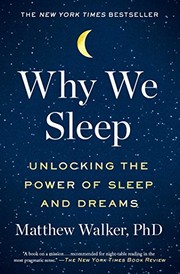
by Matthew Walker
“Matthew Walker, UC Berkeley neuroscience professor and author of Why We Sleep, explains the science behind sleep stages, circadian rhythms, and sleep's impact on health.”
Tools
“He covers jet lag protocols, teenage sleep biology, the creativity-dreaming connection, PTSD treatment breakthroughs, and immune function decline from sleep deprivation, plus his personalized sleep analytics service.”
Products
More from The RTW Podcast
We summarize every new episode. Want them in your inbox?
Surviving Stage IV Cancer: The Power of Patient Peer Navigators
Biotech's Early Innings: The Signals Investors Should Watch For
The 3x Survivor: CEO of Her Own Body: Amanda Rice on Patient Self-Advocacy and the Fight for Fertility Preservation Coverage
Innovation is the Best Medicine
Redefining the Weight Loss Revolution Beyond GLP1s: Influential Voices in the New Food Economy
Similar Episodes
Related episodes from other podcasts

The Mel Robbins Podcast
Jul 13
Find Your Purpose & Live a Meaningful Life Today with the #1 Happiness Expert

10% Happier with Dan Harris
Sep 7
The Science Of Building The Life You Want | Arthur Brooks

The Diary of a CEO
Jun 26
Most Replayed Moment: Sleep Expert On The Truth About Melatonin And Magnesium

The Knowledge Project
Jun 23
How to Repair and Nourish Your Gut | Dr. Giulia Enders

Huberman Lab
Apr 30
Essentials: Control Sugar Cravings & Metabolism with Science-Based Tools
Explore Related Topics
This podcast is featured in Best Health Podcasts (2026) — ranked and reviewed with AI summaries.
Read this week's Health & Longevity Podcast Insights — cross-podcast analysis updated weekly.
You're clearly into The RTW Podcast.
Every Monday, we deliver AI summaries of the latest episodes from The RTW Podcast and 192+ other podcasts. Free for one show.
Start My Monday DigestNo credit card · Unsubscribe anytime