Arthur Brooks On The Crisis Of Meaning & How To Actually Find It
Episode
124 min
Read time
3 min
Topics
Relationships, Fundraising & VC, Leadership
AI-Generated Summary
Key Takeaways
- ✓The Three Macronutrients of Happiness: Brooks structures happiness as three distinct components — enjoyment, satisfaction, and meaning — rather than a single feeling. When misery appears in individuals or cultures, at least one of these is blocked. Strivers typically score high on satisfaction (achievement after struggle) but chronically low on enjoyment and meaning. Diagnosing which macronutrient is deficient is the first step toward targeted intervention rather than generic self-improvement advice.
- ✓The Meaning Crisis Timeline: Survey data shows the percentage of young people reporting meaningless lives jumped sharply in 2008–2009, exactly concurrent with rising depression and anxiety rates. By 2019, before COVID, depression on college campuses had tripled and clinical anxiety doubled compared to 2008. COVID lockdowns accelerated the trend, and crucially, rates did not recover post-pandemic because the behavioral patterns — device dependency, social isolation, screen-mediated living — had become entrenched and addictive.
- ✓Left Brain vs. Right Brain and Technology: Neuroscientist Iain McGilchrist's hemispheric lateralization framework explains the crisis mechanically. The left hemisphere handles how and what questions — navigation, software, logistics. The right hemisphere handles why questions — meaning, mystery, love, transcendence. Constant smartphone and screen use forces left-brain dominance. Children now average four to seven minutes in nature daily versus four to seven hours on screens, systematically starving the right hemisphere of the conditions it needs to generate meaning.
- ✓Complicated vs. Complex Problems: A critical distinction from mathematics: complicated problems are hard to solve but solvable once (jet engines, toasters). Complex problems are easy to understand but permanently unsolvable (marriage, love, God, meaning). Modern technology offers complicated algorithmic substitutes for complex human experiences — dating apps for love, social media for friendship, Zoom for collegiality. These substitutes strip meaning from life because meaning only emerges from engaging with irreducible complexity, not from optimizing variables.
- ✓The Three-Part Structure of Meaning: Meaning breaks into three answerable sub-questions. Coherence asks why things happen as they do — requiring a belief framework, not certainty. Purpose asks why you are doing what you are doing — humans need progress toward goals, not goal attainment itself, since the limbic system withdraws satisfaction immediately upon achievement. Significance asks why your life matters and to whom — answered through love relationships and, for many, a sense of being valued by something beyond the human scale.
What It Covers
Harvard professor and social scientist Arthur Brooks joins Rich Roll to examine why meaning has collapsed since 2008, particularly among young strivers. Brooks frames happiness through three macronutrients — enjoyment, satisfaction, and meaning — and explains how technology-driven left-brain dominance blocks the right-hemisphere activity required to answer life's fundamental why questions, offering concrete strategies to reverse the trend.
Key Questions Answered
- •The Three Macronutrients of Happiness: Brooks structures happiness as three distinct components — enjoyment, satisfaction, and meaning — rather than a single feeling. When misery appears in individuals or cultures, at least one of these is blocked. Strivers typically score high on satisfaction (achievement after struggle) but chronically low on enjoyment and meaning. Diagnosing which macronutrient is deficient is the first step toward targeted intervention rather than generic self-improvement advice.
- •The Meaning Crisis Timeline: Survey data shows the percentage of young people reporting meaningless lives jumped sharply in 2008–2009, exactly concurrent with rising depression and anxiety rates. By 2019, before COVID, depression on college campuses had tripled and clinical anxiety doubled compared to 2008. COVID lockdowns accelerated the trend, and crucially, rates did not recover post-pandemic because the behavioral patterns — device dependency, social isolation, screen-mediated living — had become entrenched and addictive.
- •Left Brain vs. Right Brain and Technology: Neuroscientist Iain McGilchrist's hemispheric lateralization framework explains the crisis mechanically. The left hemisphere handles how and what questions — navigation, software, logistics. The right hemisphere handles why questions — meaning, mystery, love, transcendence. Constant smartphone and screen use forces left-brain dominance. Children now average four to seven minutes in nature daily versus four to seven hours on screens, systematically starving the right hemisphere of the conditions it needs to generate meaning.
- •Complicated vs. Complex Problems: A critical distinction from mathematics: complicated problems are hard to solve but solvable once (jet engines, toasters). Complex problems are easy to understand but permanently unsolvable (marriage, love, God, meaning). Modern technology offers complicated algorithmic substitutes for complex human experiences — dating apps for love, social media for friendship, Zoom for collegiality. These substitutes strip meaning from life because meaning only emerges from engaging with irreducible complexity, not from optimizing variables.
- •The Three-Part Structure of Meaning: Meaning breaks into three answerable sub-questions. Coherence asks why things happen as they do — requiring a belief framework, not certainty. Purpose asks why you are doing what you are doing — humans need progress toward goals, not goal attainment itself, since the limbic system withdraws satisfaction immediately upon achievement. Significance asks why your life matters and to whom — answered through love relationships and, for many, a sense of being valued by something beyond the human scale.
- •Tech Moderation Protocol: Because technology functions more like carbohydrates than alcohol — requiring moderation, not abstinence — Brooks outlines three structured interventions. Tech-free times: first hour of morning, last hour before bed, and all mealtimes. Tech-free zones: bedroom and all classrooms kindergarten through PhD, with lunch hour being the most critical for peer socialization. Tech fasts: a minimum four-day silent retreat annually, completely device-free, to restore default mode network function and right-hemisphere access.
- •The Strivers' Curse and Enjoyment Deficit: High achievers systematically sacrifice enjoyment for satisfaction because childhood conditioning taught them love is earned through performance, not freely given. This creates success addiction — dopamine-driven achievement loops that crowd out pleasure, connection, and leisure. Philosopher Josef Pieper's framework defines genuine leisure as learning for its own sake, deepening love relationships, and engaging with transcendence — none of which produce professional metrics. Strivers must schedule these activities deliberately or they will default to achievement indefinitely.
Notable Moment
Brooks describes interviewing a prominent finance executive in her fifties who had achieved every professional goal she had set. She told him she had consistently chosen to be special rather than happy — recognizing that family closeness and relational depth felt available to anyone, while elite professional status felt rare. She sacrificed the former to protect the latter, and arrived at midlife with neither.
Episode Transcript
This episode is brought to you by Freaks of Nature because I'm a freak when it comes to making sure that what goes into and on my body comes from nature. If you're like me, active, outdoors a lot, prone to sweating tons, and into clean personal care products, then you probably have had a few experiences testing some of these products only to discover they're great in theory, but underwhelming when it comes to actually working. But I gotta say, this stuff is great. It gets the job done and then some, all without trade offs when it comes to clean ingredients. I've been using their deodorant and their mineral broad spectrum SPF 50 sun stick. Both of these have earned a permanent place in my routine. The deodorant is aluminum and baking soda free, of course, but somehow still holds up through long training days, which frankly surprised me. And their Sun Stick really does go on incredibly smooth, leaves no white cast, and makes it ridiculously easy to protect your skin when you're outside for hours. Their Sun Stick sold out last summer, and their deodorant sold out within one month of launching. But good news, everything is back in stock right now. I'm all in. I suggest you will be too. And right now is the time because when you go to freaksofnature.com, which is what you're gonna do right now, and you use the code rich roll, you're gonna save 10 when you order now before it sells out again. So do it. As some of you know, I am in a very different season of training than I've ever been in before. I'm rebuilding slowly, intentionally after this spinal fusion surgery that I underwent this past May. And I'm learning what it means to be patient with my fitness and how to prioritize sustainability over intensity. And I gotta say that WHOOP, specifically my new WHOOP four point o wearable, has been this just enormously helpful companion in this process. It's a screenless wearable health and fitness coach that gives me personalized insights into my sleep, into my recovery, my strain, and my overall health, helping me to really understand what my body is actually ready for on any given day. And that awareness is what is helping me really stay focused and consistent, which is essentially everything right now. I do have some meaningful goals ahead. I am very intentional about getting back to pain free running and hopefully lining up for the New York City marathon to celebrate my sixtieth birthday in the fall. And WHOOP is helping me make the best decisions that are moving me the most expeditiously forward toward those moments with greater results and intention. So I would suggest that you check it out. Go to join.whoop.com/role for one month free of Whoop. When there's not happiness, when you see a lot of misery, there's a blockage of one of these three macronutrients. So we've got an enjoyment …
Get the full transcript (24,278 words) + summary by email — free
One-time email with the complete transcript and AI summary of this episode. No account needed.
One email, no spam. We’ll also show you what SignalCast does.

You just read a 3-minute summary of a 121-minute episode.
Get The Rich Roll Podcast summarized like this every Monday — plus up to 2 more podcasts, free.
Pick Your Podcasts — FreeKeep Reading
More from The Rich Roll Podcast
Bryan Johnson & Kate Tolo On Curing Their Incurable Diseases, Addressing The Disparity In Women's Health & The Don't Die Mission
Sep 21 · 116 min

Masters of Scale
Arthur Brooks on how to build a meaningful life
Mar 26
More from The Rich Roll Podcast
If I Can, I Will: William Goodge On Running 50 Marathons In 50 States In 24 Days
Sep 17 · 111 min

Modern Wisdom
Harvard Professor: Why Nothing Feels Real Anymore - Arthur Brooks - #1109
Jun 11
Books, tools, and gear mentioned in this episode
SignalCast may earn commission on purchases via these links. As an Amazon Associate, SignalCast earns from qualifying purchases.
Books
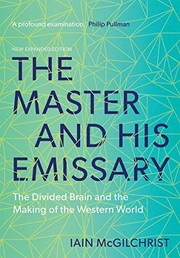
by Iain McGilchrist
“Neuroscientist Iain McGilchrist's hemispheric lateralization framework explains the crisis mechanically. The left hemisphere handles how and what questions — navigation, software, logistics. The right hemisphere handles why questions — meaning, mystery, love, transcendence.”
by Josef Pieper
“Philosopher Josef Pieper's framework defines genuine leisure as learning for its own sake, deepening love relationships, and engaging with transcendence — none of which produce professional metrics.”
More from The Rich Roll Podcast
We summarize every new episode. Want them in your inbox?
Bryan Johnson & Kate Tolo On Curing Their Incurable Diseases, Addressing The Disparity In Women's Health & The Don't Die Mission
If I Can, I Will: William Goodge On Running 50 Marathons In 50 States In 24 Days
Life's A Fight. Don’t Let It Break You: Dolph Lundgren On Trauma, Stardom & Cancer
Olympic Medalist Jenny Simpson On Her Sudden Cardiac Arrest After A Race & The Journey Back To Health
From Drinking Every Morning to Running 340 Miles: Tommie Runz on Recovery, Running & Redemption
Similar Episodes
Related episodes from other podcasts

Masters of Scale
Mar 26
Arthur Brooks on how to build a meaningful life

Modern Wisdom
Jun 11
Harvard Professor: Why Nothing Feels Real Anymore - Arthur Brooks - #1109

The Prof G Pod
May 20
Why Happiness Has Nothing to Do With Success — with Arthur Brooks

10% Happier with Dan Harris
Apr 1
Modern Life Is Designed to Leave You Empty. Here's the Antidote. | Arthur Brooks

Huberman Lab
Sep 14
The Art of True Happiness | Dr. Arthur Brooks
Explore Related Topics
This podcast is featured in Best Health Podcasts (2026) — ranked and reviewed with AI summaries.
You're clearly into The Rich Roll Podcast.
Every Monday, we deliver AI summaries of the latest episodes from The Rich Roll Podcast and 192+ other podcasts. Free for one show.
Start My Monday DigestNo credit card · Unsubscribe anytime