AB

Arthur Brooks

Arthur Brooks is a multidisciplinary scholar and thought leader who explores the intricate science of human happiness, bridging insights from economics, psychology, and personal development. Through his research and writing, he offers nuanced frameworks for understanding emotional well-being, challenging conventional wisdom about success, pleasure, and meaning by breaking down complex psychological concepts into actionable strategies. A former professional French hornist turned Harvard professor and bestselling author, Brooks specializes in decoding the mechanisms of personal fulfillment, examining topics like contempt in political discourse, the neuroscience of happiness, and practical techniques for cultivating sustainable joy and purpose. His work uniquely blends academic rigor with deeply personal insights, helping audiences reimagine success beyond traditional metrics and develop more intentional approaches to living a meaningful life. Brooks is perhaps best known for his compelling arguments about happiness as a deliberate practice—not a passive state—and his ability to translate sophisticated research into practical, transformative guidance.

12episodes
11podcasts

Featured On 11 Podcasts

All Appearances

12 episodes
10% Happier with Dan Harris

Modern Life Is Designed to Leave You Empty. Here's the Antidote. | Arthur Brooks

10% Happier with Dan Harris
75 minProfessor at Harvard Kennedy School and Harvard Business School

AI Summary

→ WHAT IT COVERS Harvard professor Arthur Brooks presents a six-part framework for restoring meaning in modern life, arguing that hustle culture, social media, and constant distraction have pushed people into the brain's left hemisphere — the analytical side — while starving the right hemisphere where meaning, love, and purpose actually live. The crisis accelerated sharply after 2008 with smartphone adoption. → KEY INSIGHTS - **The Doom Loop Interruption — Three Tech Rules:** Break technology's addictive grip by eliminating device use during three specific windows: the first hour of the morning, the last hour before sleep, and all meals. Additionally, designate tech-free physical zones (bedroom, classroom) and schedule one four-day device-free retreat annually. Brooks reports that students who follow this protocol show measurable meaning recovery within six months. - **Meaning Has Three Measurable Components:** A meaningful life requires satisfying three distinct psychological questions: coherence (why do things happen as they do), purpose (where is my life directed), and significance (who would care if I were gone). These map to different life domains — work typically supplies purpose, relationships supply significance, and worldview or religion supplies coherence. Weakness in any one dimension creates a detectable meaning deficit. - **The Two Acid-Test Questions:** Brooks assigns students two unanswerable questions as a daily contemplative practice: "Why am I alive?" and "For what would I die?" The key diagnostic: if Google can answer a question, it belongs to the left hemisphere and won't generate meaning. Only questions that resist algorithmic answers activate the right hemisphere where genuine meaning is processed and experienced. - **Relearning Boredom Through the Default Mode Network:** Research by Harvard psychologist Dan Gilbert shows people prefer painful electric shocks over fifteen minutes of unstructured silence — two-thirds of men self-shocked rather than sit quietly. To reverse this, Brooks recommends exercising and commuting without audio, allowing the brain's default mode network to activate. Initial discomfort gives way to the same generative mental state people experience in the shower. - **Calling Requires Earned Success Plus Service:** Any job can shift toward a calling by injecting two specific elements: earned success (the sense of creating genuine value) and service (the sense that specific people need you). Brooks illustrates this with a concrete suggestion — make a fresh pot of coffee and bring it to a struggling colleague — as a low-cost way to activate both elements immediately, regardless of job title or industry. - **Suffering Reduction Requires Lowering Resistance, Not Pain:** Drawing on twelve years of collaboration with the Dalai Lama, Brooks applies the Tibetan Buddhist formula: suffering equals pain multiplied by resistance. Eliminating pain through avoidance also eliminates the meaning derived from difficulty. His practical tool is a failure journal where students record setbacks, then return at three weeks to note lessons learned, and again at two months to identify unexpected benefits from the same event. → NOTABLE MOMENT Brooks recounts approaching a homeless man and, after buying him food, asking the man to pray for Brooks and his family in return. Brooks describes this as a genuine request, not a gesture, based on his belief that the prayers of people in poverty carry particular weight — and says the exchange temporarily dissolved all social hierarchy between them. 💼 SPONSORS [{"name": "Quo", "url": "https://quo.com/happier"}, {"name": "LinkedIn Ads", "url": "https://linkedin.com/happier"}, {"name": "BetterHelp", "url": "https://betterhelp.com/happier"}, {"name": "Bombas", "url": "https://bombas.com/happier"}] 🏷️ Meaning Crisis, Brain Hemispheres, Technology Addiction, Arthur Brooks, Behavioral Science, Purpose and Calling

Deep Questions with Cal Newport

Ep. 398: How Do I Find Purpose in a Distracted World? (W/ Arthur Brooks)

Deep Questions with Cal Newport
78 minAuthor, Harvard Professor, New York Times Bestselling Author

AI Summary

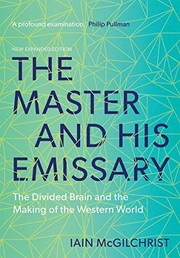
→ WHAT IT COVERS Cal Newport interviews Harvard professor and Atlantic columnist Arthur Brooks about his book on meaning and purpose. Brooks argues that a cultural shift toward algorithmic, technocratic thinking beginning in the 1990s created a meaning deficit, and smartphones then amplified pre-existing emptiness through addictive doom loops — making the solution deeper than simply reducing screen time. → KEY INSIGHTS - **The Meaning Deficit Equation:** Happiness requires three components — enjoyment, satisfaction, and meaning. Brooks finds enjoyment and satisfaction remain relatively intact, especially among Gen Z, but meaning has collapsed. The single strongest predictor of depression and anxiety is answering "yes" to the question of whether life feels meaningless — making meaning restoration the primary lever for improving mental health outcomes. - **The Doom Loop Mechanism:** Technology does not cause the meaning crisis directly — it amplifies a pre-existing vulnerability. People already disconnected from purpose turn to phones and social media to escape boredom and anxiety, which deepens both conditions, driving heavier use. This mirrors the neurochemical cycle of alcohol dependency: temporary relief followed by worsened baseline, requiring escalating doses to achieve the same effect. - **Left Brain vs. Right Brain Trap:** Drawing on neuroscientist Ian McGilchrist's hemispheric lateralization research, Brooks explains that the post-industrial economy hypertrophies left-brain algorithmic thinking while starving right-brain capacities for love, mystery, transcendence, and meaning. Spending all day on technology literally keeps people in the wrong hemisphere to process religious, relational, or existential questions — not through resistance, but through neurological neglect. - **Calling Requires Two Conditions, Not Passion-Matching:** Finding meaningful work has nothing to do with matching job content to pre-existing passion. Brooks identifies two reliable predictors of experiencing work as a calling: believing you are earning success through merit-based contribution, and feeling genuinely needed by the people you serve. Both conditions develop over years of skill-building — making early-career dissatisfaction a poor signal for career fit. - **Relationship Formation and the Dating App Problem:** Brooks cites data showing 62% of long-term relationships now begin on dating apps, yet these relationships show measurably lower stability and attraction than those formed through in-person contexts. Apps engage left-brain filtering — matching on stated preferences — while bypassing right-brain cues like scent, physical presence, and social context that encode deeper compatibility signals including immune system dissimilarity. - **Three Practical Steps to Recover Meaning:** Brooks recommends starting with anger at being trapped in the doom loop as the primary motivator for change — mirroring recovery psychology. Second, implement device-free periods: first hour of the day, mealtimes, last hour before sleep, and a phone-foyer system at home. Third, deliberately practice boredom through phone-free walks, workouts without headphones, and silent driving to reactivate right-brain processing capacity. → NOTABLE MOMENT Brooks describes a natural experiment between his two sons — one at Princeton immersed in hustle culture and struggling with ennui, the other a Marine Corps sniper with no college degree who was notably happier and socially connected. The contrast helped Brooks identify that elite academic environments, not generational weakness, concentrate the meaning crisis. 💼 SPONSORS [{"name": "Monarch Money", "url": "https://monarch.com"}, {"name": "ButcherBox", "url": "https://butcherbox.com/deep"}, {"name": "LMNT", "url": "https://drinkelement.com/deep"}, {"name": "Fabric by Gerber Life", "url": "https://meetfabric.com/deep"}] 🏷️ Meaning Crisis, Digital Minimalism, Mental Health, Purposeful Work, Relationship Formation, Behavioral Science

AI Summary

→ WHAT IT COVERS Harvard professor and social scientist Arthur Brooks joins Rich Roll to examine why meaning has collapsed since 2008, particularly among young strivers. Brooks frames happiness through three macronutrients — enjoyment, satisfaction, and meaning — and explains how technology-driven left-brain dominance blocks the right-hemisphere activity required to answer life's fundamental why questions, offering concrete strategies to reverse the trend. → KEY INSIGHTS - **The Three Macronutrients of Happiness:** Brooks structures happiness as three distinct components — enjoyment, satisfaction, and meaning — rather than a single feeling. When misery appears in individuals or cultures, at least one of these is blocked. Strivers typically score high on satisfaction (achievement after struggle) but chronically low on enjoyment and meaning. Diagnosing which macronutrient is deficient is the first step toward targeted intervention rather than generic self-improvement advice. - **The Meaning Crisis Timeline:** Survey data shows the percentage of young people reporting meaningless lives jumped sharply in 2008–2009, exactly concurrent with rising depression and anxiety rates. By 2019, before COVID, depression on college campuses had tripled and clinical anxiety doubled compared to 2008. COVID lockdowns accelerated the trend, and crucially, rates did not recover post-pandemic because the behavioral patterns — device dependency, social isolation, screen-mediated living — had become entrenched and addictive. - **Left Brain vs. Right Brain and Technology:** Neuroscientist Iain McGilchrist's hemispheric lateralization framework explains the crisis mechanically. The left hemisphere handles how and what questions — navigation, software, logistics. The right hemisphere handles why questions — meaning, mystery, love, transcendence. Constant smartphone and screen use forces left-brain dominance. Children now average four to seven minutes in nature daily versus four to seven hours on screens, systematically starving the right hemisphere of the conditions it needs to generate meaning. - **Complicated vs. Complex Problems:** A critical distinction from mathematics: complicated problems are hard to solve but solvable once (jet engines, toasters). Complex problems are easy to understand but permanently unsolvable (marriage, love, God, meaning). Modern technology offers complicated algorithmic substitutes for complex human experiences — dating apps for love, social media for friendship, Zoom for collegiality. These substitutes strip meaning from life because meaning only emerges from engaging with irreducible complexity, not from optimizing variables. - **The Three-Part Structure of Meaning:** Meaning breaks into three answerable sub-questions. Coherence asks why things happen as they do — requiring a belief framework, not certainty. Purpose asks why you are doing what you are doing — humans need progress toward goals, not goal attainment itself, since the limbic system withdraws satisfaction immediately upon achievement. Significance asks why your life matters and to whom — answered through love relationships and, for many, a sense of being valued by something beyond the human scale. - **Tech Moderation Protocol:** Because technology functions more like carbohydrates than alcohol — requiring moderation, not abstinence — Brooks outlines three structured interventions. Tech-free times: first hour of morning, last hour before bed, and all mealtimes. Tech-free zones: bedroom and all classrooms kindergarten through PhD, with lunch hour being the most critical for peer socialization. Tech fasts: a minimum four-day silent retreat annually, completely device-free, to restore default mode network function and right-hemisphere access. - **The Strivers' Curse and Enjoyment Deficit:** High achievers systematically sacrifice enjoyment for satisfaction because childhood conditioning taught them love is earned through performance, not freely given. This creates success addiction — dopamine-driven achievement loops that crowd out pleasure, connection, and leisure. Philosopher Josef Pieper's framework defines genuine leisure as learning for its own sake, deepening love relationships, and engaging with transcendence — none of which produce professional metrics. Strivers must schedule these activities deliberately or they will default to achievement indefinitely. → NOTABLE MOMENT Brooks describes interviewing a prominent finance executive in her fifties who had achieved every professional goal she had set. She told him she had consistently chosen to be special rather than happy — recognizing that family closeness and relational depth felt available to anyone, while elite professional status felt rare. She sacrificed the former to protect the latter, and arrived at midlife with neither. 💼 SPONSORS [{"name": "Freaks of Nature", "url": "https://freaksofnature.com"}, {"name": "WHOOP", "url": "https://join.whoop.com/richroll"}, {"name": "AG1", "url": "https://drinkag1.com/richroll"}, {"name": "Prolon", "url": "https://prolonlife.com/richroll"}, {"name": "Squarespace", "url": "https://squarespace.com/richroll"}] 🏷️ Meaning Crisis, Hemispheric Lateralization, Striver Psychology, Technology Addiction, Happiness Frameworks, Purpose and Coherence, Leisure Philosophy

The School of Greatness

How Faith, Neuroscience, and Meaning Work Together | Arthur Brooks

The School of Greatness
100 minHarvard Professor, Author, Happiness Researcher

AI Summary

→ WHAT IT COVERS Harvard professor Arthur Brooks explains how modern technology and hustle culture trap people in the brain's left hemisphere — the problem-solving side — while systematically blocking access to the right hemisphere where meaning, purpose, and deep relationships are processed. Brooks outlines six evidence-based methods to reclaim meaning, covering brain lateralization, the four worldly idols, relationship neuroscience, and intergenerational family structure. → KEY INSIGHTS - **Hemispheric Lateralization and Meaning:** The brain's right hemisphere processes "why" questions — purpose, love, God, meaning — while the left handles "how" and "what" problems. Modern technology, social media, and hustle culture force people to operate almost exclusively in the left hemisphere. Brooks identifies this as the primary driver of rising depression and anxiety, particularly among people under 35, where stating "my life feels meaningless" is the single strongest statistical predictor of both conditions. - **Tech Moderation Protocol:** Full abstinence from devices is impractical, but three structured interventions reset neural programming. Tech-free times cover the first hour of morning, all mealtimes, and the final hour before bed. Tech-free zones include the bedroom and all classrooms. Tech fasts — multi-day silent retreats without devices — follow a predictable pattern: day one is difficult, day two easier, day three positive, day four described as bliss. Even a phone visible on a dining table measurably reduces oxytocin flow between people. - **Micro vs. Meta Boredom:** Harvard psychologist Dan Gilbert's research shows over half of study participants chose self-administered electric shocks over sitting in silence — two-thirds of men and one-quarter of women. Smartphones have eliminated moment-to-moment boredom but created what Brooks calls "meta boredom" — a life that feels grinding and empty despite constant stimulation. The default mode network, which generates meaning and self-reflection, only activates during boredom. Eliminating all boredom permanently disables this system. - **The Four Worldly Idols Framework:** Drawing from Aristotle via Thomas Aquinas's 13th-century Summa Theologica — validated by modern behavioral science — Brooks identifies four idols that derail meaning: money, power, pleasure, and honor. Each person has one dominant idol that causes the most suffering. An elimination exercise reveals it by removing the least-valued idol first. Honor — seeking admiration from strangers — is most common among high achievers who learned early that love is earned through performance rather than given freely. - **Self-Transcendence as the Meaning Mechanism:** Two pathways activate the right hemisphere and generate meaning: standing in awe of something larger than oneself, and serving others without expectation of return. Both shift the brain from what William James called the "me-self" — the inward-looking, ruminative mode — to the "I-self," which orients outward. Brooks cites a physical therapist who removed every mirror from his home and showered in darkness for a year to break a self-objectifying fitness influencer identity before rebuilding around service. - **Relationship Neuroscience Protocol:** Four evidence-based behaviors restore cooling relationships. First, maintain direct eye contact during every conversation, as women produce three times more oxytocin than men through eye contact, and its absence registers neurochemically as emotional withdrawal. Second, maintain constant physical touch — walking, sitting, driving. Third, introduce more shared fun to dilute accumulated grievance rather than rehearsing problems in therapy. Fourth, pray or meditate together, which Brooks identifies as more neurochemically intimate than sex because it connects right hemispheres simultaneously. - **Intergenerational Co-Living Research:** Behavioral science data shows grandparents live longer and report higher wellbeing when living near grandchildren daily rather than visiting occasionally. Grandchildren show measurably stronger emotional, spiritual, and cognitive development with regular grandparent contact. Adult children maintain better long-term relationships with parents through daily proximity versus periodic visits. Brooks convened a formal family meeting, presented the research, and relocated two adult children's families into a shared multi-floor home, with structured daily meals and intentional division of household responsibilities. → NOTABLE MOMENT Brooks reveals that his deepest regret is not a career failure but two decades of minimal contact with his parents — both now deceased — while pursuing musical and academic ambitions in Europe. He describes this as a correctable error, not through guilt, but by treating his relationship with grandchildren as a direct do-over, backed by a formal family meeting and a coordinated cross-country relocation. 💼 SPONSORS None detected 🏷️ Brain Lateralization, Meaning and Purpose, Technology Addiction, Relationship Neuroscience, Intergenerational Living, Worldly Idols Framework, Self-Transcendence

AI Summary

→ WHAT IT COVERS Harvard professor and happiness scientist Arthur Brooks joins Masters of Scale to explain why meaning — not enjoyment or satisfaction — has collapsed since 2008, how smartphone-driven simulation blocks the brain's meaning-making capacity, and what entrepreneurs specifically can do to rebuild purposeful lives using neuroscience and Aristotelian frameworks. → KEY INSIGHTS - **The Three Channels of Well-Being:** Brooks identifies enjoyment, satisfaction, and meaning as the three distinct channels of well-being. Research shows enjoyment and satisfaction remain stable, but meaning has cratered since 2008. The strongest predictor of depression and anxiety in young adults is answering yes to the question: does your life feel meaningless? Entrepreneurs typically score high on satisfaction but neglect meaning entirely. - **Left vs. Right Brain Problem:** Oxford neuroscientist Ian McGilchrist's hemispheric lateralization theory distinguishes complicated problems (left brain — solvable with how-to knowledge, like software or logistics) from complex problems (right brain — unsolvable why-questions like marriage or purpose). Constant tech use forces the brain into left-hemisphere mode, making people incapable of even forming the right-hemisphere questions that generate meaning. - **Protect Boredom Deliberately:** Harvard psychologist Dan Gilbert's research shows two-thirds of men self-administer painful electric shocks rather than sit quietly for 15 minutes. Brooks recommends a specific protocol: a one-hour pre-dawn walk without devices, practiced for 30 days, to reactivate the brain's default mode network — the system responsible for creativity, complex thinking, and meaning-making. - **Aristotle's Three Friend Tiers:** Brooks applies Aristotle's friendship framework to explain CEO loneliness: tier one friends are transactional (useful but forgotten when business ends), tier two are admiration-based (disappear when the admired trait does), and tier three are virtuous friendships built around mutual love of a third thing. CEOs trend toward all tier-one relationships, which produces high achievement and profound isolation simultaneously. - **The Four Idols Framework:** Brooks uses a behavioral science framework derived from Thomas Aquinas — money, power, pleasure, and fame — to identify each person's primary distraction from meaning. The exercise works by elimination: identifying which idol beguiles you most reveals where moral aspiration will most frequently lose to animal impulse, giving individuals advance warning of their specific ethical weak points. → NOTABLE MOMENT Brooks draws a direct parallel between the 1999 film The Matrix and modern smartphone life — arguing the film's premise of an AI harvesting human attention through a pleasant simulation is no longer science fiction but an accurate description of how people currently live, with meaning as the casualty. 💼 SPONSORS [{"name": "CoreWeave", "url": "https://coreweave.com/readyforanything"}, {"name": "Lightricks LTX2", "url": "https://ltx.io/model"}] 🏷️ Meaning & Purpose, Happiness Science, Entrepreneurial Mindset, Friendship Frameworks, Technology & Mental Health

The Daily Stoic

The Philosopher Who Didn’t Care What Anyone Thought

The Daily Stoic
24 minPhilosopher and Harvard Professor

AI Summary

→ WHAT IT COVERS This episode explores Diogenes the Cynic, the homeless philosopher who lived in a barrel in ancient Athens and influenced Stoicism's founding. Ryan Holiday examines how Diogenes questioned social conventions, practiced extreme self-sufficiency, and challenged powerful figures like Alexander the Great through his radical philosophy of living according to nature. → KEY INSIGHTS - **Training Through Discomfort:** Diogenes deliberately rolled in hot sand during summer and embraced freezing statues in winter to build physical and mental resilience. He practiced begging from statues to become accustomed to rejection and indifference. This systematic exposure to hardship made ordinary discomforts manageable and developed self-sufficiency independent of external circumstances or approval. - **Freedom From Dependency:** When Alexander the Great offered Diogenes anything he wanted, Diogenes requested only that Alexander move out of his sunlight. This demonstrates that true power comes from reducing needs rather than accumulating resources. Seneca later echoed this principle, defining poverty not as having little but as wanting more, making desire itself the source of vulnerability and powerlessness. - **Philosophical Differences With Stoicism:** Cynics rejected the Stoic belief in a divine organizing principle governing the universe. While Stoics sought to align themselves with natural order and existing social structures, Cynics viewed societal institutions as arbitrary human constructs open to questioning. This made Cynicism more anarchic and radical, questioning conventions that Stoics accepted as necessary parts of the natural order. - **Continuous Learning Regardless of Age:** Diogenes compared slowing down in old age to decelerating before a race's finish line, arguing for acceleration instead. Marcus Aurelius exemplified this by continuing to study with philosophers despite being emperor. Epicurus reinforced this principle by stating that claiming you are too young or too old to learn equals claiming you are too young or too old to be happy. - **Intellectual Flexibility Over Consistency:** When questioned about changing his opinion, Diogenes responded that he used to wet his bed but no longer did, illustrating that growth requires abandoning previous positions. Cicero advocated remaining a free agent as circumstances change. Marcus Aurelius taught that people who correct your mistakes help rather than harm you, but only if you incorporate new information and adjust beliefs accordingly. → NOTABLE MOMENT Diogenes walked backwards into a crowded theater, and when people laughed and asked why, he responded that they had been walking in the wrong direction their entire lives. This reversal demonstrated his method of using absurd actions to expose societal hypocrisy and make people question their unexamined assumptions about normal behavior and values. 💼 SPONSORS [{"name": "Whole Foods", "url": null}, {"name": "Intuit TurboTax", "url": "turbotax.com/free"}, {"name": "BetterHelp", "url": "betterhelp.com/dailystoic"}, {"name": "Helix Sleep", "url": "helixsleep.com/stoic"}] 🏷️ Ancient Philosophy, Cynicism, Stoicism, Self-Sufficiency, Personal Freedom

AI Summary

→ WHAT IT COVERS Arthur Brooks explains the neuroscience behind happiness and unhappiness as separate systems, presents his evidence-based morning and evening routines for optimizing well-being and productivity, and reveals how understanding your emotional temperament determines which interventions work best. → KEY INSIGHTS - **Emotional Temperament Profiles:** People fall into four quadrants based on positive and negative affect intensity - mad scientists (high both), cheerleaders (high positive, low negative), judges (low both), and poets (high negative, low positive). Each requires different happiness interventions, with high negative affect people benefiting most from exercise and religious practice. - **Morning Protocol for Productivity:** Wake before dawn (Brahmana Horta principle), complete one hour of exercise (75% resistance, 25% zone two cardio), engage in transcendent activity like religious service or meditation, then consume 350mg caffeine with 60-70 grams protein. This sequence optimizes brain chemistry for four hours of creative work equivalent to ADHD medication effects. - **The Four Worldly Idols:** Money, power, pleasure, and honor (fame) are natural human desires that cause future regret when pursued as ultimate goals rather than instrumental ones. Identify which idol you're least willing to sacrifice to understand your psychological vulnerabilities. Success addicts typically developed this pattern from earning conditional love through childhood achievements. - **Evening Routine for Sleep:** Eat dinner three hours before bed with no caffeine or alcohol, walk 30-40 minutes post-meal to regulate glucose response, spend five to ten minutes making eye contact with partner while holding hands to release oxytocin, and read aloud to each other. This protocol manages blood chemistry and activates bonding mechanisms for better sleep architecture. - **Uncertainty Management:** Uncertainty differs from risk - uncertainty means unknown probabilities that trigger constant amygdala activation and cortisol drips, while risk involves known probabilities you can manage. Modern life creates perpetual uncertainty without situational awareness, causing dysregulated anxiety responses. Convert uncertainty to risk through planning, insurance, or acceptance to reduce suffering without eliminating pain. → NOTABLE MOMENT Brooks reveals that CEOs have higher rates of alcohol problems than unemployed people according to OECD data, because highly successful, educated, high earners use alcohol to manage the intense anxiety that drives their achievement. The correlation between success and substance issues stems from using sedation to cope with high negative affect temperaments. 💼 SPONSORS [{"name": "AG1", "url": "https://drinkag1.com/modernwisdom"}, {"name": "Momentous", "url": "https://livemomentous.com/modernwisdom"}, {"name": "LMNT", "url": "https://drinklmnt.com/modernwisdom"}, {"name": "Function Health", "url": "https://functionhealth.com/modernwisdom"}] 🏷️ Happiness Science, Morning Routines, Emotional Temperament, Sleep Optimization, Anxiety Management, Neuroscience

AI Summary

→ WHAT IT COVERS This best-of compilation features 2025's top WHOOP Podcast moments with world-class athletes and experts discussing happiness habits, meditation practices, women's health challenges, cardiovascular protection, nutrition strategies, and performance optimization through recovery and mindset shifts. → KEY INSIGHTS - **Happiness Framework:** Arthur Brooks identifies four daily pillars for sustained happiness: faith or transcendent practice, family bonds strengthened by oxytocin, atelic friendships based on shared love without utility, and merit-based work creating value for others through earned success and service. - **Meditation Benefits:** Rich Roll explains meditation develops capacity for objective thought observation, creating pause between trigger and response. This extra moment allows assessment before reacting, preventing impulsive decisions and regrettable statements while building deeper self-relationship through conscious reflection practice. - **Women's Strength Training:** Only 22% of American women lift weights, yet resistance training triggers bone cells to increase density and muscle mass, counteracting estrogen decline. This prevents frailty, falls, and hip fractures that reduce quality of life in women's longer but less healthy later years. - **Resistant Starch Technique:** Cooling cooked rice, potatoes, or sweet potatoes in the refrigerator or freezer converts regular starch to resistant starch. This modification reduces glucose spikes and insulin response while making meal prep more convenient through batch cooking and portion storage. → NOTABLE MOMENT Cristiano Ronaldo reveals he spends 10 hours weekly training in heart rate zones one through three, plus another hour in zones four to five, while emphasizing the critical balance between physical stress and mental cognition to avoid overtraining and maintain longevity. 💼 SPONSORS [{"name": "WHOOP", "url": "whoop.com"}] 🏷️ Performance Optimization, Women's Health, Meditation Practice, Nutrition Science

AI Summary

→ WHAT IT COVERS Arthur Brooks shares his daily protocols for managing mood and maximizing creativity, including pre-dawn workouts, strategic caffeine timing, and the holy half-hour. He explains how to find meaning through coherence, purpose, and significance while avoiding simulation-based living. → KEY INSIGHTS - **Brahma Muhurta Protocol:** Wake 96 minutes before dawn (04:30 AM) for peak creativity and mood management. This timing, validated by behavioral science, provides four hours of high-quality creative output versus two hours when waking after sunrise, particularly effective for managing negative affect. - **Caffeine Timing Strategy:** Delay caffeine intake two to three hours after waking to allow adenosine to clear naturally, then consume 380mg to fill receptors for maximum focus. This approach mimics ADHD medication effects by vacuuming dopamine in the prefrontal cortex without borrowing tomorrow's neurochemical resources. - **Protein Loading Method:** Consume 60-70 grams of tryptophan-rich protein in first meal (whey powder with nonfat Greek yogurt) to support mood management. Maintain 200 grams daily protein intake for optimal body composition and satiety, challenging the outdated 30-gram absorption limit myth. - **80 Percent Knowledge Rule:** Apply the Marine Corps leadership principle of deciding at 80 percent certainty rather than seeking perfect information. This prevents analysis paralysis in major life decisions like marriage, career, and faith commitments, converting search into presence of meaning. - **Self-Transcendence Practice:** Combat me-self obsession through daily transcendent experiences including worship, service to others, nature exposure, and flow states. Remove metaphorical mirrors like social media notifications and practice total absorption activities to achieve significance through decreased self-focus rather than increased self-importance. → NOTABLE MOMENT Brooks describes a fitness influencer who cured his misery by removing every mirror from his house and showering in darkness for a year to break free from constant self-monitoring. This extreme protocol eliminated the me-self obsession that had dominated his life for a decade. 💼 SPONSORS [{"name": "Human (Superbeats Sport)", "url": "https://humann.com/tim"}, {"name": "Monarch", "url": "https://monarch.com"}, {"name": "AG1", "url": "https://drinkag1.com/tim"}] 🏷️ Morning Routines, Mood Management, Ketogenic Diet, Self-Transcendence, Meaning Crisis, Productivity Protocols

AI Summary

→ WHAT IT COVERS Arthur Brooks explains happiness as three macronutrients—enjoyment, satisfaction, and meaning—rather than fleeting feelings. He provides frameworks for managing success addiction, practicing metacognition, and building sustainable happiness through deliberate choices over reactive emotions in modern life. → KEY INSIGHTS - **Enjoyment vs Pleasure:** Enjoyment requires pleasure plus two elements—people and memory. Drinking beer alone pursues dangerous pleasure; drinking with friends while making memories creates enjoyment. Anheuser Busch never shows solo consumption because isolated pleasure-seeking leads to addiction, while social experiences with memory formation produce lasting happiness. - **Satisfaction Equation:** Happiness from satisfaction equals haves divided by wants, not accumulating more. Mother nature tricks people into believing satisfaction lasts forever to motivate effort, but homeostasis returns feelings to baseline within weeks. The solution requires wanting less through practices like Buddhism's eightfold path, not chasing more money or status. - **Meaning Diagnostic Test:** Answer two questions to assess purpose—why are you alive and what would you die for today. Inability to answer indicates a meaning crisis requiring vision quest work through reading, meditation, or therapy. Meaning combines three elements: coherence (things happen for reasons), purpose (life direction), and significance (mattering if absent). - **Metacognition Practice:** Experience emotions in the prefrontal cortex rather than reacting from the limbic system. Write political opinions on your birthday then cross them out—not abandoning beliefs but processing them cognitively instead of viscerally. This transforms automatic reactions into conscious choices, enabling better decision-making despite strong feelings about divisive events. - **Success Addiction Pattern:** Highly successful people systematically sacrifice happiness for worldly metrics—money, power, fame, admiration. One billionaire executive admitted preferring to be special over happy, identical to substance addicts choosing highs over happiness. Breaking this requires detaching from ego while maintaining ambition, using success to serve others like Bach dedicating work to humanity. → NOTABLE MOMENT Brooks reveals that people who eat candy one to three times monthly live a year longer than complete abstainers, despite candy being objectively unhealthy. The key differentiator involves social context and moderation—occasional treats with others while making memories provides net benefits, demonstrating how enjoyment trumps pure biochemical effects. 💼 SPONSORS None detected 🏷️ Happiness Science, Metacognition, Success Addiction, Meaning and Purpose, Emotional Regulation, Life Satisfaction

The Rich Roll Podcast

Best of 2025 (Part One): Conversations That Shaped Us

The Rich Roll Podcast
107 minHarvard happiness expert and social scientist

AI Summary

→ WHAT IT COVERS Rich Roll's 2025 year-end compilation features conversations with Mel Robbins, Arthur Brooks, Rhonda Patrick, Laurie Santos, and others exploring emotional control, happiness science, exercise neuroscience, consciousness, purpose-finding, and practical frameworks for personal transformation and mental health. → KEY INSIGHTS - **Power vs Control (Mel Robbins):** Stop giving power to others' opinions and moods by focusing energy inward on self-respect and personal values rather than managing external reactions. When you shift from controlling others to managing your own emotions and responses, relationships improve naturally as you stop taking responsibility for everyone else's feelings and experiences. - **Lactate and Brain Health (Rhonda Patrick):** Vigorous exercise producing seven to fourteen millimolar blood lactate levels triggers brain-derived neurotrophic factor, growing new hippocampus neurons and increasing hippocampal size by two percent in older adults within one year. This lactate crosses the blood-brain barrier, fueling brain activity during exercise and supporting neuroplasticity crucial for both cognitive aging and mental health conditions like depression. - **Social Connection Over Self-Care (Laurie Santos):** Spending twenty dollars on others produces greater happiness than self-spending in controlled studies. Happy people donate more to charity regardless of income level, and acts of generosity create lasting positive memories that continue generating happiness through repeated storytelling, while self-indulgent purchases fade quickly from memory without sustained emotional benefit. - **Purpose Discovery (Arthur Brooks):** Young people find meaning by answering two questions: why do you believe you're alive, and for what would you give your life. This framework provides tangible direction compared to abstract purpose-seeking. Combat veterans develop strong life meaning through confronting these questions directly, while civilians must actively engage contemplative practices and reading to illuminate personal answers over time. - **Yo-Yo Abundance Mindset (Craig Maud):** Japanese concept of yo-yo means having space in your heart to accept others and respond to hardship with generosity. Societies with strong safety nets enable this abundance thinking because people see limited downfall risk, making them more willing to help others. Contrast with scarcity-driven American mindset where fear of falling prevents generous, empathetic responses to others' needs. → NOTABLE MOMENT Ethan Suplee warns that GLP-1 weight loss drugs used cyclically like fad diets create dangerous body composition changes where forty percent of lost weight is muscle but one hundred percent of regained weight is fat, potentially causing static weight but skyrocketing body fat percentages over time while missing discipline development. 💼 SPONSORS [{"name": "On", "url": "on.com/ritual"}, {"name": "AG1", "url": "drinkag1.com/richroll"}, {"name": "Prolon", "url": "prolonlife.com/richroll"}, {"name": "Calm", "url": "calm.com/richrole"}, {"name": "Momentous", "url": "livemomentous.com"}, {"name": "ROKA", "url": "roka.com"}, {"name": "Rivian", "url": "rivian.com"}] 🏷️ Neuroplasticity, Purpose Discovery, Emotional Regulation, Longevity Science, Consciousness Studies, Exercise Physiology

Freakonomics Radio

How Can We Break Our Addiction to Contempt? (Update)

Freakonomics Radio
40 minProfessor at Harvard Kennedy School and Harvard Business School

AI Summary

→ WHAT IT COVERS Arthur Brooks argues America faces a contempt crisis driven by media addiction and proposes fighting political polarization through love-based leadership strategies. → KEY QUESTIONS ANSWERED - How does contempt differ psychologically from anger? - What economic factors drive political polarization cycles? - Can individual warmheartedness overcome institutional contempt machines? → KEY TOPICS DISCUSSED - Contempt Psychology: Brooks explains contempt combines anger plus disgust, creating cold emotions that dehumanize opponents unlike self-limiting anger responses. - Financial Crisis Impact: German economists found financial crises increase populist party voter share by thirty percent, explaining Trump and Sanders phenomena. → NOTABLE MOMENT Brooks admits his love-based political strategy has backfired spectacularly, joking that his warmheartedness campaign has made him despised by everyone. 💼 SPONSORS None detected 🏷️ Political Polarization, Contempt Psychology, Media Addiction, Leadership Strategy

Explore More

Never miss Arthur Brooks's insights

Subscribe to get AI-powered summaries of Arthur Brooks's podcast appearances delivered to your inbox weekly.

Start Free Today

No credit card required • Free tier available